


SURVEY: GP-2025/11: AOK Nordost
20.01.2025 11:45

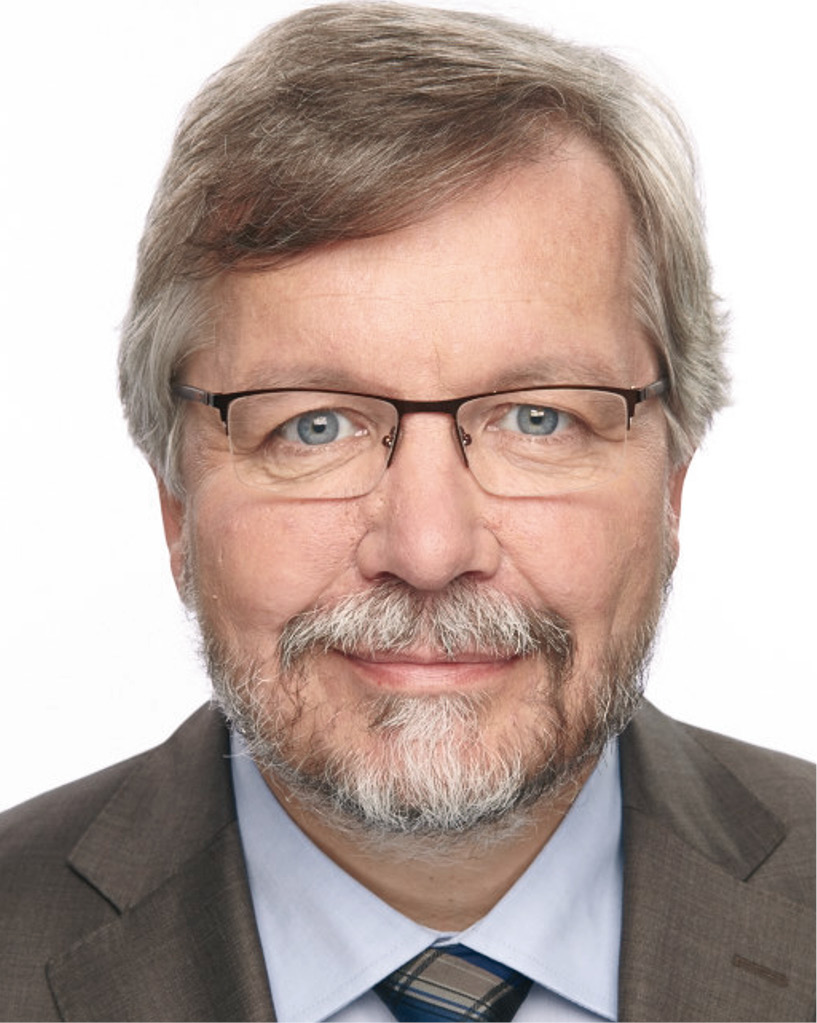
Harald Möhlmann
Advisor to the Board of Directors, AOK Nordost – The Health Insurance Fund
Which specific components of the proposed legislation do you think should and could possibly be implemented as individual measures?
At present, it appears unlikely that any of the planned or initiated legislative proposals – except for the issues of abortion and organ donation – can be advanced during the current Bundestag term. And even after the new Bundestag is constituted, the speed of action will depend on the outcome of the federal election and the composition of the Bundestag; however, the principle of discontinuity prevents a seamless transition to "old" legislative proposals.
This broadens the focus to include the actual needs for legislative proposals; even technically – to put it mildly – controversial activities such as the "Healthy Heart Act (GHG)" should then initially be pushed into the background. The focus is on core problems, as expressed in the Left Party's hearing in the German Bundestag in December 2024 (German Bundestag – Health experts support fundamental reforms):
“In the opinion of the Association of Statutory Health Insurance Funds (GKV) Reforms are essential to strengthen statutory health insurance and social long-term care insurance. A fundamental requirement is the strict separation of tasks and financial responsibilities between the federal and state governments, the association explained, citing the financing of non-insurance benefits as an example. Sustainable structural reforms are necessary given the scarcity of human resources. The contractual options available to health insurance companies for needs-based care should be expanded.."
“During the hearing, the individual expert Franz Knieps from the BKK umbrella association for a better cross-sectoral care Not much has been achieved in this regard in recent years. Knieps called for the abolition of sector separation and the establishment of joint needs planning for outpatient and inpatient care and to define uniform quality standards.”
My personal opinion is that two issues should be addressed immediately and quickly:
- The financial stabilization of the statutory health insurance system is the most urgent task, both with regard to debates about the stability of a social, solidarity-based health insurance system and to reduce non-wage labor costs in the economy and increase purchasing power, even among people with lower incomes. One immediately viable approach to this would be to increase the subsidy for non-insurance benefits from the federal budget in 2025 and in subsequent years to the health fund to a realistic level. However, this would likely require reallocations in the federal budget; the most far-reaching would be the financing of infrastructure investments through loans and the resulting use of the flexibility in the federal budget for the very short-term financial stabilization of the statutory health insurance system. Two consequences are associated with such an approach: (1) the financial situation in the statutory long-term care insurance system must be sustainable in 2025 so that a fundamental reform can be implemented there starting in 2026. (2) the structural conditions in the statutory health insurance system must be changed in the short term so that the "financial breathing room" is not used up by the complete assumption of non-insurance benefits; This includes a review of the additional EUR 50 billion funding for the transformation of hospital care.
- The necessity of changing the structural conditions in the statutory health insurance system is based on the following facts: the Federal Republic of Germany spends the most on health care (per capita, adjusted for purchasing power) in Europe, life expectancy in Germany has recently fallen below the European average, and the satisfaction of the inhabitants with the health care system in Germany is declining significantly (FAZ_July2024_Healthcare_Documentation; Healthcare Barometer 2024 – PwCHowever, the structural changes raise a key question: after all the experiences of the last 30 years, do further, highly detailed solutions developed centrally at the federal level provide a sound path into the future? Is "more of the same" really sensible?
If it is true that human health – both in terms of risk and care – is a local, regional product, wouldn't a solution approach with explicit and sufficient competence in regions be a better alternative to ever more centralized, detailed solutions? This approach could be pursued – while observing the principle of discontinuity – by resuming work on a Health Care Strengthening Act. The approach of equipping health regions with competence would then be a very central part of this law. And there are already concrete proposals for solutions: the Federal Council's response to the GVSG draft or – more targeted, because even more clearly aimed at overcoming sector boundaries in health care – the AOK Association's proposal "Health Regions – Shaping Sector-Independent Care" (Position paper on health regions). This includes the proposal for Section 123 of the Social Code Book V, which I am enclosing verbatim in the attached file.
link Position Paper 2024