


WIdO: Approximately one-fifth of hospitalized Covid-19 patients have died.
29.07.2020 14:17
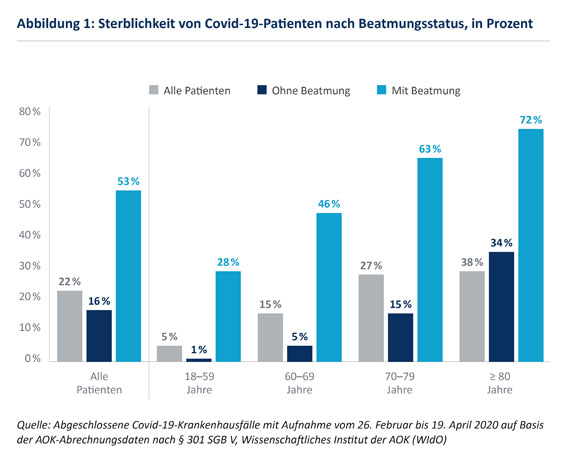
Approximately one-fifth of Covid-19 patients admitted to German hospitals between the end of February and mid-April 2020 died. The mortality rate was 53 percent for patients requiring ventilation, while it was significantly lower at 16 percent for those not requiring ventilation. Overall, 17 percent of patients were ventilated. These are key findings from an analysis by the Scientific Institute of the AOK (WIdO), the German Interdisciplinary Association for Intensive and Emergency Medicine (DIVI), and the Technical University of Berlin, which has now been published in the medical journal "The Lancet Respiratory Medicine.".
The data from approximately 10,000 patients with a confirmed COVID-19 diagnosis, admitted to a total of 920 German hospitals between February 26 and April 19, 2020, were analyzed. This joint study provides, for the first time, nationwide and population-representative results on the treatment of COVID-19 patients in Germany, based on AOK (a German health insurance company) billing data, which covers nearly one-third of the German population. A particular focus is placed on the situation of patients requiring mechanical ventilation.
Overall, about one-fifth (22 percent) of hospitalized Covid-19 patients died. The mortality rate for men was 25 percent, 6 percentage points higher than for women (19 percent). Regardless of gender, mortality was very high among older patients: 27 percent died in the 70-79 age group, and 38 percent in the group of people aged 80 and over.
High mortality rate among ventilated patients
Slightly more than half of the patients who required mechanical ventilation died (53 percent). The highest mortality rates were observed among ventilated patients in the 70-79 age group (63 percent) and among patients aged 80 and older (72 percent). Mortality was also very high (73 percent) among ventilated patients who required dialysis due to kidney failure during their hospital stay (27 percent of all ventilated patients). Mortality rates were similar for both men and women requiring ventilation. While significantly lower, mortality among patients who did not require ventilation still reached 16 percent. Here, too, age correlated with mortality.
„The high mortality rates clearly show that a relatively large number of patients with very severe cases were treated in hospitals. These severe cases tend to affect older people and those with pre-existing health conditions, but they also occur in younger patients,“ says Jürgen Klauber, Managing Director of the WIdO. „Even though infection rates in Germany are currently low, all necessary precautions should continue to be taken to keep the risk of infection in the population as low as possible.“
Men with Covid-19 are almost twice as likely to require ventilation as women.
In the study, data from COVID-19 patients with and without ventilation were analyzed separately. A total of 1,727 (17 percent) of the 10,021 hospitalized COVID-19 patients received mechanical ventilation. Slightly more than three-quarters of the ventilated patients received invasive ventilation. The average age of the patients was 68 years – in both the ventilated and non-ventilated groups. The proportion of ventilated patients varied between age groups: among those aged 60 to 69 and 70 to 79, it was 24 and 25 percent, respectively, but only 15 percent in the 18 to 59 age group and 12 percent in patients aged 80 and older.
„While the proportion of elderly patients requiring ventilation is relatively low, we can assume that in Germany all patients for whom it was therapeutically necessary could be ventilated. This is because sufficient free intensive care beds were available nationwide at all times during the pandemic, and the capacity of intensive care units was fortunately never fully utilized,“ said Christian Karagiannidis, spokesperson for the DIVI section „Lung – Respiratory Failure“ and head of the ECMO center at the Cologne-Merheim Lung Clinic. „International comparisons are difficult due to differing study samples. However, there are indications that fewer very elderly people with Covid-19 were ventilated in other countries – presumably also due to capacity constraints.“
An interesting analysis of the gender distribution also reveals interesting results: The proportion of men requiring ventilation was 22 percent, almost twice as high as that of women (12 percent), while mortality rates were comparable. "This significant difference cannot be explained by the billing data alone; further research is needed," says Karagiannidis.
Ventilated patients more frequently have comorbidities.
Hospitalized COVID-19 patients often have a number of comorbidities. The proportion of patients with comorbidities is significantly higher among those requiring ventilation than among those not requiring ventilation. For example, 24 percent of patients not requiring ventilation had cardiac arrhythmias; among those requiring ventilation, this figure was 43 percent. Diabetes was present in 26 percent of patients not requiring ventilation and in 39 percent of patients requiring ventilation.