


White Paper: Setting the course for future-proof nuclear medicine
11.06.2025 17:50
Nuclear medicine in Germany is facing a turning point. This traditionally predominantly diagnostic field is increasingly evolving into a field with a broad therapeutic spectrum. This transformation requires decisive action now so that patients can benefit from the new treatment options.
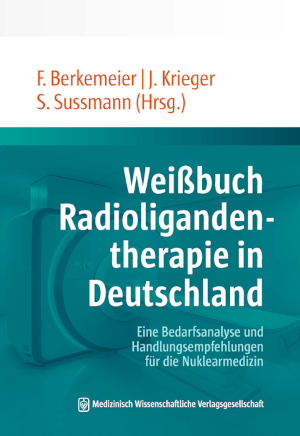
This is the conclusion of the new white paper "Radioligand Therapy in Germany," published by the IGES Institute and developed in collaboration with renowned experts. "The white paper presents the current state of nuclear medicine care, identifies gaps in care, and outlines areas where action is needed to sustainably secure the future benefits of these innovative treatment options," explained Dr. Norbert Gerbsch, Head of Public Affairs at the IGES Institute, at the book launch in Berlin.
Dynamic development in nuclear medicine
"Nuclear medicine will likely play a central role in numerous clinical pictures in the future," says Prof. Dr. Ken Herrmann, Director of the Department of Nuclear Medicine at Essen University Hospital and author of the white paper. More than 200 clinical trials with radiopharmaceuticals are underway, according to Herrmann, primarily for cancer therapy, where they could offer promising alternatives to conventional oncological treatment methods.
The main driver is radioligand therapy (RLT). In RLT, radioactive substances bind directly to cancer cells to destroy them precisely using radioactive radiation. Currently, two radioligand therapies are available in Germany for the treatment of certain patients with prostate cancer and hormone-producing tumors of the digestive system.
Securing nuclear medicine treatment capacities
Radioligand therapies are performed in hospitals under strict radiation protection regulations. However, inpatient treatment capacities have been reduced for years, which runs counter to the foreseeable new range of innovative therapies, the White Paper emphasizes: While there were 921 nuclear medicine beds in 2010, there were only 748 by 2022. This corresponds to 0.9 beds per 100,000 inhabitants.
By comparison, rheumatology, with a similarly high caseload, has 1.4 beds per 100,000 inhabitants. Furthermore, only 60 of the 92 nuclear medicine departments offer radioligand therapies in addition to diagnostics (as of 2023).
The reasons for this downward trend are the previously rather low bed occupancy, a lack of investment, but also increasingly strict radiation protection regulations and, last but not least, the current shortage of skilled workers to even be able to operate the relevant departments.
"A mere redistribution of existing nuclear medicine resources will not meet the growing demand for radiopharmaceutical diagnostics and therapy. To maintain and expand existing structures, we need a special funding category for nuclear medicine facilities within the framework of hospital funding," says Herrmann.
Overcoming barriers to access for patients
Radiological imaging (RLT) is currently difficult to access for many patients, primarily due to inadequate reimbursement regulations for necessary nuclear medicine imaging. For example, examinations such as positron emission tomography (PET) are essential for treatment planning and follow-up, but these are usually only reimbursed on an inpatient basis. The radioactive tracers required for diagnostics are also sometimes not reimbursable. Furthermore, diagnostic services vary greatly from region to region.
"Extended coverage of outpatient nuclear medicine diagnostics would enable care close to home while simultaneously making more efficient use of existing resources in hospitals and nuclear medicine practices," explains Prof. Dr. Christian la Fougère, Medical Director of the Department of Nuclear Medicine and Clinical Molecular Imaging at the University Hospital Tübingen, and also a co-author.
The White Paper also emphasizes the key role of outpatient specialist care (ASV) in patient access, which acts as an interface between traditional outpatient and inpatient care. It was designed to provide specialized, interdisciplinary treatment for patients with complex, serious, or rare diseases.
The availability of ASV teams varies considerably from region to region. In some regions in northern and eastern Germany, in particular, there are hardly any ASV teams. The considerable bureaucratic burden and the regionally very heterogeneous requirements for ASV contribute significantly to the lack of ASV structures, the White Paper analyzes.
"Strengthening and expanding ASV structures could make a significant contribution to closing the gap in care between outpatient diagnostics and inpatient treatment for radioligand therapy, as long as there is no comprehensive standard nuclear medicine care," emphasizes physician la Fougère.
Act together now for the future
"Sustainable nuclear medicine care requires joint efforts by all stakeholders in the healthcare system – from policymakers and payers to medical societies and patient organizations. Only through forward-looking planning and overcoming sectoral boundaries can we ensure that innovative nuclear medicine therapies become accessible to all patients who can benefit from them," summarizes IGES expert Gerbsch, summarizing the findings of the white paper.
About the White Paper
The publication provides information on the current state of nuclear medicine diagnostics and therapy and offers recommendations for the further development of healthcare structures. It was developed in collaboration with experts from clinical practice, health insurance companies, and patient advocacy groups. It was published by the IGES Institute. Novartis Pharma GmbH provided financial support for the project.
About the IGES Institute
The IGES Institute was founded in 1980 as an independent institute and is now one of the largest private research and consulting firms specializing in European healthcare systems, market access, and healthcare provision in Germany. Since its founding, it has worked on over 6,000 projects addressing issues of access to care, its quality, financing, and the design of competition in the healthcare sector. The IGES Institute bases its work on high levels of subject-specific and methodological expertise and offers broad access to its own data sources and those of other institutions in all areas of work.