


Change in the board of directors
26.09.2023 12:57
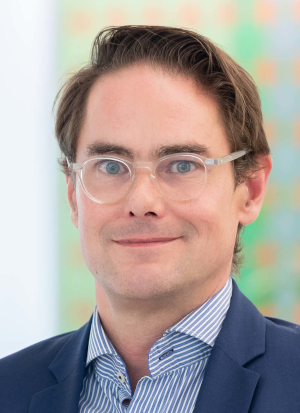
There has been a change at the top of the AOK Nordost board of directors. The alternating chairman Elmar Stollenwerk is leaving the committee. He is followed by lawyer Daniel Kostetzko.
As a result of the social elections and the constitutive meeting of the board of directors, there will be a change at the top of the board of directors of AOK Nordost. The alternating chairman of the board of directors for the employers' side, Elmar Stollenwerk, no longer ran in the social elections. From 1999 to 2010, Stollenwerk worked as alternating chairman of the board of directors for the employer side on the board of directors of what was then AOK Brandenburg. From 2014 he was a deputy member of the administrative board of AOK Nordost. From January 1, 2021, Stollenwerk, who is also managing director of the Potsdam district office of the Association of Business Associations in Berlin and Brandenburg, UVB, served as alternating chairman of the board of directors of AOK Nordost. He is now succeeded in this position by Daniel Kostetzko, who has been working as a lawyer at UVB since 2005.
“Elmar Stollenwerk and I have worked closely and trustingly together at AOK Nordost over the past few years. I am very grateful to him for this,” says Knut Lambertin, alternating chairman of the board of directors for the insured, who was re-elected for another term as chairman of the important body. “Elmar Stollenwerk has actively shaped the fortunes of AOK Nordost in recent years in a difficult health insurance environment and has always been ready for an open dialogue and exchange with the representatives of the insured,” said Lambertin.
“I would like to thank Mr. Stollenwerk very much for the constructive and always focused cooperation, i.e. the success of our AOK. He is and was an important companion and supporter of AOK Nordost,” says Daniela Teichert, Chairwoman of AOK Nordost. “I am pleased that Mr. Daniel Kostetzko, a representative of the UVB in Berlin and Brandenburg, is once again taking on this important task for the employer side on the administrative board. We need the commitment of social self-administration to statutory health and nursing care insurance, which continues to face major challenges.”
The debate about additional contributions must not be carried out on the backs of the insured and employers
Without waiting for the result of the group of estimates at the beginning of November, which states the budget requirements of the statutory health insurance to cover health costs and also state tasks for the year 2024, the Ministry of Health (BMG) is rushing forward, complains the administrative board. Before this date, Minister Prof. Karl Lauterbach announced an increase in the additional contribution of an average of 0.2 percentage points for all health insurance companies for the coming year. The argument goes that for 2024, the BMG will not provide any additional funds than the usual ones from the federal budget. Statutory health insurance currently finances state tasks, such as services for recipients of citizens' benefit financed from contributions. The cuts to statutory health insurance by the traffic light government have met with criticism from the board of directors.
“Tasks that are not adequately financed by society as a whole from federal funds and that are carried out by health insurance companies lead to a significant and unnecessary increase in contribution rates for employers, employees and pensioners in the long term. From a political point of view, this is unacceptable,” says Daniel Kostetzko, new alternating chairman of the board of directors of AOK Nordost for the employers’ side.
“By announcing that the health insurance companies may increase their individual additional contributions from 2024, the federal government is acting contrary to its coalition promise to balance tasks for society as a whole with federal funds,” says alternating chairman Knut Lambertin. Such funds were promised in the traffic light government's coalition agreement, but the promise has not yet been kept.
“Instead of aiming for a competition for the best care, a pure press competition is being launched here for the additional contribution for individual health insurance providers. This is detrimental to competition and harms the insured,” says Lambertin.