


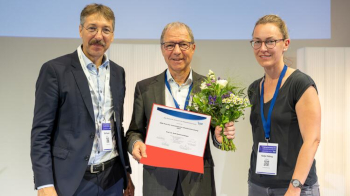
Virologist Ralf Bartenschlager receives this year's DZIF Prize for translational infection research
28.09.2023 15:36
The German Center for Infection Research (DZIF) honors the virologist Prof. Dr. Dr. hc Ralf Bartenschlager from the Heidelberg University Hospital. The prize for translational infection research is endowed with 5,000 euros and was ceremoniously presented at the DZIF annual meeting in Hanover.
Ralf Bartenschlager has been a DZIF scientist from the very beginning. He worked for years on the coordination committee of the DZIF research area “Hepatitis” and conducts research in the field of molecular virology; He is particularly interested in the interaction between the virus and its human host cell. His current work focuses on so-called RNA viruses - in particular on hepatitis C viruses, on flaviviruses such as dengue, Zika and West Nile viruses and on corona viruses such as SARS-CoV-2.
The Heidelberg scientist uses, among other things, the most modern imaging techniques to gain new insights into the virus-host cell interaction and to use this for possible therapy concepts. His research results in this subject area and those used to decipher the mode of action of antiviral therapies, particularly against hepatitis C viruses and dengue viruses, are groundbreaking and open up new starting points for the development of broadly effective antiviral drugs. Together with vaccines, these are among the most important measures to be prepared against future pandemics.
The most significant are probably the multiplication systems of hepatitis C viruses in cell cultures developed in Ralf Bartenschlager's laboratory, which are considered the most important discovery in this area after the discovery of the virus itself. These systems also formed the basis for the development and approval of the first drug against hepatitis C in 2010. Since 2014, patients infected with the hepatitis C virus have been able to be treated with combination therapy; 95 percent of those treated can be completely cured. All medications used in practice were developed using cell culture systems from Ralf Bartenschlager's laboratory.
Ralf Bartenschlager's work is therefore a prime example of translational infection research, which is the main concern of the DZIF: to transfer results from basic infectious disease research into clinical research and ultimately to benefit patients in the form of medication.
“Ralf Bartenschlager and his team have made significant contributions to translational infection research in Germany and worldwide with groundbreaking research work. His findings and innovations have not only expanded our understanding of hepatitis C virus infections, but have also made a decisive contribution to the development of new antiviral therapies,” said Prof. Dr. Dirk Busch, CEO of the DZIF.
This achievement is now recognized by the awarding of the DZIF Prize.