


Overweight and obesity: increasing prevalence
24.05.2016 10:21
Many parts of the world are seeing an increase in the number of fat people. Scientific studies also come to this conclusion, as highlighted by the World Health Organization (WHO), among others. Significant causes such as poor nutrition and/or lack of exercise are also discussed, as is the risk of resulting secondary illnesses, e.g. B. with regard to metabolic and cardiovascular diseases as well as affecting the musculoskeletal system.
The Robert Koch Institute has also found an increasing prevalence of overweight and obesity in the population in Germany. The body mass index (BMI) as the quotient of weight and height squared (kg/m²) is used as the basis for determining whether normal weight is exceeded. According to the specialist society with reference to the WHO, overweight is defined as BMI ≥ 25, obesity as BMI ≥ 30.
Therapeutic approaches for overweight and obesity
When treating obesity, behavioral changes in various respects (diet, exercise, lifestyle) are the top priority. Those who want to lose weight also like to use slimming products to help them.
Medical measures in the form of operations or medication tend to be exceptions. Drug therapy is only considered for patients with a BMI ≥ 30 who have not been able to lose sufficient weight with so-called basic therapy, and for patients with a BMI ≥ 27 who also have serious risk factors. Drug therapy should only be continued if weight loss of at least 2 kg is achieved within the first 4 weeks.
Use of medication: increase in overall prescriptions, decrease in anti-obesity drugs
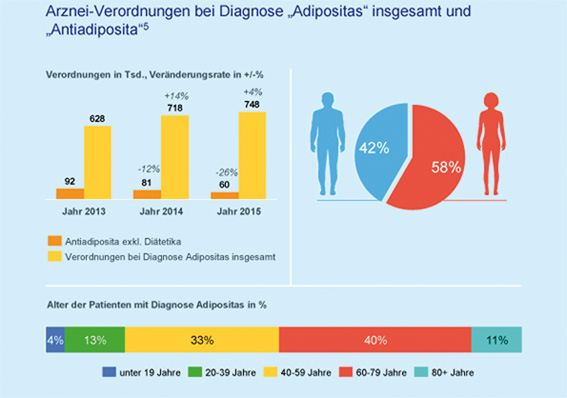
According to IMS Health, the prescription of anti-obesity drugs decreased between 2013 and 2015, their share of all prescriptions at diagnosis reduced from 15 % (2013) to 11 % (2014) to 8 % (2015). The sales by pharmacies have also confirmed this development for several years.
have increased e.g. B. Regulations for therapeutics in the areas of metabolism (ulcer therapeutics, antidiabetics), musculoskeletal system (non-steroidal anti-inflammatory drugs), cardiovascular (beta blockers, lipid regulators, diuretics) and thyroid. This could indicate that either the treatment of underlying diseases is in the foreground or that they are increasing. Over half of obesity prescriptions are for people over 60, and the proportion of female patients predominates, which is explained by their greater presence in older age groups.