


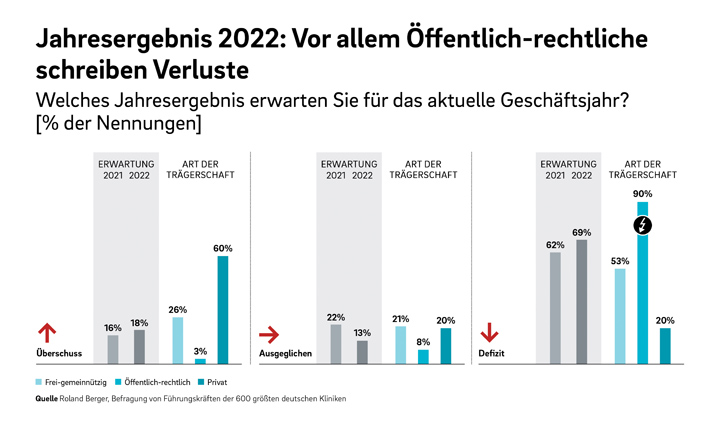
Forecast for 2022: 70 percent of hospitals will make a loss
08.09.2022 10:07
The economic situation of German hospitals has deteriorated further this year and especially in the past few months. Stagnating inpatient case numbers, the loss of COVID-19 compensation payments and loss of revenue due to a lack of staff are causing growing deficits. Nine out of ten public-run clinics are expected to post losses this year; across all types of funding, the figure is probably almost 70 percent. These are the most important results of Roland Berger’s “Hospital Study 2022”.
“Various factors are currently adding up to a worrying situation: the loss of COVID compensation payments, the massive staff shortage and high inflation are putting a massive strain on hospitals,” says Peter Magunia, partner at Roland Berger. “Because the reserves of many hospitals were already very low before Corona, many now have their backs against the wall.”
Figures from the current study, a survey among managers of the 600 largest German hospitals, prove this. 96 percent expect the economic situation to worsen in the next five years (2021: 83 %) - by far the worst value since the series of studies began in 2014. The federal government's compensation payments, which were intended to compensate for pandemic-related sales losses and cost increases, have hardly provided any relief: for more than half of those surveyed, the payments barely covered the additional expenses last year, and in the current year they have Gap even bigger. Almost 70 percent of the clinics expect a deficit this year (2021: 62 %), and for publicly owned hospitals the figure is even 90 percent (2021: 73 %). Liquidity development is also declining sharply: 62 percent expect a decline in 2022 (2021: 49 %).
A shortage of skilled workers and outpatient care will shape the future
In addition to the economic situation, hospital managers are increasingly concerned about the shortage of skilled workers. Many employees, especially in nursing, have changed careers or are no longer available to the same extent as before after two years of high additional workload. According to them, the most important topics in the next five years include digitalization, outpatient care and increasing pressure on costs and efficiency. Those surveyed are ambivalent about the fact that more and more patients are being treated on an outpatient basis instead of an inpatient basis: almost 60 percent see this as an opportunity and a risk, but only 12 percent perceive the development as a pure risk. For three-quarters, incentivizing hospitals by expanding outpatient billing options, for example through hybrid DRGs, plays a central role.
“New billing systems for outpatient service provision are important, but not a panacea,” says Janes Grotelüschen, partner at Roland Berger. “With the loss of inpatient revenue, hospitals urgently need to adapt their infrastructure and promote the development of efficient outpatient organizations.”