


Prizes awarded for multiple sclerosis research
01.08.2022 13:12
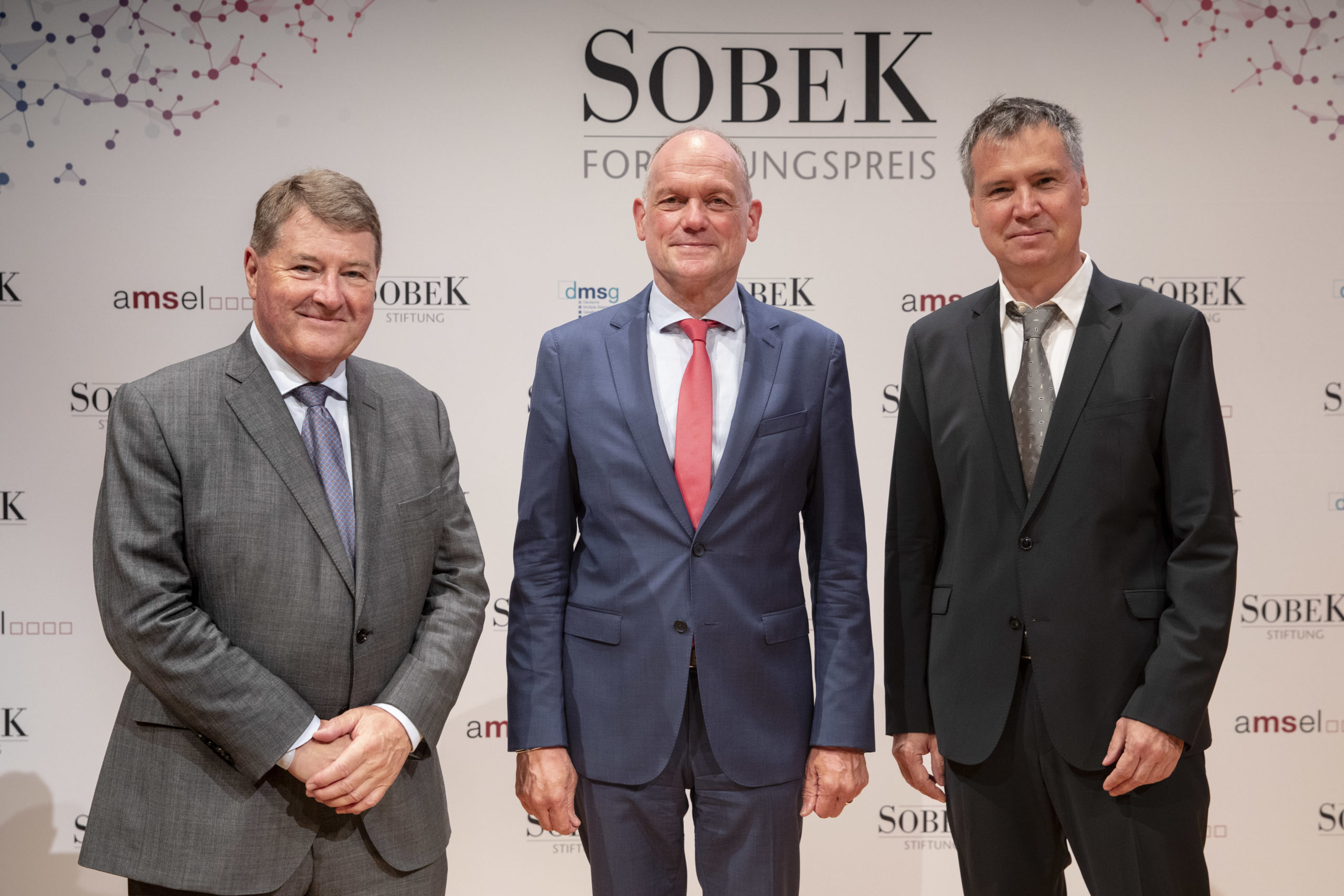
Due to the pandemic, the Roman, Marga and Mareille Sobek Foundation honored its winners from 2020 to 2022 in a joint ceremony at the Stuttgart University of Music. With a prize money of 100,000 euros, the Sobek Research Prize is Europe's highest award in the field of multiple sclerosis basic research and is awarded for a lifetime's achievement. The winner of the year 2021 is Prof. Dr. med. Alexander Flugel, Director of the Institute for Neuroimmunology and Multiple Sclerosis Research at the University Medical Center Göttingen.
The foundation's scientific advisory board selected Prof. Alan J. Thompson from the Queen Square Institute of Neurology, Dean of the Faculty of Brain Sciences at University College London, as the 2020 award winner. The Sobek Foundation honored the research work of Prof. Dr. with prizes for young talent for 2022 and prize money of 15,000 euros each. Anne-Katrin Pröbstel, senior physician in neurology at the University Hospital of Basel and research group leader in the Departments of Biomedicine and Clinical Research as well as the Research Center for Clinical Neuroimmunology and Neuroscience at the University of Basel, and Prof. Dr. Lucas Schirmer, managing senior physician and head of the section for neuroimmunology at the Neurological University Hospital Mannheim. The 2020 Young Talent Prize was awarded to private lecturer Dr. Benjamin Knier from the Clinic and Polyclinic for Neurology at the Rechts der Isar Clinic at the Technical University of Munich (TUM). The annual award ceremony takes place in collaboration with AMSEL eV, Aktion Multiple Sclerosis Sufferers, the state association of the DMSG, and the DMSG federal association as well as under the patronage of the Baden-Württemberg Ministry of Science, Research and Art.
Sobek Research Prize 2021 for insights into immune processes directly at the site of inflammation
Prof. Dr. med. Alexander Flugel, Sobek Prize winner of 2021, is an internationally recognized expert in basic research on the origin and development of multiple sclerosis in relation to immunological reactions (immunopathogenesis). His groundbreaking approaches to microscopy on living organisms (intravital microscopy) created the conditions for the direct observation of autoimmunological processes in the central nervous system (CNS) in experimental disease models of MS. His diverse findings have led to new perspectives on MS immunopathogenesis and have the potential to define the different stages of the disease processes more clearly in order to influence them therapeutically more efficiently.
He was the first to succeed in depicting the movement patterns of disease-causing (pathogenic) T cells until they overcome the blood-brain barrier. His method allows a direct view of what is happening at the sites of inflammation in the CNS. His discovery that autoaggressive T cells can maneuver almost effortlessly through the dense nerve tissue until they encounter local macrophages and are activated by them is also astonishing. This leads to an immunological chain reaction that ultimately marks the onset of the disease. Prof. Flugel researches and teaches at the University of Göttingen.
Sobek Research Prize 2020 for milestones in the diagnosis of progressive MS
Alan Thompson did pioneering work in elucidating the primary progressive form of MS, which is particularly difficult and to date has only limited treatment. He made a decisive contribution to expanding the McDonald criteria for the various forms of MS, which have been valid for many years, and making them binding for neurologists worldwide. These expanded “McDonald criteria” form the basis for the clinical therapy studies of the last two decades, which have enabled a more differentiated use of modern therapy options.
Ministerial Director Dr. Hans J. Reiter, head of the Baden-Württemberg Ministry of Science, Research and Art, praised the award winners in his laudation: “Their works are important pieces of the puzzle in recognizing and understanding the disease multiple sclerosis, its origins and its mechanisms. The hope of 2.5 million MS sufferers worldwide who still have to live with the unpredictable disease rests on your work and the results of your research. Thanks to your research, this disease will hopefully one day be curable. The awarding of the Sobek Research Prize for your lifetime achievements underlines the importance of your research and your outstanding scientific work and uses the prize money to support your continued commitment.”
Sobek Young Talent Awards 2020 and 2022
This year's young talent awards went to Prof. Dr. Anne-Katrin Pröbstel was honored for her scientific work in the field of B cell-mediated autoimmune diseases of the central nervous system. On the other hand, her colleague and sometimes co-author of scientific papers, Prof. Dr. Lucas Schirmer. Using the latest single cell sequencing techniques, he succeeded in identifying new cell type-specific disease mechanisms. The aim of the work of both young award winners is a better understanding of the disease of MS and the identification of new potentially therapeutic target structures in the tissue.
In 2020 the Sobek Foundation had private lecturer Dr. Benjamin Knier from the Clinic and Polyclinic for Neurology at the Rechts der Isar Clinic at the Technical University of Munich (TUM) was awarded the Young Talent Prize. Using optical coherence tomography (OCT), he was able to demonstrate that visible changes in the retina occur even in the preliminary stages of MS, which can provide clues to the later progression of the disease.