


praxisHochschule supports model project “Aids Passport”
03.06.2016 13:53
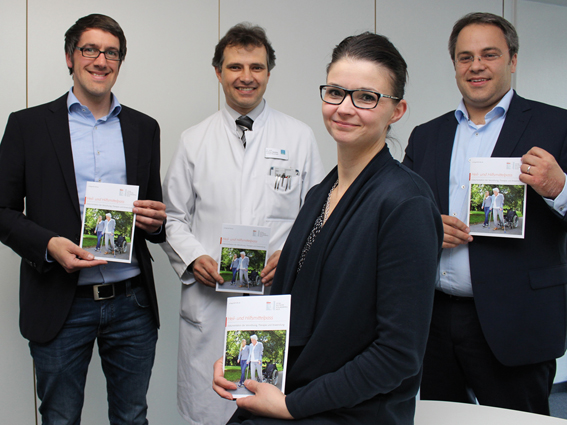
The praxisHochschule is involved together with the Ibbenbüren Clinic in the German Stroke Aid model project “Help Passport”. In mid-May, the clinic's first patients received their passport, which will be introduced nationwide after a successful test phase.
“However, collaboration across the so-called sectors is not a given,” explains Christina Habig, project manager for Stroke Aid. “The patient himself is often the medium who has to carry the information from A to B.” It becomes difficult when he is unable to do so. And that applies to the majority of patients, they are medical laypeople. Stroke patients are particularly affected by this.
The market for aids is now so large and specialized that only experts really know what they are about. This makes it all the more important that everyone involved in care has a medium through which they can communicate. The new notebook-sized passport (DIN A5) contains all important information about the patient's therapies, therapy goals, aids and nursing aids and documents developments over time. Everyone involved could make entries. Clinicians, specialists and general practitioners, therapists and medical supply store employees can communicate with each other in this way.
Data protection is also guaranteed because the patient is the owner of the passport and the guardian of his data. The test phase is now starting at the Ibbenbüren Clinic (St. Elisabeth Hospital site). Chief physician Dr. Florian Bethke and his team at the Ibbenbüren Neurological Clinic will issue the pass to 80 patients in the Stroke Unit if they are willing to take part in the model project. “This gives us the opportunity to do something for the patients beyond their stay in the acute clinic,” says Bethke happily.
praxisHochschule supports model project through research
In around six months the group will be replaced by Prof. Dr. Michael Wessels from the praxisHochschule Campus Rheine was asked about her experiences. “An exciting project,” says the university professor, “because it can offer real added value for patients and providers.” A control group of 80 patients without medical and medical aid passports will also be interviewed. In this way, the project partners receive information about how much patients can benefit from the pass and at the same time receive feedback on how to optimize the pass. The project is supported by the Steinfurt Stroke Network eV (NeSSt).