


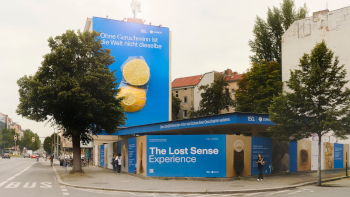
“Suddenly, part of my memories is missing” – Zurich draws attention to the loss of the sense of smell as a “forgotten” consequence of the pandemic
29.07.2025 13:35
Five years after the start of the coronavirus pandemic, Zurich Insurance is focusing on a less prominent but all the more profound long-term consequence: the loss of the sense of smell as a result of a COVID-19 infection and the associated impact on memory. "The loss of the sense of smell represents a significant reduction in the quality of life for those affected.
According to scientific findings, the sense of smell and memory performance are linked. If our sense of smell is impaired or even completely lost, this can also have a negative impact on our memory. Favorite moments that are closely associated with special scents can fade over time, and precious memories can be forgotten. "If you can no longer smell the sea, with which you associate a special vacation memory, or your favorite childhood meal, a part of your own story is suddenly missing," says Nicola Schmitz, Head of Strategic Brand Marketing at Zurich Group Germany. "With our campaign, which is explicitly dedicated to protecting these very favorite moments, we want to draw attention to the forgotten consequences of the pandemic. We also support those affected with scientifically based olfactory training to regain their sense of smell."
Immersive exhibition “The Lost Sense Experience” brings lost favorite moments back to life
According to scientific research, over four million people in Germany suffered from anosmia – a partial or complete loss of smell perception – as a result of COVID-19. Although the majority of those affected have regained their sense of smell, approximately 100,000 to 500,000 people still suffer from the consequences: everyday pleasures such as the scent of flowers, perfume, or fresh bread are no longer present. Dangers such as the smell of burning or spoiled food cannot be recognized. And precious memories associated with a wide variety of scents fade. With an elaborate experience campaign, Zurich is now paying special attention to those affected and also offering some hope for recovery.
The centerpiece of the campaign is the immersive exhibition "The Lost Sense Experience," running from August 1 to 3 at the Julia Stoschek Foundation in Berlin. The exhibition is based on real interviews with those affected: memories of smells from childhood, relationships, family, and travel were interpreted visually, aurally, and olfactorily using artificial intelligence – as imagery, soundscapes, and individually generated fragrances. The latter were created in collaboration with Algorithmic Perfumery (NL) and can be created by visitors on-site.
Through emotional storytelling and collaborations with international artists, "The Lost Sense Experience" brings a difficult-to-communicate topic to life within the framework of an artistically sophisticated production. Participants include Domestic Data Streamers (Barcelona), Mosche Sound Design, Sunst Studios, Studio De Pasquale (Studio Lilo), photographer Volker Conradus, and the directing duo Hometown (Berlin).
Back to the sense of smell with olfactory training
Visitors to the exhibition can also begin scientifically based olfactory training – with a free fragrance kit, which can also be ordered online. The goal: to regain the sense of smell – an experience as life-changing as its loss.
"Olfactory cells are nerve cells that are rebuilt; this isn't possible everywhere, but it is possible in the olfactory system. And this is the basis for stimulating the improvement of the sense of smell, and one way to do this is olfactory training. For post-viral olfactory disorders, olfactory training is currently the best-established and most promising form of therapy. It is lengthy and arduous, requiring a lot of stamina, but it demonstrably leads to regrowth of olfactory cells, the brain becomes better connected, the olfactory bulb becomes larger, and ultimately, people smell better than before," emphasizes Prof. Dr. med. Thomas Hummel, one of the world's leading experts on the sense of smell and taste. "The success of olfactory training depends on a variety of factors, such as age, gender, or the duration of the olfactory loss, so there are varying rates of improvement. On average, the rate of improvement for all patients through olfactory training is approximately 40 percent; for younger patients, it can be as high as 60 to 70 percent, depending on how long the olfactory loss has been ongoing."
Experts from renowned institutes and universities were consulted to ensure the scientific background of the initiative and to provide information on the current state of research on which the olfactory training is based. In addition to Prof. Dr. Thomas Hummel and Prof. Dr. Antje Hähner (both from the Interdisciplinary Center for Olfactory and Tasting at the Carl Gustav Carus University Hospital in Dresden), these include Dr. Helene Radbruch (Institute of Neuropathology at the Charité – Universitätsmedizin Berlin) and the internationally renowned neuroscientist Dr. Peter Mombaerts (Director and Scientific Member at the Max Planck Research Unit for Neurogenetics in Frankfurt/Main).