


Patient survey Datapuls 2021: 4 out of 10 Germans have never heard of the e-prescription.
19.05.2021 14:54
The technology is in place, but hardly anyone understands it: When the electronic prescription (e-prescription) is tested in a pilot project in the Berlin/Brandenburg focus region starting July 1st, four out of ten Germans (41.3 percent) will have never even heard of it. Furthermore, a good half of the population (52.2 percent) doesn't understand how the digital prescription works. This is shown by the representative survey "Datapuls 2021" conducted by the practice-based Wi-Fi and communication service provider Socialwave, which, in cooperation with the Hamburg-based market research institute Consumerfieldwork, surveyed 1,005 people over the age of 18 about the digitalization of the healthcare system.
„The e-prescription faces similar communication challenges to the electronic patient record. While the public debate focuses on technical feasibility, it overlooks the fact that the discourse is clearly missing the mark with the majority of insured individuals. Only four out of ten Germans admit to having a superficial understanding – and only 8.6 percent actually know – how the e-prescription works,” states Felix Schönfelder, Managing Director of Socialwave GmbH. However, the expert believes that early patient education is crucial for the acceptance and success of telemedicine projects.
A matter of trust: 80 percent choose their family doctor.
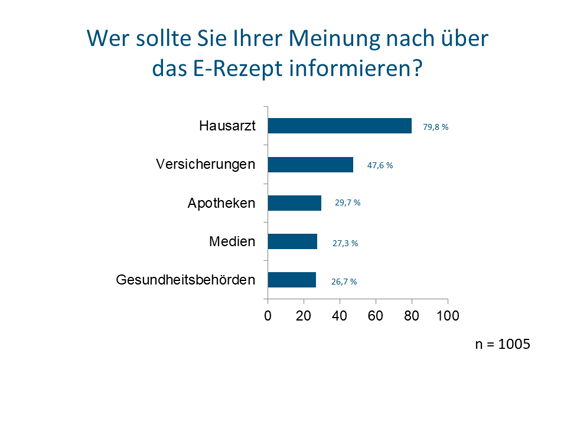
When asked who should fill the knowledge gaps, policyholders have a clear answer: Nearly 80 percent (79.8 percent) of Germans want to be informed about the electronic prescription (e-prescription) by their family doctor. Health insurance companies follow somewhat behind, but still with a clear mandate, as almost half (47.6 percent) of policyholders see them as having a duty to provide information. Pharmacists (29.7 percent), the media (27.3 percent), and health authorities/offices (26.7 percent) follow, roughly tied.
One third of Germans expect the electronic prescription to start in the second quarter.
When policyholders are asked about the introduction date of the electronic prescription (e-prescription), their assumptions vary widely: A good third (36.7 percent) expect it to launch in the first half of 2021. Nearly three out of ten Germans (27.7 percent) predict the second half of 2021, and one in five (21.8 percent) expect it in the first half of 2022. Another 5.3 percent anticipate the launch in the second half of 2022, and almost nine percent (8.6 percent) even expect it in 2023. "Considering that the trial run, the nationwide rollout, and the legal deadline are all part of the implementation process, around half of Germans are correct in their assumptions," says Schönfelder. After a three-month trial phase with selected doctors' offices and pharmacies in the Berlin/Brandenburg focus region, starting on July 1st, the nationwide rollout is scheduled for the fourth quarter of 2021. The e-prescription will only become mandatory for doctors and pharmacies from January 1st, 2022.