


Using quantum computing for personalized cancer therapy
11.08.2021 12:51
In order to develop individually effective therapy methods against cancer in the future, the German Cancer Research Center (DKFZ) wants to use the quantum computer in Ehningen as a partner of the Fraunhofer Competence Network for Quantum Computing.
Cancer patients often accumulate up to 100 terabytes of individual, usually very heterogeneous data over the course of their illness: blood and tumor values, personal indicators, sequencing and therapy data and much more. So far, this wealth of information has hardly been able to be used efficiently due to a lack of suitable processing mechanisms. Promising personalized therapeutic approaches for many cancers remain theoretical, and patients receive standard treatments.
The German Cancer Research Center (DKFZ) in Heidelberg now wants to advance research in this area with the help of quantum computing: “We want to find out how we can use a quantum computer to systematically process and use such heterogeneous data in order to find new, more targeted ways for patients, in which immunotherapy is less effective. Ultimately, the overarching question is: How can which patient benefit from which therapy?" says Dr. Niels Halama, head of the Translational Immunotherapy department at the German Cancer Research Center (DKFZ) and senior physician at the National Center for Tumor Diseases. This involves applied research questions such as: Which signaling cascades and biological processes play a role in the disease? How can we use this for individual therapy selection? Which questions are actually suitable for being solved by quantum computers?
From the simulator to the real quantum computer
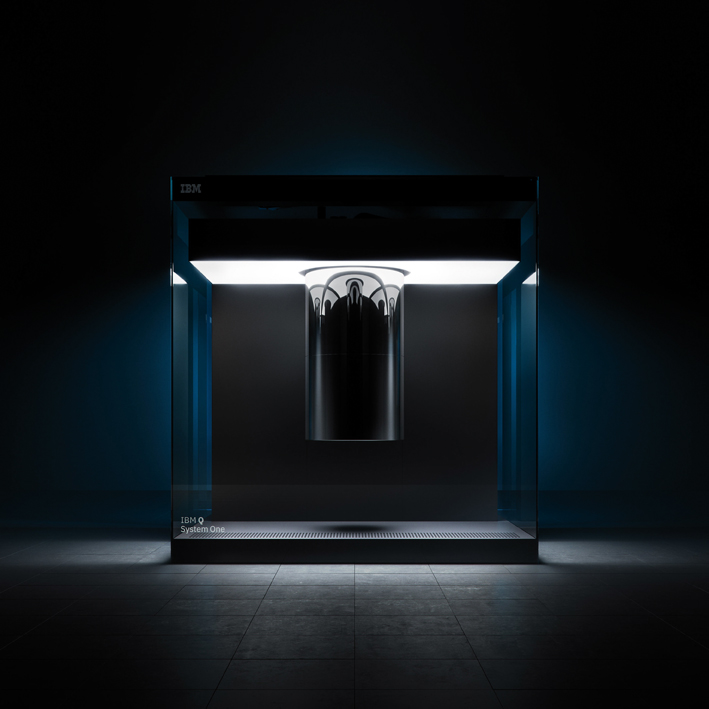
The DKFZ team has already developed the mathematical basics and has already gained initial experience with other systems and simulators available worldwide. However, says Halama, there is a huge difference whether you work on a simulator with perfect qubits or on a real quantum computer like the IBM Q System One in Ehningen. Only then can you see how stable it is at a certain level of complexity, where there are pitfalls, and what is possible.
Using the Ehninger system, the researchers now want to further develop and concretize their ideas in an application-oriented manner. Now it's a matter of finding out which algorithms are suitable for information processing, how they can be adapted or, if necessary, newly developed, but also how error corrections can be optimized. In order to research the possibilities of quantum computing for new cancer therapy approaches in an interdisciplinary manner, the DKFZ team is looking for additional cooperation partners from various areas of research and industry.
“We are very pleased to have won the DKZF as a cooperation partner,” says Prof. Raoul Klingner, Director of Research Management and Governance at the Fraunhofer-Gesellschaft. “The use of quantum computing in a field as complex and important as personalized cancer therapy highlights the potential that quantum computing offers for medicine and numerous industries beyond.”
Data protection, speed and flexibility are important criteria
For Halama, three things are very important when working with quantum computers: data protection, speed and flexibility. The scientists are still working with test data, but if real patient data is used in the future, “it will be a big plus that the Ehninger quantum computer runs under German data protection law and the data remains local,” says the doctor. The speed of calculations, which could make quantum computing superior to conventional computing in the future, is another important criterion, because for cancer patients every day counts and quick decisions are required. Because quantum processors can process data in parallel rather than one after the other, they have the potential to analyze large amounts of data in a fraction of the time it takes normal computers.
According to the doctor, the flexible, monthly ticket model that the Fraunhofer Quantum Computing Competence Network offers its partners is also interesting. “This allows us as an academic institution to use the system flexibly as needed, even without investing considerable sums over a long period of time,” says Niels Halama happily. “Fraunhofer is also an important scientific partner for us with whom we can build a bridge to application and the well-being of patients.”