


MHB receives 600,000 euros for vascular surgical health care research
26.05.2023 13:41
Around 18 million people worldwide die from cardiovascular diseases every year. This makes them one of the deadliest diseases of all. Currently, studies focus primarily on the heart, so the influence of vascular disease on this large number of deaths is often ignored. Such vascular diseases are a reliable indicator of death from heart disease. Although peripheral vascular diseases in particular, for example those of the main artery, neck or leg vessels, are associated with a particularly poor prognosis, preventative medicine often falls short of its potential for those affected.
The new VASCUL-AID consortium project Led by the Amsterdam University Medical Center (UMC), it now connects renowned research groups and experts from the fields of vascular medicine, registry research and big data in numerous European countries - including the MHB. Together, everyone involved wants to use patient data to develop suitable models for better risk prediction and patient-oriented prevention. Because it is currently not possible to predict the course of an aneurysm or peripheral artery disease. The patients will collect data themselves via the app - for example about daily activity, quality of life and heart rate. Six hospitals, including those at the University of Oxford, will also contribute such data. The aim of all researchers involved is to identify the markers of the high-risk groups and to use the collected values to make reliable predictions of undesirable effects and the progression of vascular diseases using artificial intelligence in order to provide the best possible individual prevention in care for all patients make possible.
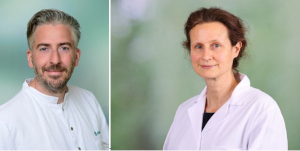
At the beginning of the month the VASCUL-AID project started with a Horizon2020 funding was launched by the European Commission in the amount of around 6 million euros. “For vascular surgical health care research at the MHB, joining this renowned European research consortium is both an opportunity and an appreciation. Around 600,000 euros of the total funding volume will go to the MHB,” says Priv.-Doz. Dr. med. Christian Alexander Behrendt, German sub-project leader of the VASCUL-AID project. Dr. Behrendt is currently acting chairman of the VASCUNET committee of the European Society for Vascular Surgery (ESVS) and medical-scientific director of the German Institute for Vascular Medical Health Research gGmbH (DIGG).
MHB is expanding its research network with a new project
Over the past ten years, Dr. Behrendt set up a research group that moved to the MHB in Neuruppin in 2022. “The development of vascular care research at the MHB offers many opportunities for internal and external collaborations. Through VASCUL-AID, the already outstanding expertise and excellent research network can be expanded to include national and international networks of research-based vascular surgery,” says Dr. Behrendt convinced. At the chair of Prof. Dr. Irene Hinterseher, section leader Vascular surgery at the Ruppin-Brandenburg University Hospital (urkb) and Vice President of the MHB, the various research projects in the areas of big data, machine learning and artificial intelligence in cardiovascular medicine are now to be brought together. “I am very pleased that we can make a significant contribution to this important task. Many people live in uncertainty about how their illness will develop. As a result, they have to be treated in hospital more often. Our primary goal is now to identify patients with an increased risk of worsening of their condition at an early stage, to develop a treatment plan tailored to them and thus to help them achieve a new quality of life,” says Prof. Hinterseher. “VASCUL-AID meets a great need for individual risk prediction and therapy. In the age of artificial intelligence and big data, this opens up many opportunities for those patients who often do not benefit from the achievements of clinical studies,” adds Dr. Behrendt.