


More caesarean section births since Corona
08.07.2022 13:46
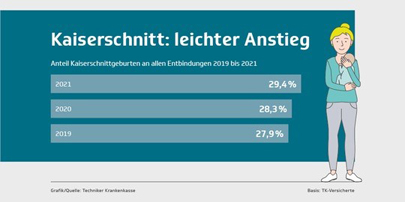
Since the beginning of the corona pandemic, more babies have been born via cesarean section. This is shown by a current evaluation of billing data from the Techniker Krankenkasse (TK). In 2021, almost every third baby was born on the operating table (29.4 percent). In 2019 the cesarean section rate was 27.9 percent, in 2020 it was 28.2 percent. This means that the cesarean section rate has increased for the second year in a row. The TK evaluation is based on all billed births of TK insured persons in the period from 2019 to 2021.
“This development surprises us. We expected the trend to continue and the cesarean section rate to continue to fall. “Many doctors and medical professionals are campaigning for fewer cesarean births,” says Dr. Jens Baas, CEO of TK. The increase in the rate of caesarean sections can hardly be explained by the pandemic alone. “We are also observing – as in the time before Corona – strong regional differences.” The cesarean section rate in 2021 in Saxony was 20.9 percent, while in Saarland it was 35.7 percent.
Role of the pandemic is unclear
Prof. Dr. Stephanie Wallwiener from the University Women's Clinic in Heidelberg says: “Explanations are difficult. We know that there were more caesarean section births in Germany during the pandemic, especially during the lockdown phases. Because many women were unsure and wanted better planning. At the same time, however, opposing developments can be seen in the regions." The cesarean section rate in the federal states with the lowest cesarean section rates - Saxony and Thuringia - increased by three percentage points, while there were falling rates in the majority of the other federal states, such as Baden-Württemberg especially in Saarland with minus five percentage points.
The CRONOS registry study is investigating connections to the pandemic, which currently includes a good 7,600 cases from 130 clinics. This shows: Pregnant women who have been infected with the coronavirus have a higher risk of a serious course of the disease. The caesarean section rate is higher among those infected and more babies are born earlier.
The increase in the rate of caesarean sections runs counter to the efforts of politicians and the medical profession
Politicians and actors in the healthcare system have been campaigning for fewer caesarean sections for several years. In 2016, the federal government declared the national health goal “health around birth” to promote healthy pregnancies and natural births. The German Society for Gynecology and Obstetrics (DGGG) presented the first S3 guidelines on cesarean section almost two years ago, in June 2020. The scientific recommendation for action based on current knowledge provides important information on correct and detailed advice for pregnant women, the indication, the time of the operation and the treatment afterwards. It is intended to provide greater clarity in which cases expectant mothers should be advised to have a section and when not.
TK boss Baas: “If a cesarean section is medically necessary, it is a blessing for mother and child. However, in many German delivery rooms, operations are still carried out too often and this can have negative consequences for the children's health. In their interest, we must therefore avoid cesarean sections that are not medically necessary. Other countries are leading the way: Sweden, Finland and the Netherlands have caesarean section rates below 20 percent.”
Caesarean section rate has doubled since the early 1990s to date
In Germany, the cesarean section rate has risen from 15 to around 30 percent since the 1990s. The Federal Statistical Office puts the peak at over 32 percent in 2011. In the following years, the number of cesarean sections fell slightly.
According to the TK birth report, previous maternal illnesses such as depression can promote a caesarean section. Pregnant women are often very worried before the birth, especially when they are expecting their first child. Fears vary from person to person. Some women are afraid of not being able to give birth vaginally, while others are afraid of having to give birth by cesarean section. Through good communication and detailed medical information, midwives, doctors could help expectant mothers to better classify their worries and reduce stress. “Great fears and psychological blockages can, but do not necessarily, justify a caesarean section,” explains Professor Wallwiener. “These are circumstances under which a normal birth could also take place under certain conditions.”