


First curriculum for internal medicine in emergency departments developed – geriatricians contribute their expertise
06.08.2024 14:04
An increasing number of very elderly patients are being treated in emergency rooms – a consequence of demographic change. Accordingly, expertise in geriatric medicine is becoming ever more important. Now, for the first time, internal medicine experts have developed a curriculum for the advanced training course "Clinical Acute and Emergency Medicine – Focus on Internal Medicine" – and it includes a comprehensive chapter on geriatric aspects.
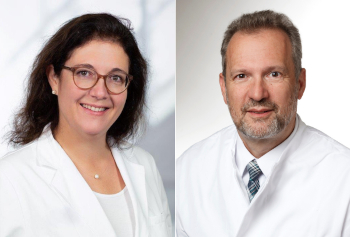
„The curriculum provides concrete recommendations on training content and can be used as a helpful tool to provide structured support for the continuing education of physicians, including in geriatric topics,“ says Professor Katrin Singler, board member of the German Society for Geriatrics (DGG). „The fact that we were involved in this extremely important curriculum clearly demonstrates that the relevance of geriatric expertise is increasingly recognized and utilized in other medical specialties. We are very pleased about this.”
In her role as spokesperson for the German Society for Geriatrics (DGG) working group on emergency and intensive care medicine, Singler is also a co-author of the new curriculum. This curriculum was developed under the leadership of the German Society for Internal Intensive Care and Emergency Medicine (DGIIN) and the German Society for Internal Medicine (DGIM), along with their respective specialist societies. "The 50-page document was created as an interdisciplinary project within just one year and aims to provide greater guidance and an overview of continuing education content," says Singler, senior physician at the Department of Internal Medicine 2, specializing in geriatrics, at the Paracelsus Medical Private University Nuremberg.
Special Geriatrics Chapter: Knowledge and skills are clearly defined.
The curriculum clearly defines necessary theoretical knowledge, practical skills, and aspects of professional conduct for all involved parties. Theoretical knowledge, specifically within the geriatrics chapter, includes, for example, fundamental geriatric concepts such as frailty and sarcopenia, age-specific drug therapy, and atypical symptoms in geriatric patients. Practical skills encompass specific assessments of frailty and delirium, as well as adapting therapeutic measures to the expected patient outcome. Regarding professional conduct, the curriculum includes points that take into account age-specific characteristics of patients, such as multimorbidity, cognitive, sensory, and functional impairments. "The recommendations are also closely aligned with the content of the new..." S3 guideline on comprehensive geriatric assessment in hospitalized patients”,” explains Katrin Singler.
Curriculum ensures geriatric expertise in emergency rooms
The newly developed curriculum covers not only geriatric aspects but also other areas of internal medicine, such as gastroenterology, cardiology, nephrology, and pulmonology. It serves as an important guideline for the state medical associations, which ultimately determine the specific examination content. "This curriculum guarantees that elderly and very elderly people can confidently go to the emergency room because the necessary expertise is demonstrably available on-site," summarizes co-author Professor Hans-Jürgen Heppner, Director of the Department of Geriatrics at Bayreuth Hospital and member of the German Society for Geriatrics' (DGG) working group on emergency and intensive care medicine.
Click here to go to Curriculum „Clinical Acute and Emergency Medicine – Focus on Internal Medicine“
(doi: 10.1007/s00063-024-01113-3)