


Decentralized storage media in patient hands at the start
13.07.2011 10:05
Supplementing the health card with emergency data and an electronic health record (ePA) as a flash memory card
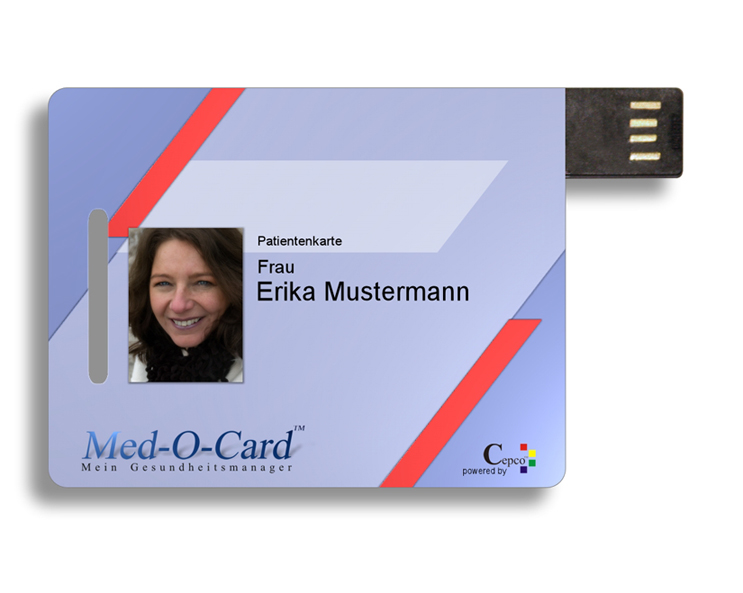
By September 30, 2011, all German medical practices will be equipped with eGK card terminals so that health insurance companies can begin issuing the electronic health card as planned on October 1. This system will be supplemented by a variant that fulfills a long-standing demand of the German Medical Association (BÄK) and complements the current minimal offering of the health card with emergency data with an electronic health record (ePA): At the instigation of the BÄK, electronic patient records (ePA) are to be implemented as quickly as possible, with data stored decentrally on flash memory cards that—like the eGK—remain in the patient's possession; however, with the significant difference that these flash memory cards can store individual patient data. To this end, MED-O-CARD AG (Frankfurt) and the Fraunhofer Institute ISST (Berlin) signed a corresponding cooperation agreement on May 31, 2011, entitled "Med-O-Card in the R&D Project Electronic Health Record (ePA) pursuant to Section 291a SGB V."„
On this electronic patient record (ePA) – a flash memory medium similar to a bank chip card with a storage capacity of 8, 16, or 32 gigabytes – every physician will be able to store patient-specific data in encrypted and signed form. "Whether a patient uses an ePA in the future is and will remain their decision," explains Prof. Bartmann of the German Medical Association. "However, the cooperation agreement lays the foundation for patients to have the choice of where their data is stored." Dr. Gunter Pollanz, CEO of MED-O-CARD AG, explains: "With this, both the Federal Ministry of Health (BMG) and the German Medical Association are taking the next logical step, as storing data on a decentralized storage medium like the MED-O-CARD in the patient's hands is a constitutionally protected civil right."„
Pollanz has been advocating for years that patient-specific data should be in the patient's hands, because only then does the patient have sole and unrestricted access to their own data. Furthermore, the patient can immediately access programs such as integrated care, radiology, medication risk analysis, a digital maternity record, or nursing care data. Pollanz explains: "MED-O-CARD anticipates hundreds of diverse applications and makes its platform available to every health and lifestyle service." The "ePA on decentralized data carriers" project will be presented by Med-O-Card and Fraunhofer at MEDICA in November 2011 as a prototype with a selection of programs.