


Blood cancer cells start a signaling cascade
13.08.2012 12:39
Freiburg researchers are uncovering how pathological cells activate themselves in chronic lymphatic leukemia.
Scientists led by Prof. Dr. Hassan Jumaa from the Center for Biological Signaling Studies (BIOSS) at the University of Freiburg, Chair of Molecular Immunology, have discovered a new mechanism that causes helpful immune cells to be converted into malignant cancer cells. In chronic lymphatic leukemia (CLL), one of the most common blood cancers in the Western world, the cells hold the key to the pathological changes within themselves, as the researchers report in the journal “Nature”. Understanding these underlying mechanisms could enable new therapies with fewer side effects.
In a healthy person, B lymphocytes, a subgroup of white blood cells, have the task of producing antibodies to fight off infections. Special receptor molecules in B lymphocytes recognize pathogens using the key-lock principle and then switch on the production of antibodies. In CLL, however, unusual forms of these receptors cause the diseased B lymphocytes to multiply uncontrollably and thereby crowd out the healthy cells of the immune system.
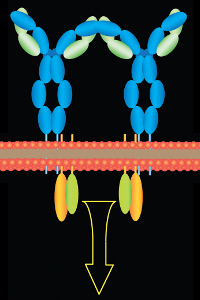
“It was previously assumed that the body's own substances docked onto these receptors and thus activated the CLL lymphocytes,” says Jumaa. “We have now been able to show that internal building blocks of the receptors are responsible for the development of CLL.” In B lymphocytes from CLL patients, the receptor building blocks HCDR3 and FR2 are shaped in such a way that they represent the lock and key of the receptor. “As a result, neighboring receptors on the same cell activate each other and trigger a signaling cascade that ultimately leads to the uncontrolled division of the cancer cells.”
Approaches such as chemotherapy are currently available as treatment for CLL, which suppress the symptoms of leukemia in a relatively non-specific way. “Based on decoding the molecular biological basis of CLL, we now want to find out how we can make this knowledge usable for patients,” says Marcus Dühren-von Minden, another author of the study. “It is conceivable that in the future patients could be given multiple copies of the FR2 key, which would then dock onto the receptors and prevent neighboring receptors from binding to one another. This stops the momentous signaling cascade.” This means that the course of the disease could be intervened much earlier than before and without major side effects.
The research group is a member of the BIOSS Cluster of Excellence at the Albert Ludwig University of Freiburg. The study is part of a collaborative project in which researchers from the university and the Max Planck Institute for Immunobiology Freiburg work with doctors from the University Hospital Freiburg to gain new insights into the development of CLL. It is funded by the German Cancer Aid and the German Research Foundation.
Caption: On white blood cells from patients with chronic lymphocytic leukemia, two receptors on the outside of the cell dock together (top, shown in blue) and trigger a signaling cascade via building blocks on the inside of the cell (bottom). This is an important part of the transformation of the immune cell into an uncontrollably multiplying cancer cell.