


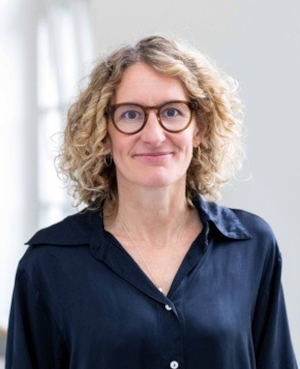
Appointment of pediatric cardiologist Katharina Schmitt as Germany's first W3 professor of developmental pediatrics
28.11.2023 15:36
The German Heart Center of the Charité (DHZC) is breaking new ground - to provide the best possible care for patients with congenital heart defects and to carry out intensive research in this area.
Thanks to the great advances in pediatric heart medicine, patients with severe congenital heart defects now reach adulthood in most cases. Unlike a few decades ago, pediatric heart medicine is no longer primarily about the survival of those affected, but rather about ensuring a high quality of life in all phases of life.
To correct complex malformations, complex operations and long hospital stays are often necessary in the first years of life. It is important to support the correspondingly difficult start in life as best as possible and holistically in order to counteract delays in the children's physical, motor or psychological development early and in a targeted manner.
Lifelong care
Even after discharge from the hospital, close, interdisciplinary and specialized support is necessary - for life.
The DHZC clinics for congenital heart defects - pediatric cardiology and for surgery for congenital heart defects - pediatric heart surgery are among the leading international centers for the lifelong care of patients with congenital heart defects.
However, there is still comparatively little data on long-term development and quality of life for the growing number of adolescents and adults with congenital heart defects - and correspondingly few well-founded and uniform care concepts.
Innovation and research close gaps in care
With the establishment of a previously unique W3 professorship for developmental pediatrics in cardiac medicine at the German Heart Center at the Charité, the basis for establishing a developmental pediatric center is now being created - and thus the framework for the structured, targeted development of the quality of care for patients with congenital heart defects of intensive research and teaching.
The main focuses are:
- “Electronic Patient Reported Outcome Measures (ePROMs)”: Assessments of health status and quality of life by patients themselves are increasingly being used to evaluate treatment success. The development of concepts for the regular recording and evaluation of these assessments is becoming increasingly important in many areas of medicine. The DHZC aims to play a leading role in the field of congenital heart defects.
- Family Centered Care (FCC) concepts: Parents and siblings of patients with congenital heart defects play an important role in the recovery process and must be integrated into the treatment team accordingly. At the same time, the burden on the entire family associated with the diagnosis of a serious heart defect must be taken into account in the treatment concept.
- The expansion of existing research networks in the area of both basic research and clinical research, in particular with the German Center for Cardiovascular Research, the Competence Network for Congenital Heart Defects and the Central Register for Congenital Heart Defects.
Appointment of an experienced top doctor
Prof. Dr. med. Katharina Schmitt completed her medical studies at the Friedrich Schiller University in Jena and at the Charité – Universitätsmedizin Berlin. She has been part of the team at the Clinic for Congenital Heart Defects - Pediatric Cardiology at what is now the DHZC since 2002.
Katharina Schmitt is a specialist in pediatric cardiology with additional qualifications in intensive care medicine and “EMAH – adults with congenital heart defects”.
She completed her habilitation in 2011 and was appointed adjunct professor at the Charité – Universitätsmedizin Berlin in 2019 in recognition of her achievements in research and teaching.
Parallel to her appointment as professor of developmental pediatrics in cardiac medicine, Katharina Schmitt also took over the management of psychocardiology at the DHZC. See our separate message (link below this message).
“The fact that more and more patients with severe congenital heart defects are reaching adulthood is a success of medical progress, but at the same time it is also a new major challenge that we at the DHZC want to face with all our strength,” says Prof. Schmitt. “My heartfelt thanks go to all colleagues who have accompanied us on this path and will continue to accompany us!”