


AOK welcomes state recommendations on cross-sectoral healthcare providers
13.11.2025 14:08
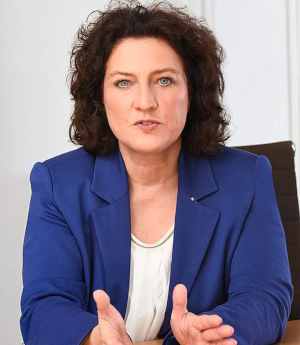
On the occasion of the first reading of the law on the adaptation of the hospital reform (KHAG) on November 12 in the German Bundestag, the Chairwoman of the Board of the AOK Federal Association, Dr. Carola Reimann, comments on the latest KHAG amendment proposals from the Federal Council:
„"The Federal Council's Health Committee is calling for further restrictions on quality standards for hospitals. The states also want to prevent greater involvement of health insurance companies in exceptional decisions. We firmly reject these changes, as they compromise treatment quality and patient safety.".
However, the states are right on another point: they make sensible proposals for expanding the range of services offered by cross-sectoral providers, which, under current regulations, are too heavily focused on providing inpatient services. Instead, these facilities should place greater emphasis on medical and nursing care. The recommendations of the Federal Council's Health Committee are absolutely correct in this regard and should be taken into account in the further course of legislation. These facilities at the interface between outpatient and inpatient care can indeed create added value for the security of care for people, particularly in structurally weak regions, if they combine outpatient and nursing care with overnight accommodation. Together with the hospital operators Sana, Asklepios, and Thüringen-Kliniken, as well as the German Protestant Hospital Association, we have developed a corresponding proposal. We are committed to ensuring that the Hospital Reform Adaptation Act is amended accordingly.
Regarding the future financing of hospitals, we still see a need for improvement: The one-year postponement of standby funding should be used to develop a scientifically sound instrument for assessing needs. After the introductory phase, the transition to needs-based standby funding, independent of the number of cases, should take place as soon as possible, based on planned case numbers, so that hospitals essential to the population are financially secure. The AOK is not alone in this demand. Important stakeholders such as the German Hospital Federation have also advocated for case-independent financing of hospitals. If policymakers adhere to the planned financing arrangement based on actual case numbers, there is a risk of perverse incentives and economically motivated treatment decisions at the expense of patients.“