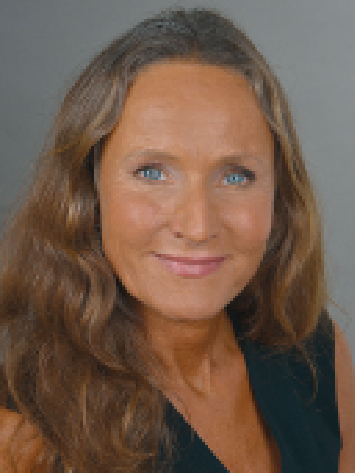
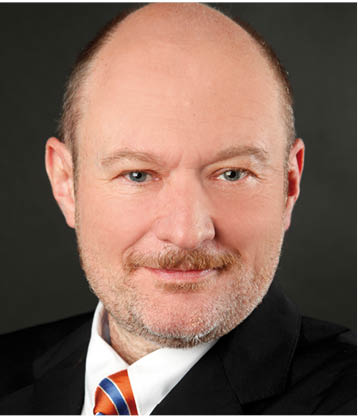
In an interview with “Monitor Health Services Research” Dr. med. Claudia Ritter-Rupp on the noticeable increase in mental illnesses, as well as possible ways and necessary structural changes to meet the resulting demands on our health system. One approach for the practicing specialist in psychosomatic medicine and psychotherapy is “psychoneuroimmunology”, a research area that deals with the interactions between psychological and immunological factors.
> Ms. Dr. Ritter-Rupp, before we go into the topic of “psychoneuroimmunology”, let’s first talk about you personally: You have represented practicing psychotherapists on the board of the Bavarian Association of Statutory Health Insurance Physicians (KVB) since 2017. What are your priorities?
As a specialist in psychosomatic medicine and psychotherapy, I am on the board of the KVB, of course, committed to better remuneration for psychotherapeutic services, but also to better and, above all, timely psychotherapeutic care for patients.
We have been very busy in the last few months implementing the psychotherapy guidelines that came into force on April 1st of this year, which were intended to create faster access to highly qualified psychotherapy and make the supply of care more flexible. This faster and better accessibility of psychotherapists and the establishment of consultation hours and acute therapies meant an enormous organizational effort for the practices.
Based on my own professional experience in my psychotherapeutic practice, I also believe that intensive exchange and good interdisciplinary collaboration with specialist and family doctor colleagues is important. Cooperation for the benefit of patients works best when, in addition to good networking, there is an understanding and appreciation of the different competencies, but also respect for the differences.
Mental illness seems to be on the rise. What impact does this increase have on the healthcare system?
In fact, we have seen a significant increase in mental illnesses nationwide in recent years. These diagnoses are now the second most common reason for sick leave after diseases of the musculoskeletal system. Often it is not just a short-term episode, but rather longer-term phases of incapacity to work. Reasons for this include, for example, the increasing concentration of tasks and activities in our modern working world, which contribute to individuals being exposed to ever increasing pressure and stress. I have seen many patients who, after many unnecessary examinations and lengthy somatic treatments, were only able to admit very late that they had psychological or psychosomatic problems and needed psychotherapeutic help. Unfortunately, mental illnesses are often still subject to social stigma. However, the later such help is sought, the more difficult and lengthy the healing process may be and the higher the costs for our healthcare system.
A greater need for treatment also arises, among other things, from the fact that the great importance of psychotherapeutic co-treatment has been increasingly recognized not only for psychosomatic complaints, but also for many somatic clinical pictures. For example, depression is now considered one of the main risk factors for heart attacks. In the treatment of cancer and many chronic diseases, it has also been shown that psychotherapeutic co-treatment significantly improves the prognosis, but we will come to that later on the topic of “psychoneuroimmunology”.
What needs to be done or what structural changes are necessary to meet the increasing demand in outpatient psychotherapy?
On the one hand, through the psychotherapy reform in April of this year, we have created better conditions for faster and more flexible access to psychotherapeutic care, but on the other hand, we now urgently need a new requirements planning that is adapted to the current care needs, in which, in addition to social data such as age and gender, also socio-economic Factors such as unemployment or income situation should be taken into account. We can tend to assume that a relatively good supply situation with a wide range of psychotherapeutic services has now developed in the large cities. However, the situation in smaller cities and towns is still inadequate.
Let us come to the “psychoneuroimmunology” you mentioned, which has increasingly become the focus of attention and highlights previously unconsidered connections in medicine and opens up new opportunities. What does “psychoneuroimmunology” mean and what is special about it?
“Psychoneuroimmunology” (PNI) is an area of research that deals with the interactions between psychological and immunological factors. It shows what influence psychological and psychosocial factors have on the immune system as well as on the hormonal and nervous systems and vice versa.
The special thing about the PNI is that for the first time in the history of science it has succeeded in building a bridge between the so-called soft data of psychology or the social sciences and the objective data of the laboratory, for example the analysis data of the immune system. If you determine the number and activity of certain immune-relevant cells, you can determine what functional state the immune system is in. By correlating these immunological measurements with psychological data, PNI, which has only existed as a science for a good 40 years, was able to clearly demonstrate that psychological stress and different forms of stress have a fundamental influence on our immune system and thus ultimately on the front line of our health. Whether we stay healthy or get sick depends largely on the stress factors we are exposed to. Stress is associated with certain immune changes that can trigger viral diseases and even cancer. In addition, chronic stress leads to significantly increased inflammatory activity in the body, which can be associated, on the one hand, with the occurrence of autoimmune diseases and, on the other hand, through retroactive immune-neuronal connections, with an increased risk of mental illnesses such as atypical depression and exhaustion. It is therefore important to positively influence the immune system with good stress and self-management. PNI research has proven that the development of chronic inflammatory processes in the body as well as the depression and exhaustion syndromes that are often associated with them can be effectively counteracted. For this reason, PNI offers an ideal, scientifically based starting point for outpatient psychotherapeutic care and also for the treatment of many chronic illnesses.
Why does “psychoneuroimmunology” have the potential to get closer to the answers to major, as yet unanswered questions in medicine, for example: What are autoimmune diseases all about and how can they and other chronic diseases be treated therapeutically more efficiently than before?
The basic principle of the various, mostly chronic, autoimmune diseases with their very different symptoms is that the immune system acts against its own body and therefore does not limit itself to its actual task, namely destroying bacteria, viruses or even diseased cells. The best-known autoimmune diseases that are still difficult to influence therapeutically include multiple sclerosis, Crohn's disease, ulcerative colitis, systemic lupus erythematosus and rheumatoid arthritis. They are an extremely interesting field of research for PNI because it can be shown that body and mind are inextricably linked in the development of an autoimmune disease. These are findings that are of great importance for holistic medicine, as it seeks to overcome the separation of body and soul and thus holds out the prospect of new therapeutic approaches that go far beyond mechanical treatment with operations or medication. Prof. Dr. Dr. Christian Schubert, head of the laboratory for psychoneuroimmunology at the University Clinic for Medical Psychology in Innsbruck, who has been researching this topic intensively for many years, assumes that psychological dysfunctions are directly linked to the development and maintenance of an autoimmune disease. According to his ideas, the immune system is used by the psyche to a certain extent in order to turn aggression that should actually be directed outwards against one's own body. The PNI creates a new approach to illness and therefore has the particular potential to view the connection between illness and health from a completely new perspective. Until now, it was believed that decoding DNA might be enough to understand and cure diseases. The PNI goes a decisive step further here by making it clear that reading out the cell structures is not enough, but that we also have to take a person's psychological circumstances and social living conditions into account if we want to help them overcome their illness - which is what we do would be back to the already mentioned holistic approach to medicine.
What does psychotherapy expect from psychoneuroimmunology?
The PNI research results objectively confirm the immunological effects of psychotherapy for the first time, for example by detecting positive changes in inflammatory parameters. This could potentially be of great importance for future developments in outpatient psychotherapy and be extremely interesting for the healthcare system, not least from a cost perspective. If it can now be shown that the psyche has such an influence on illness and health, new psychosomatic-psychotherapeutic treatment options could arise in the future, especially for chronically ill patients who have so far only been treated with medication or surgery, based on changed activities of stress - and immune system. In addition to autoimmune diseases, another example concerns the area of cancer: Given the findings that the stress system can influence the activity of cancer cells both through direct vegetative innervation and through stress hormones, the possibility of psychotherapeutically influencing cancer by changing the activity of the stress system is also possible very exciting topic.
What motivated you to get involved in such a technically demanding topic despite the immense amount of work in your office?
Since I consider outstanding innovative approaches that represent a great opportunity for standard care to be indispensable, I worked hard in my role as second deputy chairwoman of the board of the Bavarian Association of Statutory Health Insurance Physicians to ensure that the KVB participates in an innovation fund project as a consortium partner, in which a promising psychoneuroimmunological approach for chronically ill people is to be tested. The project is entitled “Personalized therapy for rheumatoid arthritis based on the model of psychoneuroimmunology” or PETRA for short.
Why do you think PETRA is a special project that should be supported by the Innovation Fund?
The PETRA project was submitted as part of the third wave of funding from the Innovation Fund and focuses on patients with rheumatoid arthritis, a disease in which inflammatory processes directed against the body, in this case the inner lining of the joints, play a major role. The aim of the project is to demonstrate that a psychotherapeutically guided strengthening of the self-management of the participating patients has a positive effect on the inflammatory parameters and thus leads to a reduction in disease flare-ups. The patients are addressed and closely cared for by the family doctors or rheumatologists. In addition, demonstrating the influence of the psyche on immune activity in rheumatoid arthritis could fundamentally create a different approach to a physical disease.
The practical approach of this project is to carry out so-called “activating skills training”. The training takes place in small groups and is led by highly qualified psychotherapists. As part of the standardized intervention, patients should be enabled to actively improve their health and life skills. The focus is therefore on the topic of life and health skills. The participants learn how they can manage their health themselves by learning, with the help of the therapists involved, to recognize the psychologically critical moments for them and to deal with them constructively. The PNI project - and that is why, in my opinion, it deserves to be supported by the Innovation Fund - promises a significant, immunologically objectively measurable improvement in the disease progression of patients with rheumatoid arthritis, combined with a significant reduction in medication intake due to the improved immunology.
Who is involved in the project?
In addition to the KV Bayern, numerous well-known partners and experts are involved in the project, including the University of Witten/Herdecke as consortium leader and overall coordinator of the project, the BKK Bavarian State Association, the professional association of rheumatologists, the Bavarian regional associations of the professional association of contract psychotherapists and the German Psychotherapists Association, the professional association of preventologists, the Medical University of Innsbruck, the Ludwig Maximilian University of Munich and the Institute for Applied Statistics. The Bavarian General Practitioners Association and the German Rheumatism League, Bavarian regional association, are cooperation partners.
If PETRA were included in standard care, what would happen to psychotherapeutic service providers?
In my opinion, the innovation fund offers optimal conditions for testing new, promising forms of care, as shown in the example of the PETRA project. Scientific monitoring and evaluation of projects with the aim of transferring useful concepts into standard care is also required by the Innovation Fund. Although the PETRA project focuses on rheumatism patients, patients with other chronic diseases can also benefit from the PNI findings. If the PETRA study shows that the management interventions carried out in the project result in significant changes in the disease activity of rheumatism patients and PETRA is adopted into standard care, the next logical step will be to use everything available Spectrum of psychotherapy is examined step by step for its effectiveness in chronic inflammatory diseases and, if necessary, incorporated into standard care. This is of enormous importance for medicine because existing paradigms are further developed and it becomes increasingly possible to treat patients more holistically. This applies to both the therapeutic area and preventive aspects. <<
Miss Dr. Ritter-Rupp, thank you for the interview.
The interview was conducted by MVF editor-in-chief Peter Stegmaier.