On October 2, 2019, the Center for Public Health and Services Research Tübingen (ZÖGV) was founded at the University Hospital of Tübingen (UKT). The aim of the center is to link university medicine more closely with health services research and the public health system (ÖGW). Health care research projects are to be initiated and processed in the ÖGW, methods of health care research are to be deepened and both areas are to be strengthened
>> The desire to establish such a center at the UKT has existed since 2015, as was presented at the opening of the center. Prof. Dr. Michael Bamberg, Chief Medical Director and Chairman of the Board of the UKT, hopes that this “lighthouse project” will provide new insights through research in public health. The focus is on the population perspective.
Health promotion and prevention also play an important role.
The focus of medical faculties has so far been almost exclusively on basic and clinical research, emphasized the dean of the Tübingen Medical Faculty, Prof. Dr. Ingo Autenrieth. He emphasized that university medicine needs to broaden the scope and look at the entire health care system. This translation has not yet taken place. He emphasized that in addition to biomedical research, health services research is also becoming increasingly important.
In his welcoming speech, the Baden-Württemberg Minister for Social Affairs and Integration Manne Lucha addressed the central question of health services research: “What's the point?” Even if the freedom of science exists, almost like a fundamental right - the question must still be asked: who benefits from it. This is the request of health services research in the area of public health in order to clarify population-related questions about illness and health.
The topics are diverse and range from infection and vaccination protection, prevention, cardiovascular and tumor diseases, climate change, regional care planning to emergency care for the population and integration into health systems as well as consideration of technical developments such as telemedicine. The topic could therefore also be called population medicine, as a term that describes the health and social situation of the population. Social Minister Lucha referred to the neighboring district of Reutlingen, represented by District Administrator Thomas Reumann, where numerous such projects are already being pushed forward.
The representative of the Ministry of Science, Dr. Carsten Dose, highlighted the interactions between the individual, the state and science and the complexity of the factors influencing the individual health of citizens. Science not only has the responsibility to generate new knowledge, but also to reflect on the transfer of knowledge and to place greater emphasis on new forms such as interprofessionalism or prevention in order to benefit the population.
Dr. Ute Teichert from the Federal Association of Doctors in the Public Health Service (ÖGD) spoke out in favor of a better link between science and ÖGW in order to direct the professional and public focus on the area of “public health”. Not least through the founding of the ZÖGV, but also through the founding of the Institute for General Medicine and Interprofessional Care in 2015 and the name extension of the Institute for Occupational Medicine, Social Medicine and Health Care Research (2012), Baden-Württemberg stands out positively.
The keynote lecture, presented by Dr. Andreas Zapf, President of the Bavarian State Office for Health and Food Safety, looked at the historical development of the public health service and the historically changing need for research. At that time and especially today, workforce and health were at the center of public health efforts. His message was unmistakable: “people must remain the focus”. The public health service must act as a moderator of evidence-based but also value-based medicine.
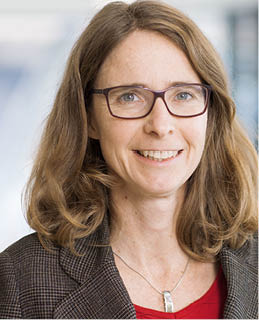
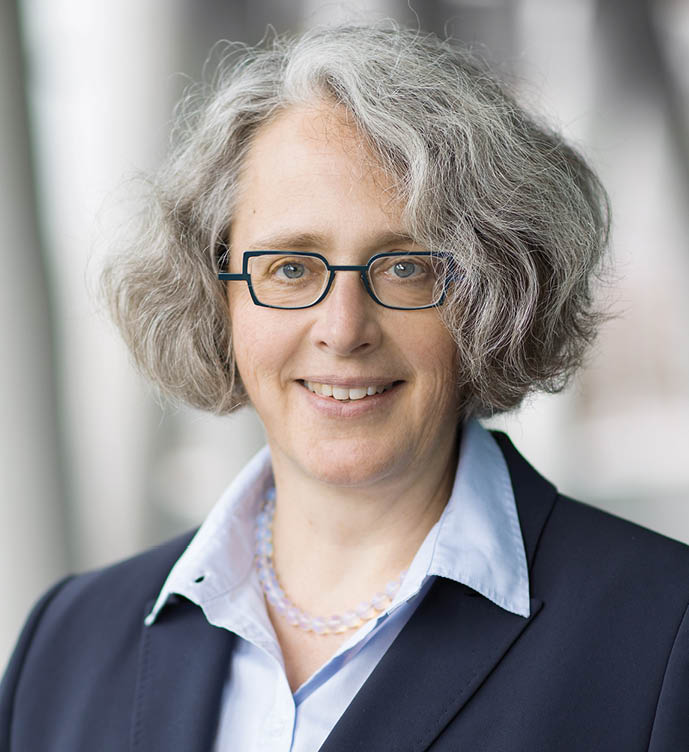
Prof. Stefanie Joos, Medical Director of the Institute of General Medicine and founding board member of the ZÖGV, referred in her presentation to the relevant differences between health services research and clinical research: while clinical research relies on high internal validity and ensures the best possible study results through isolated conditions, Health services research wants to research the effects in a real environment with many influences and to ensure a high external validity in the studies. Prof. Monika A. Rieger, medical director of the Institute for Occupational Medicine and also founding board member of the ZÖGV, used the example of company health management to show that in health services research it is necessary to ask fundamental questions about the offer of health-related services; Because: if it is unclear what and why is offered and used in practice, all recommendations for the design of health-related measures reach their limits.
With PD. Dr. med. dent. Fabian Hüttig and PD Dr. med. Florian Junne, two former members of the Baden-Württemberg Junior Academy for Health Care Research gave an impressive account of the significant impulses for further engagement with health care research topics that resulted from the methodological and content-based support of their projects within the framework of the state funding for health services research that existed from 2011 to 2017. Start-up funding from the Ministry of Social Affairs and Integration of Baden-Württemberg as well as from the University Hospital and the Medical Faculty of Tübingen for the ZÖGV can now have a similar effect.
During the symposium, representatives from science and the Baden-Württemberg health authorities called for the use of cross-sectional expertise and partnership-based collaboration between science and the health authorities and all those involved in the public health system. The wish expressed for the new center was to act as a moderator and source of inspiration and to create an academic connection to the public health service in research and teaching. Further suggestions and requests from the individual representatives and representatives to the ZÖGV will be systematically recorded, discussed and prioritized in the coming months in order to then result in concrete joint research projects. <<
from:
Dr. David Häske, MSc MBA1,
Prof. Dr. Monika A. Rieger1,2,
Prof. Dr. Stefanie Joos1.3
1 Center for Public Health and Health Services Research Tübingen, University Hospital Tübingen, 72074 Tübingen
2 Institute for Occupational Medicine, Social Medicine and Health Services Research, Tübingen University Hospital, 72074 Tübingen
3 Institute for General Medicine and Interprofessional Care, Tübingen University Hospital, 72074 Tübingen
Link: https://www.medizin.uni-tuebingen.de/go/sorgesforschung/