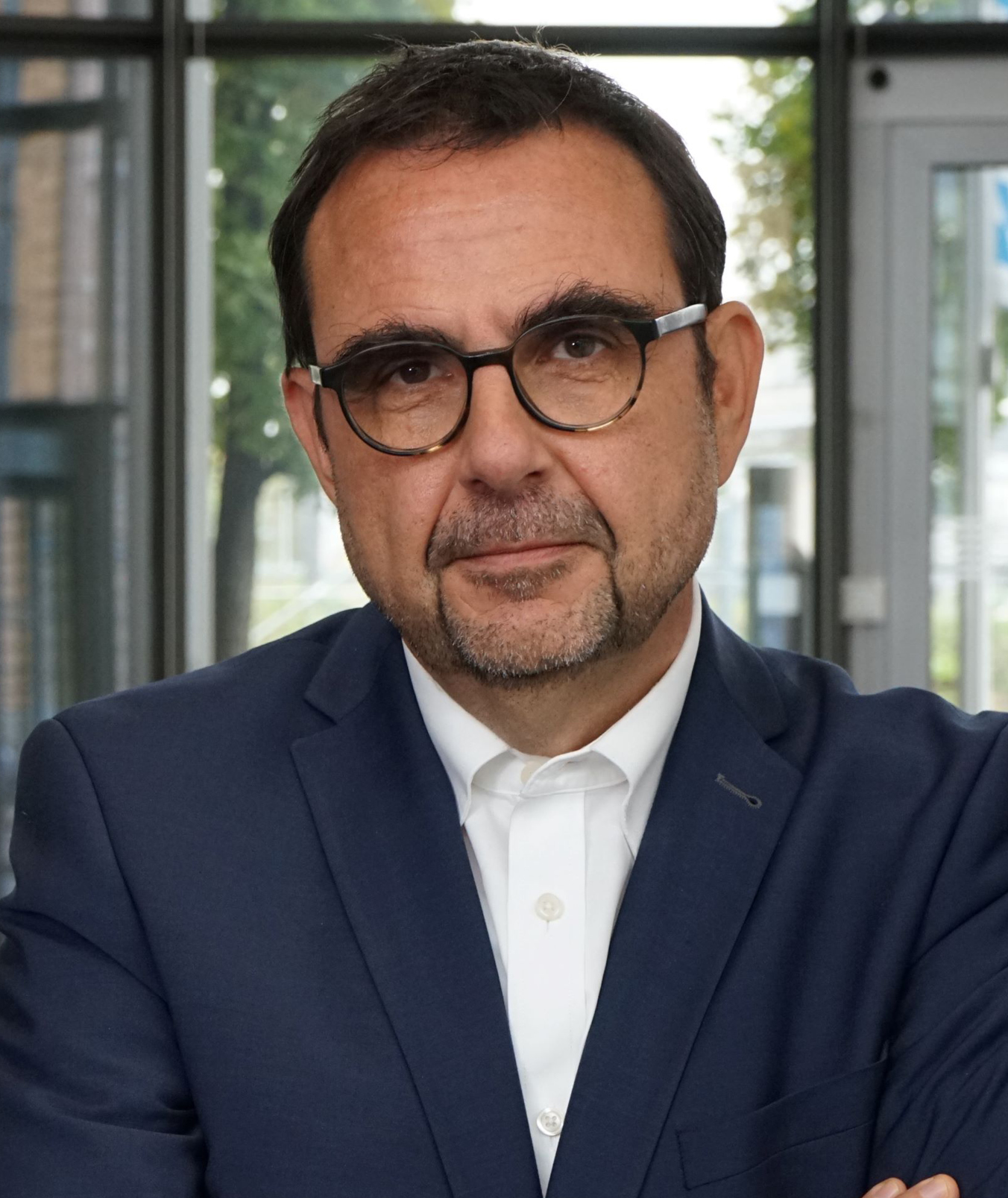
>> Mr. State Minister Holetschek, you certainly experienced first-hand that “supply works regionally” and, above all, has to work locally when you were mayor of the city of Bad Wörishofen from 2002 to 2013. You have now been Minister of State for the Bavarian State Ministry of Health and Care since January 8, 2021. Has this move from a local to a national perspective changed your perspective, for example when you think about hospital planning and reform?
No, because first and foremost it is always about the people who need high-quality hospital care close to home. The Bavarian state government ensures efficient and comprehensive inpatient care through hospital planning and, above all, through state financing of investment costs. But one thing is also clear: the framework set by the federal government has resulted in a noticeable trend towards concentration of service offerings - especially in times of a pervasive staff shortage and ever stricter quality requirements imposed by the federal government. Hospitals must tackle structural change boldly. In order to survive, they must ensure sustainable, comprehensive structures in good time. Above all, this means that sufficiently large departments must also be created in hospitals with smaller capacities.
What are you doing specifically?
As part of hospital planning, Bavaria also supports hospitals that are necessary for comprehensive care despite their inherently uneconomical size. Bavarian hospital planning therefore promotes structures for larger and more efficient operating units where it is possible and sensible from a supply perspective. Even if this can mean additional journeys for people in individual cases, we ensure inpatient care in the relevant region. In any case, the aim remains to ensure a balanced relationship between proximity to home and stability in medical care.
In your welcoming speech at the 21st German Congress for Health Services Research (DKVF) in Potsdam, you said that although people would like to talk about people at the center, ten minutes later at the latest they would talk about the question of finances. What is your general opinion on the topic of competition and economization of medicine?
I do not consider competition and economization in the market on the one hand and the needs of people on the other to be irreconcilable opposites. But people's health and care clearly takes priority. I therefore believe that further economization of the health system is wrong. The aim must be to promote innovations that, on the one hand, help people, but may also help to keep medical care affordable.
However, there is also too much economization. From Bavaria's perspective, the increasing proportion of investor-operated MVZs ((i)MVZs) poses considerable risks for supply. The pursuit of profit maximization is in conflict with providing care that is geared towards the well-being of patients. When it comes to investor-owned medical care centers, we urgently need more regulation and more transparency. Bavaria has therefore long been committed to further regulations and more transparency in both the statutory health and dental sectors. As part of the 94th Conference of Health Ministers in November 2021, it was unanimously decided to further regulate MVZ.
What has happened since then?
The federal government has not yet implemented these GMK resolutions. In order to prevent more and more newly founded MVZs from being able to rely on their existing status and an irreversible change in the supply landscape, an open state working group was founded on Bavaria's initiative with the participation of the BMG and under the chairmanship of Bavaria. Their goal is to create an MVZ regulatory law. The inaugural meeting of the new country working group has already taken place.
Let's take a more detailed look at Bavaria, which like many other federal states is struggling with the effects of demographics, with an aging, multimorbid society encountering fewer and fewer doctors and nurses. As Bavarian Minister of Health, what are you doing now – or have you already done – to ensure good care close to home in the future?
Bavaria has long been committed to strengthening medical care in rural areas with a whole range of measures: With the rural doctor bonus, we support the establishment of general practitioners and specialists. We have already been able to support 1,014 settlements across Bavaria, of which 702 are general practitioners and 312 are specialists. We need more young doctors in Bavaria who work in rural regions. With our scholarship program, we support medical students from the third year of their studies who undertake to work in rural areas for a certain period of time after their studies. In total, we have invested more than 70 million euros to strengthen medical care in rural areas of Bavaria. The 287 students supported so far demonstrate the success of the program.
Bavaria has recently also had a country doctor quota.
This rural doctor quota is important because it allows us to allocate almost six percent of medical study places in Bavaria to applicants who are particularly interested in working as a family doctor in rural areas. We introduced the rural doctor quota in Bavaria for the winter semester 2020/21 and have so far received almost 1,500 applications for the available places. 327 students are currently studying human medicine as part of the rural doctor quota. The “Best Countryside General Medicine” program (BeLA program) also offers medical students the opportunity to complete an exciting, practice-oriented advanced curriculum in general medicine and the BeLA regions of South, North and Lower Franconia.
What is the goal?
It is important to me that all people in Bavaria who need care, especially in rural areas, receive the care and support they need close to home. This is where our funding program “PflegesoNah” comes in, which supports tailor-made care offers on site. There are 93 applications for 2022 with a possible funding volume of almost 204 million euros. Specifically, the working and general conditions for nurses must also improve. We have been committed to this for a long time in Bavaria and also at the federal level. We have introduced a Federal Council initiative with the aim of implementing tax exemptions, at least for surcharges and other salary components, particularly in long-term care. In order to attract people to the nursing profession, we have also launched the “NEUEPFLEGE.bayern” campaign.
A learning that Federal Minister of Health Prof. Dr. What Karl Lauterbach has won is the construction of 1,000 low-threshold health kiosks, with the first of four wooden health kiosks recently opened by Thuringia's Prime Minister Bodo Ramelow in the Thuringian village region of Seltenrain. When will the first one be available in Bavaria and where?
These health kiosks won't solve any of the current supply problems! The concept has not been thought through to the end. Rural areas in particular cannot be covered by this! For large states like Bavaria, such health kiosks can - if at all - only be a tiny piece of the mosaic of comprehensive health care. What we need are further measures to secure care in rural areas, such as those successfully implemented in Bavaria with the rural doctor bonus. The Free State also relies very successfully on the “Health Regions Plus”. For me, they are the exemplary model for promoting health care and health care at the local level.
One of the most pressing main tasks of all German state health ministers is not only the question of hospital reform, but also cross-sector planning of the outpatient and inpatient areas. Where are the breaking points that became apparent during the pandemic? What are your learnings and future concepts?
We must boldly reform our healthcare system. The Lauterbach proposals for day treatment in hospitals go in the direction of sector integration, but they still raise too many inconsistencies. What we need are constructive proposals that will relieve the burden on the health system without creating further problems. I am promoting outpatient health centers in order to be able to design the structural reform of hospitals to suit the needs of the area. They are a supplement to the service areas at the boundaries of the sectors. In such health centers, patients could primarily be treated on an outpatient basis during the day, but if necessary could also be observed overnight at a low threshold by qualified specialists - not necessarily doctors. With a model like this we can succeed in meaningfully supplementing outpatient care. This would also enable us to create a medically viable alternative for one or another hospital location. But it is also clear: we must do everything we can to ensure that the staffing situation in hospitals improves again. We must sustainably improve working conditions. And the financial situation of hospitals also urgently needs to be stabilized. The clinics need unbureaucratic help – now.
There has been a long-standing desire to bring hospital planning to the federal level.
Such future concepts include ensuring that hospital planning remains in the hands of the states in the future. The failure of some countries to support investment costs should not be used as a justification for abolishing or restructuring a system that has been successful if designed correctly. In the comprehensive reform process, we must also be very careful to ensure that the federal government does not significantly interfere with the planning sovereignty of the states under the guise of central requirements for financing operating costs. But we also need a comprehensive structural and financial reform of nursing care. I have been pushing for this since the beginning of my term in office in 2021. In mid-March 2021, I presented key points for a generation-fair reform. The goal is to fundamentally simplify the structures. We have to focus on people and not on accounting issues. Those in need of care must be given even greater financial relief.
At the moment, a lot of things are being forced on us from outside, whether it was the pandemic or the diverse consequences of Russia's brutal war of aggression on Ukraine, whether it be migration, increases in energy prices and material costs or logistics problems. In this context, you spoke of a “cold structural change” at the 11th DKVF. How could we enter into a kind of “warm structural change” in the health sector, in which the necessary change process is designed together and then addressed together?
We must not jeopardize needs-based structural change through planned economic structures and small-scale federal regulations. Bavarian hospital planning has proven itself here: it analyzes the changes and successfully accompanies the structural change. We have to shape this together with the local actors. Because they can best assess the situation on site and develop tailor-made measures. The hospital authorities are well advised to ensure that structures are sustainable and at the same time comprehensive in a timely manner. This means that all stationary offers no longer have to be available at every location. It may also be necessary to discontinue fully inpatient services at some locations, for example. B. to strengthen neighboring locations of the same hospital provider and adapt them to future conditions.
Digitalization and data use are key factors for a better healthcare system. The KV Westfalen-Lippe has just canceled its e-prescription model project after a data protection veto. As Bavarian Minister of Health, what is your opinion on digitalization in the health sector?
Digitalization in health and care is an area with many opportunities; However, there is still a significant lack of successful implementation here, as has recently been proven by the e-prescription being stopped again in the pilot regions. What we need are practical, digital and networked offerings. Then digital solutions can be excellent tools to further improve care for specialists and patients.
Your opinion on the e-prescription?
The future belongs to the e-prescription - patient reports testify to the advantages of the completely paperless route. It is now the task of the shareholders of gematik to determine how the user-friendliness of the e-prescription can be improved and which low-threshold access options can still be helpful. Open questions, including data protection, must be clarified in advance so that this key application for digitalization in the German healthcare system does not have to be stopped again during its introduction with maximum damage.
And about data usage?
We finally need a real European health data space - for health care, health research and also for health policy. Health data can save lives. Bavaria is committed to making better use of it through initiatives and the promotion of projects and events. In view of the existing shortage of skilled workers, we are also calling on the federal government to avoid unnecessary bureaucracy and ensure the smooth functioning of the technology.
What exactly do you do for this?
We have already achieved initial successes when it comes to health data: the federal and state governments will work on the use of health data and the further development of its protection in a new working group chaired by Bavaria and the Federal Ministry of Health. In December we will hold a symposium with the Bavarian Academy of Sciences to advance the discussion and specify concrete demands for a health data usage law. In my opinion, it is now important that the much-discussed Health Data Usage Act in Germany is introduced as quickly as possible - we finally need the big hit here and cannot allow ourselves any further delays.
At the 11th DKVF, you also stated, among other things, that you were in favor of an opt-out regulation at the ePA in order to be able to use data even better in the area of health services research.
What do you specifically expect from health services research if this regulation were actually implemented?
First of all, I very much welcome the fact that the Federal Minister of Health has now made a clear statement and that the opt-out procedure for the ePA is finally being launched. I have already asked for it several times: Without an opt-out regulation at the ePA, we will never receive the broad data base that is so urgently needed for research and innovation from Germany. Others are way ahead of us. On my trip to Israel in November, I saw how progressively the collection and use of health data is handled there. A learning healthcare system must also be our goal, in which the data comes from the patients and flows back to them as therapy innovations and tailor-made care offers. But we are miles away from that and have to make progress as quickly as possible so that we don't lose out further internationally.
What should I do?
The advantages for health services research are obvious. If researchers, innovators and public institutions have access to large amounts of high-quality health data under clearly defined conditions, then benefit research for individual therapeutic measures is evidence-based and possible on a broad database.
lich. In the end, the main thing is to improve everyday health care for service providers as well as for citizens through more health data with the opt-out procedure in the ePA. A hand on the bed is more valuable than on the keyboard, or even worse, on the fax machine.
You also said at the DKVF: “I advocate that we do not continue in this despondency where we raise new concerns every day, but that we take courageous steps, otherwise it will no longer work. We need courage, determination and we need you in health services research. That's why I wish you a great congress, lots of good ideas that we can hopefully take with us into politics, not just talk about it, but also implement it at some point. That's also part of the truth." This "someday" is irritating: Why doesn't the German population have the right to the best care when there is sufficient evidence for this, which should then be implemented promptly and not at some point?
One thing is clear: the best ideas are of no use to us if we only discuss them and they only appear on paper. The statutory health insurance system is fundamentally dependent on health services research. It is an important component for updating the GKV service catalog and of course it is important that the forms of care developed are also implemented in the near future. The federal legislature has a duty here. Declarations of intent, as vaguely formulated in the coalition agreement, are of little use to us. In view of the necessary access to health data, we now need a trustworthy legal framework that guarantees patient sovereignty and at the same time enables data use for specific purposes. We have been campaigning for a national health data usage law in Bavaria even before it was heard from Berlin.
With what real implementation?
The people in our country are entitled to the best possible care - for this we need the ability to use existing data. In Bavaria we are already achieving this in pilot projects with great impact: for example with “DigiMed Bayern”, which focuses on the use of health data in the area of cardiovascular diseases; or with “digiOnko – integrative concept for personalized precision medicine in prevention, early detection, therapy and relapse prevention using the example of breast cancer”.
Prof. Josef Hecken, the impartial chairman of the Federal Joint Committee and at the same time chairman of the G-BA's Innovation Committee, explains in the cover interview of the last MVF issue: “Let's be honest: such 'small-small' research approaches really benefit our health system Not forward!” He also misses the “big hit” of approaches in the innovation fund applications that would “really catapult us forward”. This is what the specialist magazine “Monitor Health Services Research” is now trying to do, which is organizing the first part of its annual congress on the topic of “Prioritization Catalog of Health Services Research” online on December 13, 2022. In your opinion, what would be the 5 most important questions to be answered by health services research that would truly improve care and make it more resilient and future-proof?
It is difficult to distill the challenges down to the “top 5” issues. In my opinion, the most important thing is to make sensible use of the possibilities of digitalization, to address the shortage of skilled workers and to reduce bureaucracy in the healthcare system. These are three central challenges that are directly related to each other. For me, as Minister of Health in a large country, medical care is also a priority, especially in rural areas. Another challenge is to make the opportunities resulting from medical and scientific progress available to people regardless of their income, while also ensuring that they can be financed through statutory health insurance. <<
Mr State Minister, thank you for the conversation.
The interview was conducted by MVF editor-in-chief Peter Stegmaier.
Klaus Holetschek
studied law at the University of Augsburg from 1984 to 1990 and passed the first state examination in law. From 1990 to 1993 he was a legal trainee. After successfully passing the 2nd state law examination, he was admitted to the bar.
From 1993 to 1998 he worked as a consultant for the promotion of young journalists and media policy at the Hanns Seidel Foundation in Munich and as deputy department head in the funding agency.
After various positions in local politics, he was a member of the German Bundestag in 2013 and a member of the Bavarian State Parliament in 2014. From February to August 2020 he was Ombudsman for the Bavarian State Government, and from August 2020 to January 2021 he was State Secretary in the Bavarian State Ministry for Housing, Construction and Transport. Since January 2021 he has been Minister of State in the Bavarian State Ministry of Health and Care.