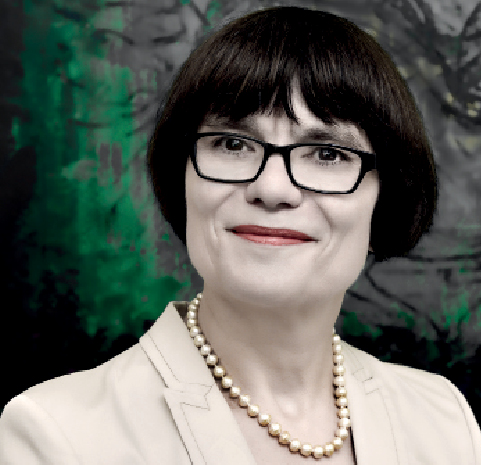
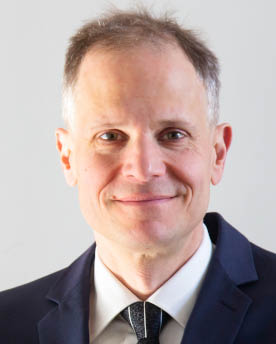
Professors Dr. med. habil. Maria Eberlein-Gonska and Dr. Jochen Schmitt, both employed at the Dresden University Medical Center, are a very special team. While Eberlein-Gonska oversees quality management at one of Germany's largest hospitals, Schmitt works in the same building on the university campus in the field of health services research, often on topics that are of particular interest to quality manager Eberlein-Gonska—a win-win situation not only for both of them, but for the hospital and for healthcare as a whole. After all, what the two professors are researching together certainly has the potential to improve the quality of care itself—at least a little bit.
>> Dear Professor Eberlein-Gonska and Professor Schmitt, you two form a rather rare partnership at the Dresden University Hospital: quality management on the one hand and health services research on the other.
Eberlein-Gonska: The Central Quality and Medical Risk Management Department, for which I am responsible, with its ten employees and one medical rotation position, is a well-established and recognized central unit, considering the size of the University Hospital. It supports the employees of the various professional groups at the hospital in their own working environments in providing high-quality patient care. This work repeatedly raises questions that require a scientific approach as well as evaluation. We are fortunate and privileged to have the Center for Evidence-Based Healthcare (ZEGV) of the Dresden University Medical Center located at the Dresden University Hospital.
This does not necessarily automatically mean close cooperation.
Schmitt: It's certainly true that this isn't mandatory. But here in Dresden, it simply works; certainly also because the ZEGV isn't simply seen as a department or even a mere add-on that just happens to conduct something like health services research, but rather as an integral component and cross-sectional area of the faculty and hospital.
Why?
Schmitt: Because it was recognized very early on that a much greater impact can be achieved if clinicians and health services researchers are not only brought together, but also work closely together and thus strengthen each other.
So a kind of “driven by job”?
Eberlein-Gonska: More like "driven by need." Such needs exist in every (large) hospital, but there are plenty of them, small and large, significant and complex, and all with a significant impact on outcome quality.
Would you please illustrate this with an example?
Eberlein-Gonska: For example, we were able to reduce the comprehensive pressure ulcer documentation at the Dresden University Hospital thanks to the evidence compiled by the ZEGV.
Reduce?
Eberlein-Gonska: Yes, there are such things. How pleased do you think the nursing staff were when the Central Quality and Medical Risk Management Department reduced the documentation effort while maintaining the same high quality?
And that works?
Schmitt: If we have a better understanding of when documentation is necessary and when it isn't, then yes. However, that also means that not only the opportunities for participation but also the responsibility of nursing staff must be encouraged and strengthened, because every individual decision—whether documentation is necessary or not—must be weighed up by the nursing staff.
Not everyone will be happy to make this decision.
Eberlein-Gonska: Some people are certainly a bit uneasy about the new responsibility, especially because it changes the existing routine, which also provides a certain degree of security. At the same time, it also strengthens personal responsibility for the quality of patient care, and here, too, quality management and health services research can work closely together, because such a change, no matter how marginal, requires scientific support.
Schmitt: This is exactly where implementation, or translation, comes in. For QM, the research results themselves are certainly interesting, as they reveal how and, above all, where documentation can be modified, thereby even improving quality. However, health services research must also consider the path to healthcare and, ideally, support it.
Eberlein-Gonska: The associated hurdles must also be considered, and thus the close cooperation with health services research is a kind of historic moment for me as a quality manager at a large hospital, because it creates completely new evidence bases and thus a basis for decision-making.
What does top management gain from this?
Schmitt: It always depends on how you convey such a basis for decision-making as evidence. We both certainly did that quite skillfully...
… by presenting various scenarios.
Eberlein-Gonska: In the case of pressure ulcer documentation, there were three scenarios, starting with screening only for high-risk departments, which means that about a quarter no longer needs to be documented at all. This approach was important because top management can only make the right decisions if they know which of the decisions will lead to which causality—based on the available evidence, with a fairly high probability.
But the final decision must always be made by the board.
Schmitt: Certainly. QM and health services research can only provide a kind of anchor. However, it is important that the evaluation be consistently continued after such a decision, because the previous evidence, although only retrospective, has also created a kind of baseline against which the outcome of the decision once made can be measured. Only in this way can we achieve a truly learning system.
Is this a way into the future?
Eberlein-Gonska: Absolutely. The more and more closely we work together, the more I'm convinced that we can and must put our quality management on an even more scientific footing. If we're being completely honest, quality management used to mostly function on the basis of applied, common sense, and for most quality management officers, that's still sufficient for their work today. But the challenges in healthcare require us to conduct a careful benefit assessment that must be scientifically sound. Otherwise, there's a great danger that quality management will degenerate into a mere control tool.
Isn't common sense enough?
Schmitt: It depends.
Another example please.
Eberlein-Gonska: For example, our fall assessment has shown that the instrument currently used to assess fall risk in the intensive care unit is completely inadequate.
Schmitt: We were only supposed to and wanted to prove that there are differences in the application of this instrument between the intensive care unit and the normal ward, which is something that common sense would suggest.
What came out?
Schmitt: That the validity for the normal ward is quite good, but you can just as easily roll the dice in the intensive care unit.
Why is that?
Eberlein-Gonska: Because different risk factors for falls are probably more important in each case. The instrument we use was developed based on the Johns Hopkins instrument, which is used in over 1,000 hospitals in the US without much validation—at least not in an intensive care unit.
You might not even believe that.
Schmitt: Without any deep, reliable evidence, at least.
It shows that you both have a lot of work ahead of you.
Eberlein-Gonska: That's why the collaboration is so exciting for both of us, also because it's a win-win situation. One of my former bosses once said that you have to find the best incentive for each individual so that "they do what you would like them to do." Professor Schmitt's incentive is: I am the "playground." My incentive is: He does the research I need!
But without research, every playground remains somehow only theoretical.
Schmitt: True. But that's how we create value. For example, we've significantly reduced the effort required for decubitus documentation while achieving at least the same level of benefit.
Eberlein-Gonska: But this still needs to happen for many more instruments and procedures, also because new ones are constantly being "invented" or prescribed and incorporated into the setting. Our goal is: with the highest possible level of evidence!
Is this also the path to a culture of error?
Eberlein-Gonska: There are tons of publications on the effects of medical expertise and organizational culture. But what the ultimate outcome is, firstly, in terms of benefit for the patient and, secondly, in terms of learning for the individual physician, is extremely difficult to assess.
Schmitt: It will probably never be possible to measure how many errors can actually be avoided. And, more importantly, which ones? Nevertheless, every patient can expect their trusted hospital to adhere to a culture of error and a self-critical approach to errors and their processing—but also to potential errors or even near-accidents. But that requires a completely new culture and interdisciplinary communication.
Eberlein-Gonska: But the first step is taken if we take advantage of the opportunity for close cooperation and support and strengthen each other. A quality manager can and will, under certain circumstances, ask completely different questions than a scientist, because the former is more closely aligned with practical and application-oriented approaches.
Morbidity and mortality conferences, or MM conferences for short, are certainly a good start.
Eberlein-Gonska: For example, we want MM conferences to be held in all our clinics, but not just randomly, but in a structured manner. This is a board requirement.
If asked, most university hospitals would probably explain that they also have such MM conferences.
Schmitt: But only because there is no standard as to where an MM conference begins and a discussion in the senior physicians' circle ends.
Eberlein-Gonska: Exactly. Here in Dresden, we do things differently, systematically, by first considering what we want and how we need to structure and systematically develop such a thing. My department here at the hospital is certainly in such a good position because we can provide support on all of these issues. This begins with process analyses, continues with the structuring and simplification of procedures, and the identification of problem areas, all the way to the implementation of a quality culture. However, all of this requires unconditional support from the hospital management, and I can rely on that here at the UKD.
Where could you claim that you have really improved care?
Eberlein-Gonska: For example, we certified our cancer center in 2004, making us the first in Germany to do so. Starting out as a small outpatient clinic, Dresden is now a National Cancer Center. I believe this is partly due to good organization, transparent processes, and demonstrable quality. But here, too, it's important to pay close attention to detail: For example, we were the first to measure whether the decisions made within a tumor board are actually being implemented.
Which again would have been suggested by common sense.
Eberlein-Gonska: This is called a horizontal audit, and it now also takes the form of a course for students. It involves randomly sampling 20 tumor board decisions, which are then examined to determine whether and how the decisions have been implemented. Such measures positively influence processes and thus the quality of outcomes, and promote training.
Schmitt: But mortality could, of course, also decrease due to normal medical progress. Therefore, it's relatively difficult to scientifically prove exactly what is responsible for the quality of the results.
What about peer reviews here?
Eberlein-Gonska: I am convinced that peer reviews have an impact on a small scale and thus also on a large scale. This process, which was originally initiated by the HELIOS group, is now being implemented by around 400 hospitals, representing one-fifth of all German hospitals with more than 6 million inpatient cases.
Schmitt: To evaluate the effectiveness of peer review in reducing hospital mortality, we submitted an application to the Innovation Fund together with the Initiative for Quality Medicine (IQM) and were fortunate enough to receive funding. We now have the opportunity to obtain hard evidence on the benefits of a complex quality intervention through a cluster-randomized study. This is a first in Germany, and we hope it marks the beginning of a transition from primarily descriptive health services research to prospective, controlled studies of health care concepts, quality assurance measures, and other complex interventions. This step is important for actually implementing the often-cited "learning system."
Professor Eberlein-Gonska and Professor Schmitt, thank you for the interview. <
The interview was conducted by MVF editor-in-chief Peter Stegmaier.