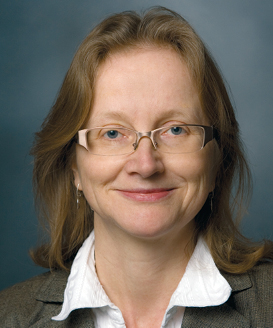
“Health care all-inclusive” or “3 in 1” - this is how the business model of the US healthcare system Kaiser Permanente could be described. Kaiser Permanente is a consortium of health insurers, clinic operators and physician organizations and serves 8.7 million members in nine US states, most of them, 75 percent, in California. The term “health network” is also appropriate because the service providers involved not only cooperate across sectors in their everyday practice. The network also connects the medical professionals digitally: they can view medical records via a common IT platform, and patients can contact them and view their own data via an integrated member portal. The company's own health network catches the insured early and focuses on prevention and wellness: it almost sounds too good to be true. But can the concept also be transferred to Germany? And what are the success factors of this exceptional model that has proven itself in the USA? “Monitor Healthcare Research” spoke on the sidelines of the DGbV Future Congress with Sophia Schlette, who worked at the Kaiser Permanente headquarters in Oakland for two years.
>> Ms. Schlette, Kaiser Permanente's concept is considered a best practice example in healthcare. What are the success factors?
On the one hand, it is certainly the very unique corporate structure that enables the complete integration of service providers and insured persons into the health network. Payers and service providers conclude exclusive contracts with one another at the regional level, in which the permanent medical groups, i.e. the KP doctor organizations, undertake to only treat KP insured people and, in return, to contract health insurance exclusively with permanent medical groups. Theoretically, the “Kaiser Permanente construct” can fall apart every year; In practice, it has held up – through crises – on a voluntary contractual basis and exclusive reciprocity since 1945. On the other hand, the employees are highly self-motivated - and that sets them apart from other health professionals.
How does this intrinsic drive come about?
This has to do with Kaiser Permanente’s self-image as a “Total Health Organization.” The entire business model is based on this. Characteristic of Kaiser Permanente is the consistent, data-supported quality orientation and a consistent population orientation, that is, the focus on sick and healthy members. There is no shortage of highly qualified employees - on the contrary. Graduates from the most prestigious medical schools across the country apply to KP. They are those who dream of healthcare that is completely focused on quality, of a system in which they can act as providers and do not have to act as entrepreneurs - the professionals take care of the business part for them. This means that there is a certain amount of self-selection even before hiring. Doctors who work at Kaiser Permanente have made a conscious choice and remain loyal to the system. The insured people and patients, in turn, tell them that they value what Kaiser Permanente has to offer, especially if they have suffered serious illnesses. This of course increases motivation.
Let's stay with the insured, what exactly makes Kaiser Permanente so attractive?
Oh, there are lots of reasons. Above all, there is the quality of care experienced in a one-stop shop, the direct access to your own family doctor via email and the fact that there are practically no waiting times. As a KP employee, I was also insured by KP and used the system myself. First out of curiosity, then also as a patient. I was able to book the appropriate appointment online, I didn't have to wait more than five minutes, and I was able to pick up the prescribed medication in blister packs from one of the in-house pharmacies immediately after visiting the doctor. If I had any questions or if I couldn't classify a test result, I could send my doctor an email via the patient portal - and she replied within hours. No wonder that KP HealthConnect - this is the name of the health information system that was introduced nationwide in 2009 and is used regularly by over half of all KP insured people. The close support and navigation through the system creates trust and alleviates uncertainty and fears - especially in the case of serious diagnoses. I think this is personalized medicine in the literal sense. And studies have already objectively supported what patients subjectively experience as an improvement: chronically ill people who can communicate with their care team via email have better health outcomes, are more stable, happier and feel better cared for.
How long do insured people stay loyal to KP?
KP members stay insured with Kaiser for an average of ten years. That's incredibly long considering that Americans are very mobile and typically change jobs every two to three years. In the USA, job mobility usually means changing health insurance with your employer. In times of ongoing recession, rising health care costs and shrinking health insurance benefits, job seekers - especially if they were previously insured with Kaiser - fear that they will not receive a comparable replacement for the Kaiser package from their new employer if they change careers. The whole thing is an example of how a dysfunctional healthcare system can act as a brake on productivity and threaten mobility and performance.
How does KP as a company manage to assert itself in the competition and survive in the long term, what is the secret?
KP practices systematic innovation management. There is no other private healthcare organization that has its own innovation center like the Garfield Innovation Center (named after the first physician and co-founder of Kaiser Permanente). The idea is not entirely new; Large car or food manufacturers have similar units where products and processes are tested, improved and renewed. What is crucial is a coherent overall strategy that promotes innovation. Take quality management in hospitals – corresponding tasks cannot be assigned to individual employees unless the entire facility is behind them. At Kaiser there are extra teams that deal with the roll-out of successful pilot projects. In addition, there are in-house think tanks and research departments both at the umbrella organization in Oakland and decentrally in the nine KP regions. This structure contributes significantly to ensuring that the Total Health approach is consistently implemented. The continuous development of care is also supported by US-wide quality comparisons between clinics and health plans - for example using the HEDIS indicators (The "Healthcare Effectiveness Data and Information Set", a set of indicators from the non-profit organization National Committee for Quality Assurance , measures and compares the quality of care provided by 90 percent of all American health insurers). KP consistently performs above average in these rankings.
What is the age structure and balance between older insured people, who incur high costs, and younger people? And: What social backgrounds do the majority of members come from?
The members come from very different professions and backgrounds, and the age structure corresponds to that of the overall population - 15 % of Kaiser insured people are over 65 years old. However, only a very small proportion of those insured are unemployed or destitute. This is because the employer takes out the insurance, individual policies are very expensive and the general insurance requirement introduced by President Obama only came into effect in 2014. However, Kaiser expects 500,000 new members in California alone.
Opinions about Kaiser Permanente still vary widely today. In California, the image of insurance for workers in high-risk jobs such as construction still persists.
At the end of the 90s, this deterred the clientele - i.e. the employers as contractors - from other industries, and there was a dwindling number of members. In order to turn the image around, Kaiser placed greater emphasis on the idea of wellness and targeted younger and healthy, often uninsured Americans as part of the “Thrive!” advertising campaign starting in 2004. (“Thrive” is – paraphrased – the call to consciously live and enjoy a healthy and active life). The campaign was a breakthrough and good for business. Kaiser managed to convey that being healthy is fun and that the goal of care is not to limit damage in the event of illness, but rather to maintain health right from the start. Every new member is registered, carefully examined and immediately accepted into the supply system. After the check-up, regular preventive examinations are arranged.
To what extent can the success factors be transferred to Germany? Would it make sense, for example, for a KV or a hospital to boost quality by hiring particularly good doctors?
Quality improvement requires a system and an overall concept – and of course good employees. Our politicians had already set the course for quality improvement and cross-sector coordination before 2009 - through start-up funding for pilot projects in integrated care, for example, or through the introduction of MVZs, outpatient surgery, etc. At Kaiser Permanente, every avoidable hospital admission is considered Failure of the system. It is not the place where the service is provided that counts, but rather how the service is provided and remunerated.
So is it also a question of the attitude or way of thinking of the German health players? How would they have to change their way of thinking?
It is not about treatment within or outside certain sectors. The question is: How can care be designed to be more functional and patient-oriented? In Germany we are still very stuck in sectoral thinking, especially the service providers. That's still how the incentives are, that's how compensation works for us, so it's understandable that everyone behaves that way. Many people are happy with it and don't see the need for change. In addition, innovations are always uncomfortable and disturbing at the beginning, especially if they cannot be viewed positively - comparisons, study trips, internships or tandem approaches could help. Numbers can also help. A KP doctor once told me that he and actually all doctors love numbers; In everyday clinical practice, you constantly deal with numbers. In order to determine the state of health, the course of the disease or the success of the treatment, measurements are continuously taken, images are taken, before and after data are compared - it makes sense, said the colleague, if you look at the numbers with the same enthusiasm as your own results in comparison to the results of other doctors or care teams. Incidentally, the comparisons between doctors, teams and regions are so popular at KP that good performance is linked to high work motivation and willingness to perform - at Kaiser, awards are more important than result-oriented financial bonuses, which, by the way, have little impact on the salary.
Do you reject the pay-for-performance approach?
Oh well. The experiences with this in the USA are not entirely convincing, mixed at best, the methods are difficult to compare, what is measured, what quality level do you start from, what incentive systems are already in place, does P4P put small practices at a disadvantage compared to large care facilities? The effects can sometimes be undesirable or even harmful if attention is focused on the services that are specifically rewarded and other services are neglected. The euphoria has pretty much subsided. In any case, Kaiser relies on non-monetary incentives such as awards within the team. And the question that counts is: How high is the quality of our service compared to our competitors?
How could the German system become more performance-oriented?
I think our public reporting systems in the inpatient and outpatient sectors deserve respect. Hospital quality reports, for example, go much further in Germany than in any other country.
The question is whether this will be implemented in practice. Are these measures popular enough to bring about quality improvement?
In the age of the Internet and informed patients, quality transparency is becoming increasingly important. In this country, too, the Internet is being used more and more to search for information about treatment options and the quality of facilities. The nice thing about it: the information is available 24/7. I think that information portals like the Weisse Liste - an online clinic guide for patients, developed by the Bertelsmann Foundation and umbrella organizations of the largest patient and consumer organizations - are the future. The German population may not yet be as Internet-savvy as in the USA, where one in three adults goes online to look for health information. But the trend is the same.
Do you rely on online competition between service providers?
That's the way it is. We know from other countries: quality comparisons challenge service providers to provide better services. This can be seen in the USA: The rankings not only open up more comparison options for patients, they also put service providers under pressure. None of them want to remain invisible, so to speak, while the competition is present on the Internet.
The AOK is trying to set up a system in Germany in which patients recommend doctors and the AOK supplements its recommendations with further information. How do you feel about such a model? Is it too risky?
Here you have to differentiate. The White List compiles information according to the criteria for hospital quality reporting. When patient experience is added as a criterion, the evaluation can become subjective. Behind this lies the peer idea and the greater immediacy of self-experience. But something like this can also have disadvantages - if it takes on the character of a hotel or restaurant review. The users of such information must learn to deal with the peculiarities of the system, ie with such subjective evaluations.
If we turn to the doctors: They reported on the high level of motivation among Kaiser employees. Do you think that the attitude of German doctors is changing in the same direction?
I observed one thing at events for aspiring doctors in Germany: many medical students think in a very similar way to Kaiser doctors, have ideal ideas about the medical profession and a personal and trusting doctor-patient relationship. Working in a multidisciplinary team - together with the nurse or the pharmacist - is also part of this ideal. However, it seems that this ideal image is lost in everyday hospital life - somewhere between time and budget pressure, training requirements and hierarchical work organization. When Kaiser doctors report on their working day at events - 20 minutes of time per patient, concentration on the really sick, support through management and information systems, regular working hours, work in a team, quality assurance through second opinions in real time, feedback systems and recognition Award – many of us can hardly believe that care can work like this – without a hamster wheel.
How then could a change in circumstances be driven?
I think you have to start early, during your training, because that's where professional socialization takes place. The promotion of certain disciplines also plays a role. In Germany there are reform courses that focus on areas that are becoming increasingly important for the care management of chronically ill people and for population-oriented systems, such as general medicine, community medicine, care for the chronically ill, geriatrics, mental health and palliative care. We also need more non-medical courses and professions that are also becoming more important in supporting chronically ill people - young specialists who “tick” differently than today’s providers. The second is the targeted promotion of new multidisciplinary forms of care, keyword chronic care model.
Socialization and structure play a major role as success factors. What does the IT base look like in Germany?
It seems to me that in Germany, concerns about data protection are all too easily used as an excuse for doing nothing. How long has the effort to create an electronic health card been taking? The fear of quality transparency is certainly greater than the fear of data misuse, and the cost argument doesn't really work if the initial investment quickly pays off. Why do many healthcare systems still work with paper and hanging files, while in other sensitive sectors - whether aviation, food or banking - errors have long been minimized using IT systems?
If we could now compare another success factor, the salutogenic approach, with regard to its applicability in Germany. In other words: Does wellness have a chance in Germany?
Sure, you can earn quite a bit of money on the secondary healthcare market. So there is definitely demand. However, we have not yet seen wellness and health promotion as an integral part of standard care. The prevailing opinion is that the funds from the insured community should be given to the sick, especially the seriously ill, and not to the healthy. And the evidence for many prevention approaches was thin for a long time. Nevertheless, Kaiser's salutogenic approach is so convincing to me because it has a positive view of health and does not assign blame. The sick are not pitted against the healthy or vice versa, the thin are not pitted against the fat... Kaiser succeeds in both - prevention in individual and setting approaches and top-quality care with excellent outcomes such as survival rates after breast cancer and low mortality from cardiovascular diseases in the Kaiser insured population. The advantages of Kaiser's Total Health approach are obvious... However, Kaiser does not save costs - the money in the system is simply distributed differently.
Another success factor for Kaiser Permanente is its compensation system. Could you briefly explain it?
It's very simple: Doctors at Kaiser receive a fixed salary. The contractual partner – i.e. the employer – pays Kaiser Permanente an annual capitation fee for each insured person; and KP manages their health regardless of the duration, frequency and intensity of the treatment. In California, Kaiser Permanente also benefits from high market penetration and can offer group insurance more cheaply than its competitors. Kaiser's market power has a moderating effect on the cost increase there.
Can a similar system be designed for Germany and can it even work given the various interest groups and distribution struggles among doctors?
The larger medical care centers (MVZ) already work according to a similar business model, with core elements such as a one-stop shop, electronic patient files, care teams and second opinions, employed doctors and a professional division of labor between patient care and clinic management. This requires perseverance, a willingness to engage in dialogue on the part of everyone involved, a favorable political climate and, above all, good examples of integrated care that is not controlled from outside. Language is very important, fighting terms and expressions such as “coercion of doctors”, “distribution battle” or “cookbook medicine” are out of place.
But “distribution struggle” is the feeling that the doctors actually have. Will the deep divisions continue to exist?
With communication and perseverance you can achieve a lot, and controls are less helpful than good examples. Doctors could be better informed about the many advantages of such a system - more time for patients, less administration, income security, family-compatible working hours, teamwork, feedback and the latest information technology equipment. Many doctors already appreciate this today.
A new supply law is upon us. One of the key points is to regionalize supply. An improvement?
Health care will not automatically be improved through greater regionalization. Elsewhere in Europe it can be observed that decentralized care can lead to social upheaval instead of improvements and being more citizen-oriented; the supply offers and density are sometimes very disparate; Medical tourism within and between countries is the result of a health policy based on regional budgets. In addition: the more fragmented the care, the more complicated the network of competences, for example through joint state committees, the less transparent the whole thing becomes. It is better for the states to be consulted in the central bodies of self-government.
What would be a success criterion for the supply of the future?
That would be a quality and a population orientation in health policy and among the actors. In addition, more diversity in the supply landscape would be desirable. At the moment, however, I am again observing skepticism towards competition on both the service providers and the government side, an arrangement with the status quo despite all the supply problems and a lack of courage towards innovative forms of supply. <<