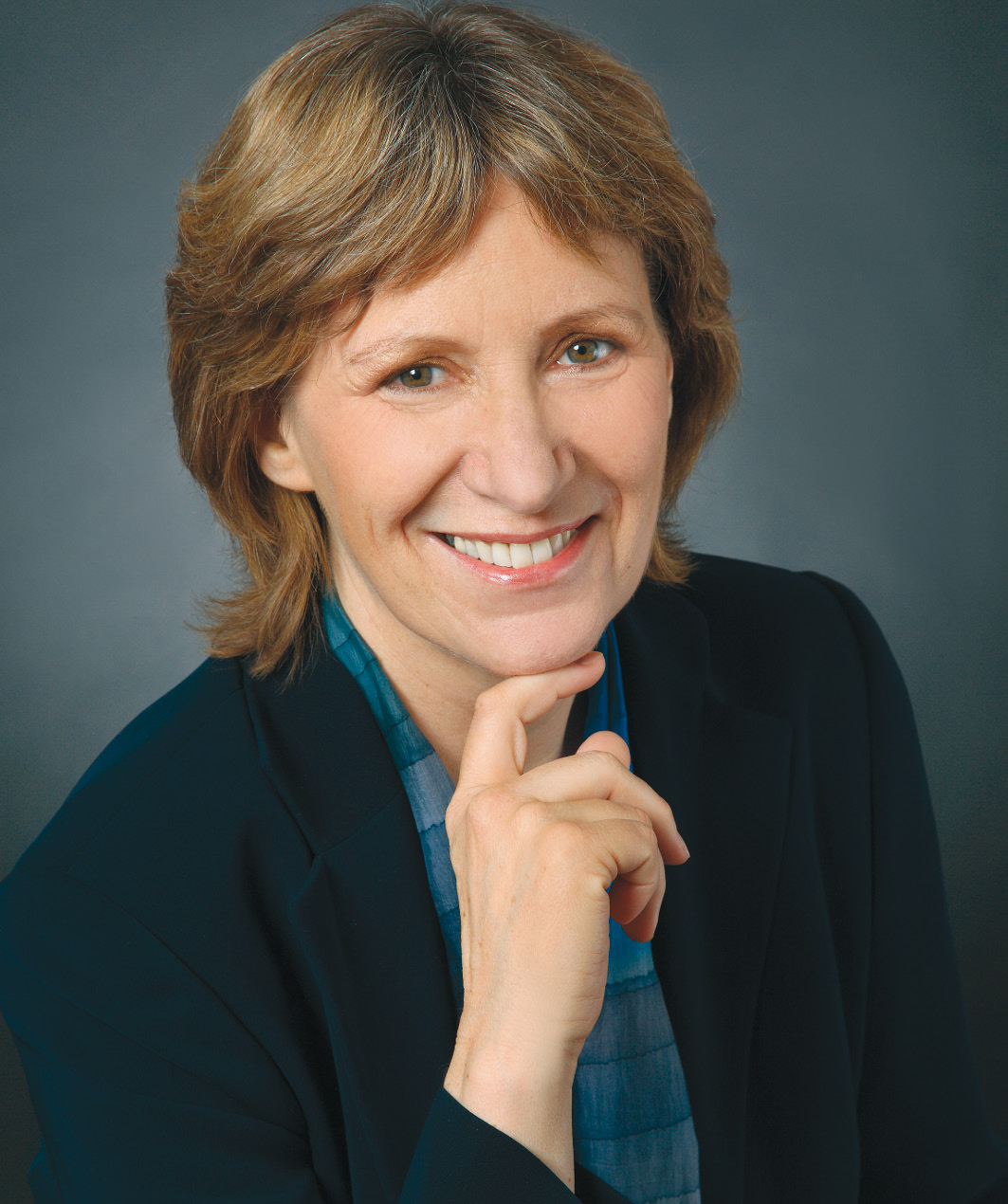
From 2002 to 2005, Birgit Fischer was Minister for Health, Social Affairs, Women and Family in the state of North Rhine-Westphalia, deputy since 2007 and then chairwoman of the board of the Barmer GEK from 2010. Until she took a big step into the industrial side in May 2011 and became CEO of the Association of Research-Based Drug Manufacturers (vfa) as the successor to Cornelia Yzer. This step was polarizing and there was even talk of it being disreputable, probably also because she was seen as a critic of the pharmaceutical industry on the health insurance side. Today, exactly one year later, such criticisms are a thing of the past, also because the trained educator sees herself as a “bridge builder”, as someone who knows and understands the different sides of the health system and is working on a new, common and, above all, sustainable care solution want.
>> Ms Fischer, when presenting the annual report of voluntary self-regulation you recently said: “Cooperation needs trust, clear rules and transparency”. Is this something like your own personal confession of faith?
I believe that everyone in their respective professional areas and sectors tries to do their job as well as possible. Unfortunately, it is often the case that too many people only see their job, their role and their function. Over time, this creates a lack of knowledge about each other's thinking, situation and general conditions. This leads to distortions and sometimes even to hostilities because it is actually only about defending one's own interests, which quickly turns others, who also want good care, into enemies. The view of the common intersection, the common objectives and interests is lost.
This certainly seems to be the reality in the German supply system.
At least as long as you don't try to regain the common starting point and interests. This requires understanding and understanding of the other side, although this “other side” sounds too confrontational to me.
Is this realistic?
It will because the common intersection clearly exists.
How do you define this common intersection?
For me, the first and most important intersection would be the shared focus on the patient. It won't work any other way, because the patient himself doesn't have the choice between one or the other player; if in doubt, he simply needs all of them. Now, from the patient's perspective, it's about getting coordination, coordination and cooperation so that everyone, if possible, pulls in the same direction.
Everyone is already doing that today, just at different ends of the line, because everyone is ultimately fighting for their own budgets.
Which wouldn't actually be necessary. One recent experience is that it is not at all true, for example, that patients from specialists do not return to their general practitioners. What is important is who can do what best for the patient and at what point in time. Nothing else. You will never achieve a good division of labor if you only think based on your own interests, but you will certainly achieve it if you do so based on the interests of the patients. The second realization of the last few years is that it may work in the short term if you isolate yourself and assert your own interests against those of others, but it never works in the medium and long term.
Because in the medium and long term only solutions that mean a win-win situation for those involved can work.
Even. I am currently experiencing a willingness to rethink this relationship. Which may not happen entirely out of choice, but because everyone has their backs to the wall and everyone realizes that things can no longer go on as before.
Why doesn't it continue?
There are certain times when specialization and quality development make sense and are necessary. However, once you have reached a certain quality standard, further progress and a further increase in quality are only possible through cooperation. And when it comes to specialization, we are perfect in Germany anyway. But the holistic view is now missing.
Who can contribute this perspective?
The patients could demand them.
They just don't have a strong enough voice.
True. But today everyone involved in the health system feels that they cannot make any progress with their interests alone. This increasingly endangers the quality of care because no one alone can guarantee the right treatment at the right time for the right patients. That is why all service providers, both interdisciplinary and multi-professional, are dependent on finding other cooperation partners with whom they can jointly design care.
Which would also mean implementing such thinking at the very beginning of the training of doctors and medical professions, of which there are around 800 in Germany. But there are no interconnected training paths.
This is precisely why we are currently noticing a lack of or under-supply in many areas, simply because cooperation and coordination often does not work. Collaboration is essential here. And if there is a high level of job dissatisfaction in individual areas, it also has to do with the fact that the individual can no longer achieve the optimal result. That really calls for cooperation. While years ago we talked about integrated care and it was more of a persuasive effort, today there has largely been a realization that integrated care is simply necessary.
The only question is how this should happen in a healthcare system that is so divided into sectors and in which the individual fee pools are also divided into sectors.
In change processes there will always be “winners” and “losers” in some respects. It is clear that everyone is afraid of being among the “losers”. That's why you first have to take this fear back a bit and look together for solutions that are truly win-win-win situations. That's the trick.
What role can the pharmaceutical industry play in this concept?
If you look at the overall care of the patient, then the role of the industry in the broadest sense is the health medical service. This is completely unthinkable without innovation and without the pharmaceutical industry.
Now all too often there is talk of hostility to innovation.
What has developed in the healthcare system is that we don't talk about research, development and innovation and thus also about medical progress. Instead, in recent years we have continued to “cultivate” this opposition and these two seemingly hostile sides. This hurdle must be overcome, this bridge must be built if we want to leverage the shared opportunities and potential and use the existing resources for a sustainable further development of care and therapies. I can hardly imagine any other way if one wants to maintain the quality achieved today.
Unfortunately, there are very few properly functioning, integrated contracts, such as the schizophrenia project by Janssen-Cilag and the AOK in Lower Saxony.
That does not surprise me. Many obstacles and handicaps have to be overcome before such a project works. The project in Lower Saxony also took around four years to come to fruition. The hostility towards the cash register and the industry was also massive.
Because the accusation is always raised that the industry just wants to sell more medicines.
I find this suspicion simply one-sided and undifferentiated.
Perhaps there is a general global prejudice behind such projects initiated with industry.
The core business of research-based pharmaceutical companies is the research and development of drugs. And as in any other area of research, this is about the question of application, i.e. simply about medical care. The industry cannot afford not to have any interest in ensuring that care is of high quality and well. This essentially depends on the quality of one's own work and one's own products, which ultimately have to be incorporated into the supply reality.
But for many years, thinking within the industry was very focused on the drug itself.
It was focused on the product without actually taking into account the conditions under which care takes place and the structures in which care takes place and thereby generating knowledge and added value. That was certainly a big drawback. This is precisely why there is currently a process of change in which the industry sees itself as a player in the healthcare system and is also prepared to take responsibility for joint care solutions. Basically the same thing is currently happening on the health insurance and doctors side, who have initially built a wall that they now have to overcome.
How can you build trust? Everyone is well aware that pharmaceutical marketing in the past did not always necessarily build trust.
Trust can only be built through relationships and through things you do together. Trust needs a practical test: keeping commitments and promises too! This creates reliability. That's why there's no getting around this arduous process of trying things out and testing things out.
What speaks for an expanded pay-for-performance idea?
Pay-for-performance is a possible model. But I believe that there are much more common models with which certain care programs can be approached together. If coordination is necessary, if agreements have to be made, if agreement on objectives is necessary, then the negotiating partners actually automatically ensure that all the necessary steps are quality assured. One will always be guided to a certain extent by guidelines and evidence-based medicine, whereby the most important measurement criterion must be the benefit for the patient. Essentially, this does not measure the input of a service, but rather the outcome, i.e. the result for the patient. But unfortunately we still don't look enough at the actual processes or the real outcome.
We agree on that. What can you do now to get closer to the noble goal of better care?
I now experience many discussion platforms and many different groups made up of different actors who are starting to think together about how processes could be designed differently and better than before. Personally, I don't believe that you can simply change our healthcare system overnight through legal changes. Change must be driven by practice and also supported by practice. Of course, in a collective system everyone will never do this at the same time, but there will always be some entrepreneurs who see progress and want to implement it. You have to bring these open minds who are looking for intelligent solutions together to try to get something off the ground together.
Couldn't the vfa be such a pool in which a supply master plan could be drawn up?
I don't think any player, including the industry, can say: I'm going to put my hat on and move forward. The willingness must be present in a wide variety of areas. Only when actors from a wide variety of areas come together will it be possible to initiate real change for the better. However, this willingness certainly exists. But unfortunately the handicaps and financial restrictions are still enormous. As long as there is no such thing as an innovation fund, for example, little will change. Financing from the industry alone would perhaps be possible, but in principle it would not be conceivable at all because then all the prejudices would immediately come back to the fore. That's why there needs to be participation from a wide variety of actors.
Do you prefer a particular model? Integrated care à la Lower Saxony? Kinzigtal à la Hildebrandt? ACO à la USA?
There will be a wide variety of models side by side. You can't rely on a single model and say: This is the right way to go. All have their merits if they ultimately lead to a structured, evidence-based treatment.
The results of health services research are the trade secrets of the researchers, whether they are health insurance companies or pharmaceutical companies: Shouldn't these results generally be public?
The first step would be for those involved in health care research projects to agree on how data should be handled. Health care science, but also health insurance companies and pharmaceutical companies are required here. Of course, the affected patients and their interest groups are of particular importance. Because it’s your data that matters!
The only question is whether the pharmaceutical industry will finance healthcare research under the rubric of pure knowledge gain.
For example, when we talk about specific patient, indication and population groups in individualized medicine, it becomes clear that the industry's view needs to become much more differentiated because it is no longer just generally focused on a specific clinical picture. This requires health services research, but also a differentiated approach. This in turn leads to certain questions that are relevant to the research and development of pharmaceuticals. More and more research will have to come from healthcare practice, because the great findings and experiences from natural science alone are probably finite. That's why I believe that we are in an absolute upheaval within research, in which health services research will play a central role.
This is new territory being broken here.
Secure. This also means that our previous patterns of behavior and acceptance suddenly no longer work. From the perspective of researching pharmaceutical manufacturers, these are absolutely central questions that will determine whether there can still be innovations in the future.
Do you really see this danger beyond all association theatrics?
I definitely see this danger. If it is not possible to cooperate, but if everyone continues to do their part side by side, then it will not be possible to create a common solution. The meaning of any research and development ultimately always depends on whether the result is possible in application, whether patients have access to this innovative care or not, and whether an innovative drug really finds its way into therapy. The entire spectrum of benefit assessment and price negotiations comes into play here. I am currently experiencing a highly complex system that many decision-makers do not understand in its complexity and may therefore make decisions that can lead astray.
Now the AMNOG process is referred to as learning. However, it can be seen that the companies that go through the early benefit assessment are particularly struggling with four sets of problems - appropriate comparative therapy, related studies, related parameters and operationalization of the additional benefit. What would turn the “learning system” into an “understanding system”?
The question is, why are we even talking about a “learning system”? We are doing this because AMNOG was a premiere in Germany. This means that new instruments have been created, but their exact application is not entirely clear. Therefore, reflection on the use of the instruments is necessary. How necessary monitoring is can be seen in many recent individual cases. All of our attention should now be focused on ensuring that the bottom line is that this does not have a detrimental effect on patients. Your supply of innovations must not stall. So if assessments or negotiations ignore conditions that are crucial to companies' research, it must be in the common interest to consider how these conditions can be adequately taken into account.
Boehringer and Lilly recently withdrew the “opt-out” option because they did not want to be satisfied with the price range of a few cents for their innovative drug that was discussed in the price negotiations, especially in view of the European pricing function of German prices. What would the argument be from the perspective of your previous role at Barmer GEK? And what about the current one?
It is now important that everyone involved finds common solutions that will help the matter. The focus must be on the interests of patients in good supply of innovative medicines. The benefits for them must continue to be guaranteed in the future. And this will only succeed if the competitive conditions of international research companies are adequately taken into account. Because they are the ones who have to ensure the supply of innovations. As a result, patients need both the pharmaceutical companies that conduct research and the health insurance companies that finance necessary services. Therefore, in the interests of patients, we should not create unnecessary differences between the pharmaceutical industry and health insurance companies. What matters for patients is how they work together.
Has the image of pharmaceutical companies really changed due to AMNOG, the concentration on proving the benefits and - whatever - fair pricing? Or will it slowly change?
The AMNOG is not an instrument for working on the image. Rather, its structures and instruments offer the opportunity for fair negotiations and the chance to focus on patient benefits. Negotiating partners who treat each other fairly and produce good results can certainly count on being valued without having to worry desperately about their own image. In any case, that is the path the industry wants to take.
What can you personally do after you have taken the not entirely unpolarizing step across the bridge from the cash register to the industry side?
The bridge I crossed required a really big step - but perhaps it was also a small role model for others. Trust is the be-all and end-all and understanding is the alphabet. People who have experienced the system from different sides may show a little more willingness and ability to collaborate than others who are stuck in their sectors.
Ms. Fischer, thank you very much for the interview. <<
The conversation was conducted by MVF editor Prof. Dr. Reinhold Roski and MVF editor-in-chief Peter Stegmaier.