>> The Chair of Medical Management and Health Services Research was established in April 2017 as part of the complementary expansion of health economics at the University of Bayreuth. In addition to covering the eponymous disciplines, the chair, which is located within the Faculty of Law and Economics, complements the existing core teaching and research portfolio with the areas of technology and innovation management in health and pharmacoeconomics.
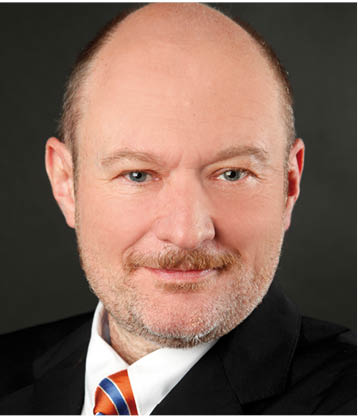
These are three major meta-topics that require someone who is proficient in them and, above all, capable of driving them forward with foresight. This person was found in Prof. Dr. Dr. Klaus H. Nagels, who had been teaching as a private professor of medical management and health sciences at the University of Bayreuth since 2010. Until 2015, he represented his almost namesake, Prof. Dr. Eckhard Nagel, who, during this period, held the position of Medical Director and Chairman of the Board of the University Hospital Essen.
Nagels had already been in discussions with the now deceased health economist Prof. Peter Oberender about possible research collaborations, and thus had been connected to Bayreuth since the end of 2007. Much of his motivation comes from his own experience in healthcare. Back in the early 1980s, he worked for some time in the X-ray department of pediatric oncology at the University Hospital of Bonn. Nagels: "At that time, children with sarcomas or leukemia often came there, but for many of them, the disease could not be stopped at that time. Through the children's many visits to the imaging department, I witnessed the progression of the disease and the approach of death."
That stays with me and still drives me today. Thankfully, we've made progress since then, and the combined power of molecular biological insights and digital optimization options gives us hope for further successes." For those who have experienced something like this personally, the rather technocratic term "unmet medical need" also has a face and a connection to personal fates.
Nagel's contribution to research often lies in identifying the direction of innovation-driven changes, preparing the ground for the implementation of innovations, and, above all, helping to accelerate translation processes. This requires understanding success factors and, on the other hand, realistic assessments of the value of innovations for healthcare must be determined and evaluated on an evidence-based basis. "Clinical and health economic translation-
parity are indispensable instruments for this,” says Nagels from his many years of experience as a pharmaceutical manager and management consultant with a medical and pharmaceutical background, who appreciates the value of business and economic instruments for the preparation of evidence-based decisions in this regard.
Medicine, health sciences, and economics are not mutually exclusive when it comes to creating evidence-based transparency. "We need this in healthcare, too, to decide which care concepts to abandon and which to incorporate into healthcare from this tremendous stream of innovations," says Nagels. His vision for the coming years is to support the digital transformation, especially with regard to the convergence of data streams. This could further optimize patient care, particularly in oncology, but also for many chronic diseases.
Appointed to the newly created W3 Chair for Medical Management and Health Services Research at the University of Bayreuth in 2016, which complements the existing portfolio, Nagels enriches the education of approximately 100 to 120 young health economists* (BA, MA, MBA) each year with this vision. In addition to his duties as chair holder, Nagels is chairman of the University of Bayreuth's Ethics Committee and is involved in the AMNOG Arbitration Board and the European Society for Radiotherapy and Oncology (ESTRO).
Although the chair's move to new premises in April 2017 entailed considerable effort, the continuity of the research projects Nagels had supervised for many years was maintained, and the associated research successes were achieved. The "CardioBBEAT" project, the first prospective and multicenter study in Germany to simultaneously analyze both the clinical and economic effects of telemonitoring in 621 high-risk patients with chronic heart failure in a randomized controlled trial, was successfully completed.
Since May 2018, the chair team has been collaborating with a leading provider of medical practice software, focusing on digital applications aimed at improving care and efficiency in practice workflows. The scientific research conducted by Dominik Seitz, for example, takes into account service theories that have been further developed at an international level in Bayreuth for years.
The chair's overriding premise and philosophy is that scientific theory, both medical and health science and economic, can help structure the challenges of healthcare practice and address them in a solution-oriented manner. Nagels: "Theory and practice are not mutually exclusive; both are relevant, and we are also leveraging previously unused theoretical approaches to structure potential contributions to healthcare and the significance of the many facets of so-called 'digitalization'."
The chair team, which includes Dr. Reiner Hofmann and Dominik Bindl as an extended leadership group, focuses on the application of health economic, clinical-epidemiological and health services research methods in the respective context.
From the perspective of innovation and technology management, the configuration and coordination of core care-relevant processes is given overarching priority, especially since the research team also sees these as the constitutive elements of digital transformation in the healthcare system.
In Nagels's view, considering the many innovations and expansions of diagnostic, preventive, and therapeutic options, there is a growing realization that the influence of the configuration and coordinated coordination of all healthcare components, from "input" to "outcome," has largely been scientifically investigated to a limited extent. In his opinion, greater precision in medicine than before would certainly be feasible even under everyday conditions if the results of healthcare research were taken seriously. Nagels: "This is precisely where the potential for improving treatment outcomes lies, the source of greater patient safety, and the approaches for effective and efficient use of resources, especially when considering the consequences of a lack of precision, for example, in diagnostics." He therefore considers healthcare research to be one of the most strategically exciting research areas – if only because healthcare research forms one, if not the definitive, platform for the pioneering topics and segments of digitalization.
The chair is well-equipped for this. It covers a wide range of research areas, including analyses of the effectiveness, acceptance, and framework conditions of technology-supported forms of care, and research into digital transformation, particularly in the outpatient sector, with regard to existing and emerging business models. Furthermore, work is carried out on pharmacoeconomic analyses, cost-of-illness studies, discrete choice experiments, and quality-of-life research on the aforementioned rare neuromuscular diseases, as well as outcome and cost comparisons of oncological treatments, especially in radiation oncology.