Zum Inhalt springen
Sponsorship
Die MVF-Knowledge-HubsFrisch aus der Forschung. Täglich aktualisiert!

Suchen Sie in Hunderten nationaler und internationaler Datenbanken nach dem neuesten Studienwissen der angegebenen Themengebiete und/oder lassen Sie sich werktäglich per Newsletter informieren. Die Newsfeeds werden auf deutsch übersetzt and nach Übertragbarkeit auf das deutsche Gesundheits-/Versorgungssystem ausgewählt:

Zu den Knowledge-Hubs

“Some districts have good conditions”

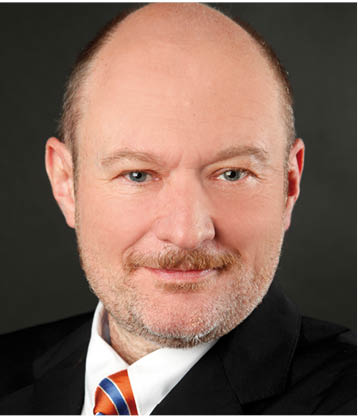
The “Integrated Care for Healthy Kinzigtal”, which was launched in 2005, is definitely a flagship project of a different, more modern care concept. A whole series of evaluations of individual intervention programs as well as the results for all insured persons of the participating health insurance companies show that, on the one hand, hospital admissions and the number of prescriptions for unnecessary medication are decreasing, and on the other hand, the contribution margin, for example for the residents of the nursing homes in Kinzigtal, for whom a special care program was started , was already significantly positive in 2010, whereas in 2007 it was almost minus 3,000 euros. “The current results show how quickly integrated care can lead to substantial success, to the benefit of both the insured and the health insurance companies,” emphasizes Helmut Hildebrandt, board member of OptiMedis AG and managing director of Gesundes Kinzigtal GmbH. Hildebrandt sheds light on the success factors of the model he initiated in an interview with “Monitor Healthcare Research”.

Read more
First publication date: 24.02.2012

Additional Information

Plain Text

>> The Kinzigtal is a kind of showcase model. However, there are certainly other areas in Germany that could be considered for such a model, which is now evidence-based. Could this model be scaled to achieve increased supply on the one hand and increased economy on the other?
You could.

But?
Different things are answered. The most common prejudice heard is that the Kinzigtal model would only work because there are mountains around it and the patients basically can't leave.

Is that correct?
Of course there are mountains. But you should also know that the Kinzigtal is a relatively large, long region of at least 50 kilometers. So you've been driving from one side to the other for a while. In addition, the population in Kinzigtal is relatively mobile, which has to do with the high commuter rate. This means that there are high litter and litter effects in health care as well. You also go to the doctor in the nearest district town and not in your home region.

So the Kinzigtal model is not the best model region?
Not the best, but a possible one. In a big city it might even be easier to set up such a supply project. I don't exactly mean a trendy district that I wouldn't necessarily go to because the mobility is too great and the population is too young.

And the specific supply requirement is too low.
That too. It should be noted, however, that with such a model you always invest in a population as a whole. That is why such a model would be easier to set up in cities or, better, districts with a classic building structure and higher agglomeration.

Are federal states showing interest in your model?
Ministers, members of the state parliament and patient representatives certainly encourage us to think about rural care. ...

Detailed interview: see archive, MVF 03/12 (access only for subscribers)

Do you want to leave us already?

Subscribe to our newsletter quickly. Then you can be sure that you won't miss anything.