Ability groups yes, quality no, level no
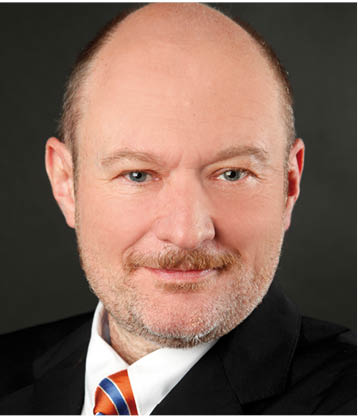
Even though Federal Health Minister Karl Lauterbach was able to announce a fundamental agreement with the states on the federal hospital reform at the beginning of July, this does not mean unanimous. Two federal states in the extreme north and south had a different opinion: 14 federal states voted in favor of the project, Schleswig-Holstein abstained and Bavaria was against it. The Bavarian Health Minister Klaus Holetschek explained why he voted differently than all of his colleagues during the opening event for this year's Capital Congress 2023 in front of the auditorium in the semicircular forum area of Berlin's hub27, which is embedded in an exhibition hall.
>> State Minister Klaus Holetschek, MdL and head of the Bavarian State Ministry for Health and Care, nonchalantly stated at the beginning of his keynote speech that compromises definitely have to be made, which will work “if you join forces”. This does not seem to have been the case at the last federal-state talks on the upcoming federal hospital reform or - as can be assumed - he simply has a different opinion on one factual issue than all the other health ministers. He told the interested audience at the capital congress that “the benchmark of every reform is not an end in itself,” but that it is also “not the financial question per se,” but rather how “we can best provide for the people in this country in the future “.
Of course, the Bavarian minister continued, we have to talk about the reform and none of his colleagues from the states would deny that hospital reform is necessary. “But we are now struggling to find a way forward, and this struggle is good.” Therefore – says Holetschek – “we should first wrestle with each other as best as possible over the details so that we can then get the law underway together.” But the Bavarian immediately strikes a massive verbal block: The tasks of the federal and state governments have clear boundaries as to “who is responsible for what” anchored in the constitution. Holetschek: “I want to make that very, very clear again. What care will take place in the future will be decided solely by the state and not the federal government.”
Which doesn't mean that what comes from Berlin or other federal states is bad per se just because it isn't colored white and blue. “I tell you clearly that in the future we will plan according to performance groups,” explains the State Minister. With this approach, which comes from the North Rhine-Westphalia hospital plan, he believes “we can all live in the meantime”. According to Holetschek, he can also live with redefining quality. But then not really, because for him it means that there have to be further exceptions and opening clauses because the supply structures are simply different in the countries. Original sound from the Bavarian Minister of Health: “In Bavaria we are talking about a large country with certainly different requirements than some other countries.” Even if quality is an important feature, he warns that “everyone who is still doing the work out there at the moment to say that it doesn't offer quality." This is a way of disavowing the people who do their best in hospitals, even if the same quality is not offered everywhere. Of course, Holetschek continues, there are differences, but you shouldn't say to people who work as nurses or doctors in sometimes smaller houses: “We don't want you!” Holetschek: “We need them, all of them People who are out there doing their duty because we are talking about a shortage of skilled workers and skilled workers.” The level classification of hospitals also plays a role in this area for him.
In his opinion, if quality is defined by the service group, the necessary quality can be achieved in each clinic in the respective service group. His petition: “That is the wrong statement: abolish the levels.” Despite all the digitalization, people will still be needed in the future to do their job. In Holetschek's opinion, this must also be a message from this congress: "We have to improve the working conditions for certain groups in care, and I would also make the allowances tax-free."
He made this statement despite the fact that he immediately stated that hospital insolvencies would have to be accepted as the budget situation became more difficult. But “that’s just the way it is” is not acceptable to him. There should be no capitulation to the question of “how much money we get”. First and foremost comes the question of what structures are necessary for future-proof supply, but a Federal Finance Minister is not allowed to decide which supply takes place where. Holetschek said categorically: “That’s a no-go for me.”
According to the Bavarian Health Minister, the insolvency of a hospital should not be a coincidence. Of course, structural change is necessary, but not in a cold way, but “intelligently and together in the regions, with the medical profession and everyone who works out there”. It only works with everyone working in the health system, and only in dialogue. “That's why we have to fight with each other for the next few weeks,” said Holetschek, explaining his attitude, which was also expressed in the no vote at the federal-state talks with the basic agreement - without him. He also formulated a condition: “If we don’t put money into the system again, then it will be bitter for the people in our country.” And with an absolutely warning undertone: “If Karl Lauterbach spoke of a revolution, perhaps we are at one Revolution that will subsequently result in suffering for the people in this country because important and necessary supply structures have been destroyed.”
Franke: Courage for structural reforms
Not entirely to the astonishment of the audience, Prof. Dr. was present at the subsequent HSK panel discussion. Edgar Franke (Member of the Bundestag) has a slightly different opinion. The Parliamentary State Secretary in the Federal Ministry of Health
sundheit responded to Holetschek's demand for “more money into the system”.
a very clear rejection, but formulated
also a way out. With regard to the many things that the Bavarian Minister of Health mentioned in his speech, it must be taken into account that “the financial framework conditions are not exactly
de are good to address this structural reform
hen”. Nevertheless, it must be addressed, even if this is “incredibly problematic” and “incredibly difficult” in view of the pandemic we have just survived, the associated delivery bottlenecks, the subsequent war in Ukraine and the around 500 billion euros in economic aid required for this. Franke: “That means that we won’t have very easy times in terms of budget, at least next year 2024, if we want to comply with the debt brake.” There is, however, a way out – according to the Parliamentary State
Secretary in the BMG – that if more money in
Hospital system is necessary, including the states
“We should do a little more investing.” Franke: “However, I believe that in the long term and by 2025 at the latest, we need a federal-state fund with which the transformation can be financed.” Structural change will be difficult from 2025 without a transformation fund.
Nevertheless, Franke Holetschek was right on one point. “We can only achieve hospital reform if we all pull together and in one direction,” he explained to the audience at the opening forum. To do this, we would meet every week at the technical level and twice a month at the political level, which is “the way we can move forward”. His minister – Prof. Dr. Karl Lauterbach – said that we need a law that requires approval, which is only possible with the states. Franke: “Of course we still have to come to an agreement,” but also about “the countries perhaps still going along with the investments.” Of course, according to the BMG ministerial, he understands that employees in many hospitals in rural areas are afraid that a clinic
reform could lead to nationwide coverage no longer being possible
and jobs and locations were lost.
Franke: “We have to take this seriously.”
But Franke believes the other side of the coin also needs to be looked at closely. This became clear to him after his visit, which took him to rural areas and around 50 clinics - including in Lower Bavaria. According to Franke, there were regions in which a 400-bed hospital was only twelve kilometers away from a 150-bed hospital. This creates a coexistence of oversupply and undersupply. Many clinics are in the red, the economic situation for some is difficult and there is a risk of bankruptcy: this is also why the hospital reform is so important. If you add to that the shortage of skilled workers, “we have to tackle these structural reforms and have the courage to do them.” However, this is not about closing hospitals in rural areas across the board, but rather about strengthening hospitals that are particularly in need - through revenue-independent flat-rate payments that complement the DRG system - in order to relieve them of economic pressure.
However, Franke also drew a clear red line by demanding: “We have to create service transparency.” It is necessary to improve the quality of treatment and ensure that “not everything can be done in every hospital”. For example, if a patient suspected of having a stroke needs to be admitted, Franke's example would be to go to a clinic with a stroke unit, but not to the next small hospital around the corner.
Gaß: 20 percent in 20 years
Clinic locations fewer
If Federal Minister Prof. Dr. Karl Lauterbach says publicly that in the next few years there will be far fewer hospitals in this country than there are today, that is one thing. It is completely different if Dr. Gerald Gaß, CEO of the German Hospital Society e. V., agrees – and that too in public at the HSK.
Gaß explained that no one is contradicting the fact that the situation in hospitals is serious. The words of the Federal Minister of Health at a GKV event in Berlin were “legendary in this regard”. Lauterbach said that 80% of hospitals were in the red and 25% were at risk of insolvency, which the new numbers in the hospital rating report objectively represent “very understandable and not influenced by us”. Gaß' hope: "If the hospital reform begins to have an impact in 2025, then the situation should improve." He said publicly that "in ten years, in such a transformation process, we will definitely have 20% fewer clinic locations and still be able to provide good care."
The hospital scene is aware that change, mergers, transformations and outpatient care are necessary. However, in the opinion of the DKG, this necessary process was “poorly, even miserably, set up by the federal government”. Gaß: “Hospital care is a task about which people are rightly extremely sensitive.” Poor actions here will catch up with politicians and are already catching up with them in some cases today. He therefore appealed to the federal and state governments not only to agree on a key points paper, but also to initiate a transformation process with the players in the healthcare system that is worthy of the name, backed by money, but not money that subsidizes what is already there enables, “but what really enables forward development”. <<