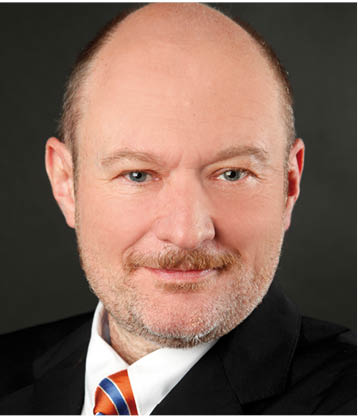
Lauterbach: “A highway of fast studies”
“A decision that sustains and strengthens Germany as a location” (Habeck); “A really good day for Germany” (Lauterbach). It is rare that two federal ministers - Prof. Dr. Karl Lauterbach (Health) and Dr. Robert Habeck (Economy and Vice Chancellor) appear together at a press conference for a pharmaceutical company. All that was missing was Bettina Stark-Watzinger, Federal Minister of Education and Research, to round out the triumvirate of ministries significantly involved in the topic. After all, the research-based pharmaceutical company Eli Lilly and Company in Berlin announced far-reaching investment plans in Germany: construction of a new high-tech production facility in Alzey is to begin in 2024 - subject to the approval of the state authorities - for 2.3 billion euros. Initially around 1,900 employees will work in the new production network, and after completion in 2027 around 1,000 employees will work.
>> “This is an important decision that will further strengthen Germany as a pharmaceutical location,” said Prof. Dr. Karl Lauterbach, Federal Minister of Health, on the record. The swansong of Germany in this area is “simply not right”. Lauterbach continued: “We have a strong pharmaceutical industry and benefit from additional investments.” This is thanks to basic science that has been very good for years, but also to equally good engineering and skilled workers. This means that the conditions for basic science and production in Germany are excellent.
Lauterbach wants to create what is still missing together with companies like Eli Lilly and Company by igniting a “next stage”: research and production of innovative products should be “even more likely to be brought to Germany”. “Important laws” have already been made for this purpose, and another important law will be coming soon that will facilitate and accelerate medical research in Germany. The aim of this medical research law is to simplify and accelerate the remaining problems with data protection and ethics when approving studies while at the same time improving security. Lauterbach: “There will be less bureaucracy and a highway of faster studies.” This is something that other countries would also benefit from, because the results of the resulting studies in turn form the basis for new products and the basis for the further development of existing products.
However, since science in medicine and especially in drug research will also change because artificial intelligence and digitalization will play an increasing role, his ministry is also active here: With the Digital Act and the Health Data Use Act “we want to make it possible in the future “With artificial intelligence processes, active ingredients can be developed more quickly” and their effects can then be recognized much more quickly in routine care. These are opportunities that previously only existed in pioneering countries like Israel. “That’s exactly what I want to do on a much larger scale, so that Germany can really play a completely different role in research, production, and further development of drugs and medical devices,” said Lauterbach. According to the Health Minister, this can only be done because “we are also trusted”. Lauterbach: “And Lilly brings trust today.” The company is investing in Germany and is making a good investment that will be worthwhile for the company because the products manufactured in this way would help patients. There are also research announcements for new products.
With the planned facility, Lilly wants to expand its global production network for injectable medications and the associated injection aids (pens). This is intended to meet the growing demand, among other things. after diabetes medication can be served reliably. Since 2014, Lilly has expanded its portfolio to include a total of 21 drugs and plans to introduce additional drugs in the coming years. “With every investment in our manufacturing capabilities worldwide, we are committed to the patients of today – and to the people who may need our medicines in the future,” said Edgardo Hernandez, executive vice president and president of Lilly Manufacturing Operations. “This state-of-the-art injectable drug manufacturing site with the latest technology will enable us to continue to reliably provide safe, high-quality medicines.”
With the new factory in Alzey, Lilly will operate a total of six production sites in Europe - including one in nearby Fegersheim near Strasbourg in France - and thus create operational synergies. Through the early involvement of Germany Trade & Invest (GTAI) and the trusting cooperation throughout the entire period, Lilly was able to find the best possible location for this major project from a variety of attractive options.
“At Lilly, we are always looking for partners who share our vision of improving people’s lives and want to help us bring the next generation of medicines to market,” said Ilya Yuffa, executive vice president and president of Lilly International. “With our investment plans in Alzey, we want to take cooperation and innovation in Germany and Europe to a new level and pursue one goal together: finding sustainable solutions for patients.” Lilly has already invested more than eleven billion in the past three years US dollars in production facilities worldwide announced.
With the also announced investments of up to $100 million, the company aims to strengthen its relationships with the scientific and public sectors in Europe, support the start-up ecosystem of the life sciences industry and diversify Lilly's growing presence in Europe. The goal: accelerate the development of innovative medicines that can improve the lives of people worldwide.<<
by: MVF editor-in-chief Peter Stegmaier