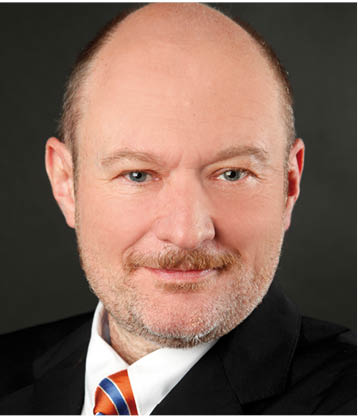
“The great opportunity of the future,” says Prof. Dr. Frank Jessen, Director of the Clinic and Polyclinic for Psychiatry and Psychotherapy at the University Hospital of Cologne, the model of Disease Interception. Many authors and interlocutors who speak in the specialist book of the same name – published in the “Monitor Healthcare Research” (MVF) series – find similarly strong comparisons. “A bold and hopeful vision,” for example, is what MVF editor Prof. Dr. Reinhold Roski in his editorial describes this “promising concept” (quote from Prof. Dr. Dr. Eva Winkler, senior physician at the National Center for Tumor Diseases and head of the research focus “Ethics and patient orientation in oncology), which “represents the most fervent wish of all affected patients and Patients” (Dr. Martin Danner, BAG) could make health instead of illness come true. Above all, because this “bet on a better future” (Wasem) has the potential to become “an established repair shop after centuries of medicine,” as Prof. Dr. Jochen A. Werner, Medical Director and Chairman of the Board of the Essen University Medical Center, states in his contribution that he is “opening a new chapter”.
>> The specialist book “Disease Interception” brings together original scientific articles and interviews with opinion leaders from politics and the health insurance sector to form a current picture of knowledge and sentiment. It shows what evidence there is already for this topic today, according to co-editor Dr. Christoph Bug, Medical Director and Managing Director of the pharmaceutical company Janssen Germany, which supported the creation of this publication - is located “at the interface between medical vision and concrete research and development”. In interviews with politicians and representatives of the cash register, we will also find out how self-administration, politics and society can deal with this system innovation that is coming to us sooner or later. Or must, if you follow MP Michael Hennrich, who says: “If you assume that the prevalence of Alzheimer’s disease will triple worldwide by 2050, we cannot close our eyes to an opportunity like Disease Interception.”
Doch vorher muss, wie Franz Knieps, Vorstand des BKK Dachverbands, unter Ulla Schmidt acht Jahre lang Staatssekretär im Bundesgesundheitsministerium, rät, ein „gesellschaftlicher Diskurs geführt werden“, um
wichtige Fragen zu beantworten: „Wie soll unsere Zukunft aussehen?“, „Wie wollen wir diese gestalten?“, „Was sind die besten Rahmenbedingungen?“, „Wieviel wollen wir dafür ausgeben?“ und „Wollen wir den Prozess beschleunigen oder bremsen?“ All diese Fragen bedingen nach Meinung von Knieps einen gesellschaftlichen wie politischen Konsens.
But this will not be as easy to achieve as Prof. Dr. Jürgen Wasem, holder of the Alfried Krupp von Bohlen and Halbach Endowed Chair for Medical Management at the University of Duisburg-Essen, explains that, in his opinion, there is no way around using the health economics toolbox that has so far been established in the statutory health insurance system in Germany (see p. 8 ) to expand.
Damit käme man bei der in Deutschland bislang nur sehr zögerlich – wenn überhaupt – geführten Diskussion um qualitätskorrigierte Lebensjahre (QALY: quality-adjusted life years) an. Disease Interception bietet nach Ansicht von Wasem jedoch nun den Anlass, über dieses im angelsächsischen Raum und in der internationalen Gesundheitsökonomie seit Langem verwendetes Maß, nachzudenken, und zu hinterfragen „ob gesundheits-ökonomische Modellierungen wie QALY bei uns wirklich weiterhin ein Schattendasein fristen müssen, vielmehr dürfen“. Dies aber sei in erster Linie eine politische Entscheidung, die jedoch sehr wohl von der Gesellschaft vorangetrieben werden könnte, und vielleicht auch müsste. Wenn sie es denn wollte.
Die nötige Diskussion dieser Vision bezeichnet Knieps als eine „strukturerweichende“, die „unserer Gesellschaft und insbesondere dem Gesundheitssystem ganz gut“ tue, weil anhand eines Modells, wie dem der Disease Interception, diskutiert werden kann, „wohin sich die Gesellschaft entwickeln will“. <<