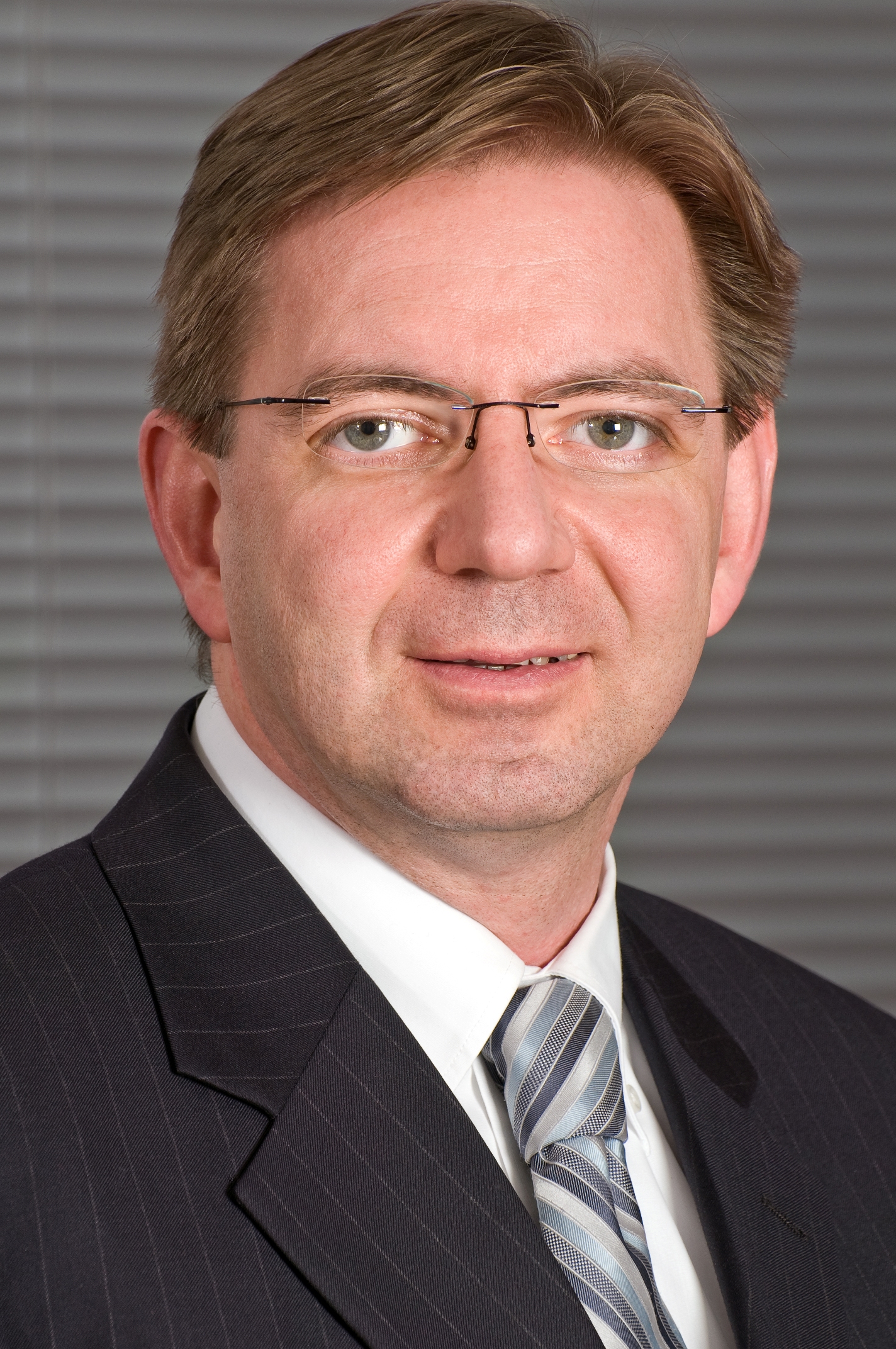
According to the arguments presented recently at the bwcon event in Stuttgart by Dr. Werner Baumgärtner, Chairman of MEDI Germany, and Dr. Rolf Hoberg, CEO of AOK Baden-Württemberg, "family doctor-centered care (HZV) at the federal level has significantly lost its innovation potential" if the current cabinet resolution on the Statutory Health Insurance Financing Act is implemented unchanged. These are the words of the HZV cooperation partners in Baden-Württemberg—also reflected in recent press releases. It was immediately clarified that the AOK family doctor program, for which the eHealth specialist InterComponentWare AG (ICW) is providing the encapsulated core, connector, and IT infrastructure, is to be continued until at least the end of 2015. It can also be assumed that the family doctor contracts concluded with many other health insurance funds will continue at least until 2012. Time is running out for the contracting partners and ICW, as a telematics service provider, to prove whether GP contracts have positive effects on the quality of care and cost-effectiveness. In an interview: ICW CEO Peter Kirschbauer and board member Jörg Stadler.
>> What can ICW do to help the IT behind the HZV to succeed?
Stadler: Before and after the AMNOG comes into force – and the final word on the actual wording of the passages concerning selective contracts has not yet been spoken – a strict distinction must be made between, on the one hand, the situation as it currently presents itself in Baden-Württemberg today and in the near and medium term, and, on the other hand, the actual contractual situation that can be observed nationwide – also today and in the future. It is certainly true that if Federal Minister Dr. Philipp Rösler sticks to his opinion and enforces it in law, that the collective contract system should be the blueprint for the selective one, future selective contracting will not exactly be encouraged.
Kirschbauer: But on the other hand, in the past two years, in which GP-centered contracts have existed in Baden-Württemberg and have gradually been implemented, facts have been established; facts that cannot simply be ignored.
What about a potentially real IT infrastructure that might one day exist, into which selective contracting needs to be integrated?
Kirschbauer: The crucial aspect of the situation in Baden-Württemberg is that the IT structure follows the applications, not the other way around. Until now, IT here has been driven solely by primary care physicians. Without this new contract world, the currently existing and functioning infrastructure would not exist either.
Again the keyword blueprint.
Stadler: Baden-Württemberg already has an intact IT infrastructure that connects HZV physicians with health insurance companies—primarily with AOK Baden-Württemberg, but also with Bosch BKK and others. This IT infrastructure is no longer a blueprint; it has been institutionalized and industrialized. And: It works and could ultimately undergo a nationwide rollout.
Would it be possible to create a larger, even nationwide solution based on the existing IT infrastructure in Baden-Württemberg?
Kirschbauer: Certainly. We have the classic chicken-and-egg problem with the nationwide IT infrastructure: There have been no value-added applications so far because there was no infrastructure. Conversely, because of the lack of value-added applications, there's no business case to even begin to finance the infrastructure. But in Baden-Württemberg, the chicken-and-egg problem was solved through selective contracts; here, the IT structure is a living reality.
Stadler: The security requirements we already meet in Baden-Württemberg would allow for a nationwide rollout. Ideally, our connectors, which are designed to be Gematik-compatible from the outset in accordance with our contractual partners – AOK and Medi Baden-Württemberg – and certified by the BSI (Federal Office for Information Security). However, we are already in discussions with the BSI to obtain certification outside of Section 291a. If this succeeds, and we expect it to, we will be relying on a standard that is unassailable.
One of the main questions will also be to what extent your IT is able to scale up or standardize.
Kirschbauer: It's a question of technology and the necessary practicality. Of course, doctors don't want to be confronted with too many different processes, forms, and interfaces in their daily routine; that's understandable. It's true that certain processes and interfaces in IT applications need to be standardized more than they are today. But that's not so much our problem; it's the problem of the various practice system providers.
Because they offer a clearly defined “encapsulated” core.
Stadler: Exactly. Essentially, the entire selective contract world takes place in this core. It's called "encapsulated" because a high security structure prevents the contract details stored there, known only to the contracting parties, from leaking out. Various practice software solutions from other providers are now docking onto this core, providing the corresponding forms, procedures, and interfaces. These providers are naturally called upon to standardize far more than before.
Question about the "encapsulated" core: How many contracts can be processed via one and the same core? It's hard to imagine that 100 or even 600 different contracts can be managed in one core, even if the standardization is high and the basic modules are the same. There has to be a limit somewhere.
Kirschbauer: The technician says: It depends. It's true that the contracts are fundamentally very similar and will continue to be so in the future. This similarity is essentially standardized and therefore doesn't need to exist 100 or even 600 times in different forms. In addition, there are rule-based systems with parameters that almost every insurance company may define differently, but which can be processed based on rules.
Stadler: However, it becomes difficult when it comes to elements of contracts that have to intervene in the operation of the practice systems.
With the core, you therefore have your own business model and where things get difficult, the practice software providers are responsible.
Kirschbauer: That would be too simple. Of course, we want and can help, for example with forms. For example, we could bring medicinal product forms to the user interface via our core and have them displayed in every doctor's system. Some of the data required for this could already be imported from web services, so that the corresponding form is already partially completed. The doctor then only needs to enter a few details, which are checked against value tables. And if the form contains no errors, it can be sent via the core to the processing center. This would be a service that would greatly reduce the workload for all PVS providers, because a necessary technical solution only needs to be programmed once in the core and not multiple times in each PVS.
What about your own HZV software solution “Hausarzt+”?
Kirschbauer: In addition to developing the encapsulated core, we are simultaneously driving forward the development of Hausarzt+ and will fully fulfill our contractual obligations. We are engaging with PVS providers in bilateral discussions and workshops to define common strengths and eliminate weaknesses.
What are the problem areas?
Stadler: IT is and should never be an end in itself. But it must also be clear that without IT, a contractual structure as complex as those for general practitioners or specialist contracts can never function. Especially in the early days, the difficulties that such an undertaking automatically entails were evident: Above all, there was a veritable flood of changes, whether from politics, data protection, or from the contractual partners. For us as an IT provider, this meant enormous time pressure in implementing all these requirements.
Because of the high complexity behind it?
Kirschbauer: It's not easy when the contracting parties, despite pressure from the KV system or other self-governing groups, agree on a selective contracting process and establish a completely new care structure for it. This is something that is negotiated and – in a positive sense – argued about. But once they have reached an agreement, they naturally want to see the necessary IT structures implemented as soon as possible. This creates enormous time and success pressure, which, in principle, everyone is exposed to.
How can collaboration be improved?
Stadler: This has already been partially achieved, with the contracting partners creating so-called specifications, which we and all other software companies involved can use as a basis for development. But once the specifications are approved, time is running out again.
What about your health record?
Stadler: Technically, all patient data could be loaded into the health record with a click of the mouse.
But this is not done or is done too rarely.
Kirschbauer: True. Unfortunately, neither we nor the contracting parties of the selective contracts have yet succeeded in communicating to the physician what core benefits he or his patient will derive from them.
This leads back to the problem of the nationwide IT infrastructure: As long as the central question of benefit isn't resolved, even the best structure or applications are of little use. But what benefit does a doctor get from a health record, other than the fact that the data is quickly, comprehensively, and digitally available to another doctor in an emergency or in case of doubt, even if a patient changes doctor?
Kirschbauer: The counter-question is whether the doctor really needs to benefit from a medical record. The question should rather be: What does it do for the patient?
How could this system be transformed into a better one?
Stadler: This is what happens in the HZV contracts, where health insurance companies and physicians agree on a structured care model. That's the first step. Now the second must follow, which will require physicians to keep the available patient data in digital form.
Kirschbauer: They're currently doing too little of this because this option isn't yet sufficiently integrated into their computer-supported workflows. Incidentally, this option has been available in our HZV software solution, Hausarzt+, for a long time, and it's being used. If doctors could upload patient data from their PVS system to the health record with a mouse click, or even send it to the physician providing further treatment, they would do so—at least more than before.
A similar system seems to apply here again.
Kirschbauer: Exactly. Here, the chicken and egg principle applies again: Selective contracts create benefits, and IT creates the opportunities for them.
Where do you see the future for your company? In "Hausarzt+" – a HZV contract software solution with its own interface? In the "encapsulated" core, which could be understood as a kind of "Intel inside" of the HZV contract world?
Stadler: Compared to the encapsulated core, demand for Hausarzt+ is decreasing. Current installation figures demonstrate this: Our encapsulated core is running on around 7,000 contracted physicians, while Hausarzt+ is running on only 400. Our goal must therefore be to become more of an enabler of the selective contract world than before.
Kirschbauer: We also have other solutions in our portfolio. These include solutions for hospital networking, care management, and telemedicine. Here, I would like to mention the research project "Partnership for the Heart" at the Berlin Charité, in which we are participating. The goal here is to ensure that telemedicine services for heart failure are recognized as standard services.
Are these different IT worlds or are common standards used?
Kirschbauer: We primarily use an integration platform for developing applications and solutions. It supports both integration and data exchange scenarios.
Which in turn represents its own small IT infrastructure.
Stadler: Our platform hosts data, offers networking opportunities, and content management. ICW's motto is: Connecting instead of replacing. Connecting the various participants is a core competency, one in which we have extensive experience and offer the appropriate technology.
The interview was conducted by Peter Stegmaier.