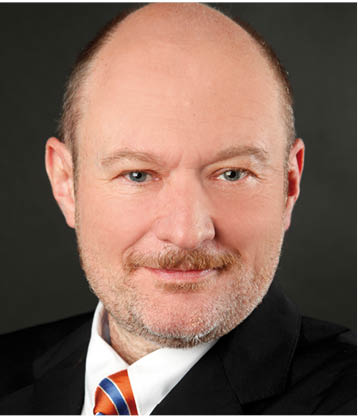
>> In his lecture, which he entitled “Vaccination gaps – really just the effects of Corona?”, Gosch addressed the “increased politicization of vaccinations and vaccination medicine” observed during the pandemic. This would have to do, among other things, with “sometimes disproportionate, often poorly communicated measures with significant restrictions on fundamental rights, some of which have been declared inadmissible by the courts.” In combination with “inconsistent, unscientific, fear-mongering behavior on a talk show and Twitter level,” in Gosch’s opinion, this would have led to “psychological reactance with a decline in the general acceptance of sensible vaccination programs.” “Trust in the safety and effectiveness of vaccinations is crucial” for willingness to vaccinate.
With a view to the war refugees from Ukraine and other countries, the vaccination rates and the approaches of the various vaccination strategies in Germany must be reassessed. Since diphtheria, for example, is still endemic in Russia, it would be entirely possible that this vaccine-preventable disease could be reintroduced at certain points.
Gosch chose the example of “diphtheria vaccinations” to begin his remarks on vaccination communication. He characterized this situation with the following argument: Even if the number of diphtheria cases in Germany is still low - he spoke of 10 predominantly cutaneous diphtheria cases in 2021, 16 in 2020 - and one should not dramatize the impending danger, one simply has to state that that the average diphtheria vaccination rate in this country is only 52 percent.
However, Gosch cannot understand the inadequate vaccination rate, especially for this vaccine-preventable disease. For him, it is inexplicable why there is an “imbalance between vaccinations against whooping cough and vaccinations against tetanus and diphtheria,” because these vaccinations can be administered in combination. In addition, the STIKO recommends a booster schedule that, in its opinion, is not particularly favorable, because a single booster vaccination against pertussis is certainly not enough, especially since the related vaccine protects for a maximum of four years. Gosch: “If this STIKO recommendation were followed, the vaccination rates against tetanus and pertussis would have to be the same.” However, since this is not the case, it means that “these vaccinations are not implemented sufficiently well in doctors’ practices”; also that “there is obviously insufficient knowledge about vaccine-preventable diseases not only in the population, but also in doctors’ practices”.
That is why one of his core demands is that in the future there must be, on the one hand, open communication that is understandable to laypeople with the presentation of current, valid data, and, on the other hand, information that is understandable to laypeople and age-adapted to weigh up the risks between disease risks with vaccination rates adapted to age and risk groups and risks attributable to vaccines.
In his opinion, the most important communicator, trust builder and source of inspiration can only be the medical profession and medical professionals, so the most sensible approach is to “consistently strengthen vaccination medicine in this sector”. It is also necessary to provide information and transfer knowledge in an appropriate form, taking into account Article 2 of the Basic Law and Section 7 (1) of the Medical Professional Code.
“Now draw the right lessons from the pandemic in order to sustainably improve care for the population,” demanded Dr. Jens Vollmar, Chairman of the vfa Vaccines Committee, who discussed “reasons and possible solutions” in his lecture “Risk to ensuring supply”. “Vaccinations can make a crucial contribution to relieving the burden on the healthcare system,” said Vollmar, of course also - but not only - with a view to the corona pandemic. For example, the Covid-19 vaccination in Italy halved the number of Covid deaths and prevented two million deaths in the USA.
However, this spotlight on the corona vaccination, which dominates the vaccination topic, should not obscure the fact that “even before Covid, vaccine manufacturers had made a significant contribution to global disease prevention”. According to very conservative figures - those from the WHO are three times higher - according to information from “Vaccines Europe” (2021), around 20 million deaths, 500 million cases of illness and 9 million long-term disabilities were prevented worldwide through vaccinations in the last 20 years before Covid. In Germany, too, the burden of disease would be significantly lower. According to Vollmar, more than 50% of all reportable infectious diseases and more than 40% of the associated hospitalizations could be avoided, as the RKI annual statistics of reportable diseases for 2019 show. However, one should not forget that the HPV vaccination in girls, for example, can significantly reduce the occurrence of cervical cancer. But, says Vollmar: “High vaccination rates are crucial when it comes to protecting people from serious illnesses and deaths, but also to relieve the burden on our healthcare system.”
The “perhaps little-known goals” of the “WHO Immunization Agenda 2030”, which formulates a vision of a world in which everyone, everywhere and at every age benefits from vaccinations to maintain health and well-being, are defined, for example, in point 4, that “all people at all ages benefit from recommended vaccinations, effectively integrated into other essential health services”.
“Where are we here in Germany?” Vollmar asked purely rhetorically because he was also showing the German vaccination rates in comparison to other countries. There is a “significant need to catch up” here in Germany, especially among adults. Even though the vaccination rate for influenza has improved somewhat in the wake of Covid-19, vaccination rates for all other important standard vaccinations such as pneumococcal and HPV have declined massively during the pandemic, especially among adolescents and adults.
Vollmar said that we could learn from the activities that were used during the corona pandemic: “Covid has shown us that reminder systems and low-threshold vaccination offers can play a very important role in achieving high vaccination rates.”
Taking a detailed look at the federal state in which the Association of Statutory Health Insurance Physicians he leads, the KV Brandenburg (KVBB), operates, KV Chairman MUDr./CS Peter Noack said: “On the one hand, we are always positively surprised by the comparison between the federal states good results for many types of vaccinations, but were even more disappointed by the rather poor vaccination rates for corona vaccinations, especially in Saxony and Brandenburg." Nobody could explain this exactly, even if colleague Gosch had already mentioned a few facts that certainly contributed to it have. However, the KV has “no security mandate at the moment” and is therefore not responsible for ensuring vaccinations at all; at the moment only the health insurance companies can regulate this with appropriate contracts and vaccination agreements.
The Federal Joint Committee certainly has a vaccination guideline (1) that it has set, which is based on the recommendation of the RKI (2), which should then be implemented by the KVs in vaccination agreements with the health insurance companies. But, says Noack: “Since these vaccination agreements are outside of the insurance mandate of the KVs on the one hand, but also outside of the KVs’ total remuneration on the other hand, the necessary budgets are not included in the total remuneration.” This is an attempt to implement the recommendations contained in the The vaccination directive would be implemented in vaccination agreements, a matter of negotiation between the health insurance company and the KVs. Although the ideas of the medical profession and those of the insurance company regarding the implementation of vaccinations - especially with regard to costs - are often far apart, in Brandenburg they "always manage to come to an agreement with difficulty".
This is the only way to create the necessary broad impact on the topic of vaccination, which would lead to Brandenburg having higher vaccination rates on average compared to the federal territory - although still far from sufficient. This is thanks to the work in many doctor's practices and MVZs that carry out these vaccinations. If that were not the case – says Noack – “we would have an even bigger problem in Germany”. His plea: “Prevention is the prevention or prevention of illness.” And prevention includes vaccination because it allows you to avoid illnesses, prevent serious progression and therefore also save treatment costs. That is why, according to Noack, “vaccination ultimately has an economic impact”, but “prevention and therefore vaccination are always an investment in the future”.
“Are better vaccination rates possible?” asked Dr. med. Hans J. Schrörs, general practitioner and project manager of the Society for the Promotion of Vaccination Medicine mbH (GZIM), which he founded. His answer: “We have to use the opportunity of digitalization.” Digital vaccination management including a reminder system could significantly increase vaccination rates. This was already proven in 2016 by a study (3) by the LMU Munich, whereby vaccination data was collected anonymously using an electronic vaccination planner in 110 general practitioners' practices over 12 months from 2010 to 2011 and 53,443 complete vaccination documentation (vaccination passports) with 613,471 individual vaccination entries were evaluated. Schrörs: “It’s not recommended for nothing
The WHO now also has a digital vaccination management system with an included database in which the signatures for digital vaccinations and digital vaccination cards can be stored.” The nice thing about this is that a German company received the corresponding development contract, which gives him optimistic hope “that “Something positive can be brought into the world through digitalization made in Germany.” This is also urgently necessary, because so far there is no standardized reminder system, which, in combination with the lack of networking between the practice and patients and an equally missing vaccination register in combination with the loss of vaccination certificates in around 25% of the population, leads to “glaring deficits in vaccination prevention”.
In addition, there is often incorrect vaccination management in the doctor’s office, which “should cause us great concern”. Prof. Weltermann from Essen from general medicine described in a paper (4) that one in four vaccination practices makes serious errors when vaccinating, on the one hand with regard to the schedule and on the other hand with regard to the use of vaccines, and sometimes incorrect indications are given. Schrörs: “However, none of us are aware of this because we have neither a vaccination register nor a vaccination surveillance system with which health services research could identify problem areas, under- or incorrect care and gaps, including regional ones.”
In his opinion, a solution to this could be an electronic vaccination certificate, which the GZIM developed and also uses, including vaccination management and vaccination documentation for the doctor's office; For example, since 2019 for AOK Plus policyholders in Saxony and Thuringia.
A note on this: Ulf Maywald (Head of the Medicines/Remedies Division at AOK PLUS in Dresden), among others, will address the background in the follow-up congress “Quo vadis vaccination quota – desire and reality of §132 e paragraph 4 SGB V?” (5). , which will take place again virtually via Zoom on June 30, 2022 - free registration is already possible now.
Zeljar: not a doctor-replacing, but an additional vaccination offer
Rebecca Zeljar from the Berlin/Brandenburg state representative of the Association of Replacement Funds also spoke about a “decision by the replacement funds to fulfill their legal mandate”. v.
(vdek) in her presentation on the vdek model project “Charlottenburg Life: Vaccination in the pharmacy – opportunities and risks”. In November 2021, with the participation of initially eleven (currently 134) apo-
counters and a limited term over the two vaccination seasons 2021/2022 and 2022/2023 together with the Berlin Pharmacists Association Apotheker-Verband Berlin e. V. (BAV) launched a regional model project to carry out flu vaccinations.
However, the one on June 30th is not here. §132e that is to be discussed, but rather §132j SGB V
brought about, whereby - said Zeljar
openly - “we have had quite a difficult time creating additional models parallel to the world of vaccination agreements with the KVs”. In addition to certain basic requirements, remuneration is also required
to regulate health issues, training and appropriate rooms in which vaccinations can be carried out.
In agreement with the BAV and in consultation with KV Berlin, the Berlin district of Charlottenburg-Wilmersdorf would have been chosen. The justification for §132j calls for “low-threshold additional offers to the current vaccination offer”, which would usually be provided by contract doctors or company doctors or other models. Zeljar: “But not everyone, especially in younger age groups, necessarily has a family doctor, but sometimes they go to a pharmacy where they can then be offered a corresponding vaccination offer.” The vdek hopes that this will raise general awareness among all insured people for influenza vaccination, especially in vulnerable target groups.
Of course, this could also be done via app or reminder on smartphones, but it must be managed to bring vaccinations into the “focus of the population's thoughts”. This is particularly necessary in the Charlottenburg-Wilmersdorf district. According to the figures presented by Zeljar, the flu vaccination rate for people over 60 is sometimes below 30%, although the Berlin average vaccination rate of 49.1% is not much better. What is important to her is the statement that “Charlottenburg Life: Vaccination in the Pharmacy” should by no means be understood as an offer that replaces a doctor, but rather as an additional option to offer patients and insured persons a supplementary vaccination option. Above all, pharmacies often have different opening times than doctors in private practice and also have lower-threshold, quicker access to patients, which has long been recognized and used in Scandinavian countries. Zeljar: “We think that it must also be possible in this country to include other professions in vaccinations.” Of course, it’s not about including every profession, but it makes sense to integrate pharmacies into this prevention service, too to enable a broader distribution of work across several shoulders and thus perhaps to take a little pressure off the doctors, who might otherwise have to ensure additional consultation hours if the STIKO recommendations are even remotely fulfilled at some point. <<
from:
MVF editor-in-chief Peter Stegmaier
1: https://www.g-ba.de/downloads/62-492-2704/SI-RL_2021-10-21_iK-2021-12-15.pdf
2: https://www.rki.de/DE/Content/Infekt/EpidBull/Archiv/2022/Konton/04_22.pdf?__blob=publicationFile
3: Schuler, U., Comparative study on increasing rates of influenza and pneumococcal vaccination among patients with chronic illnesses and patients aged 60 and over after the introduction of the practice software Immundoc, dissertation Medical Faculty of the Ludwig Maximilian University of Munich, 2016
4: Weltermann et al., Vaccination Management and Vaccination PLOS ONE 2014 Vol 8, e105119
5: https://www.monitor-sorgesforschung.de/willkommen/kongresse/Impfen_132e