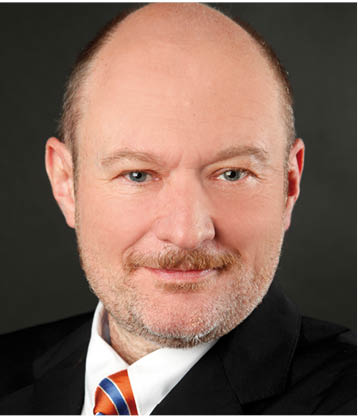
One question that has so far remained unanswered is what economic dimension a case management approach has. And even more so one who is involved in a selective contractual process. The recent publication of a study on Bosch BKK's approach to patient support provided a positive answer to both open questions. The results speak for themselves and are likely to have an influence on political decision-making, as Bosch BKK board member Bernhard Mohr said when presenting the study at the Bosch representative office in Berlin.
>> “You have to define clear care goals, which then have to be met step by step,” said Mohr, one of the success factors for any case management. These will of course be very different, such as for a stroke patient with consequential damage a certain degree of rehabilitation, for cancer patients with a recurrence a quality of life to be achieved after chemotherapy or radiation or for mentally ill patients it can be important to decide whether psychotherapy and/or drug treatment is the right way. But according to Mohr, the following always applies: “Every project has to pay off in the short or at least medium term.” Because a fund always has to make advance payments with investments, Mohr also gave hard numbers. For example, his fund had to make provisions of around 0.2 contribution rate points for the case management project “Patient Support” (see scientific articles from p. 24 ff.), which were of course also included in the budget planning. Overall, Bosch BKK expected personnel and material costs of around one million euros. In addition, there was a waiver of the practice fee of around 1.1 million euros as well as additional doctor's fees amounting to around 1.6 million euros. Mohr: “If the project had gone wrong, the sum would be the worst-case scenario.”
But there was more of a best case, like Prof. Dr., who was entrusted with the study support of the “patient support” approach. Peter Lochbach found out. In his control group study with 1,064 patients, he examined the available cost data and, due to the data availability, was able to include all of the patients' identifiable costs, but unfortunately with the exception of service expenditure for outpatient medical treatment, which Mohr was only able to quantify in general terms. It became apparent that the model - as was to be expected - initially entails additional costs in the form of expenses for patient support and costs for optimized care. However, the first reliable finding is that these additional costs turn into positive cost effects after around a year at the latest. Loecherbach: “Overall, significant savings of an average of 21.5 percent were determined approximately one year after the end of the patient support.” A conservative “extrapolation” showed that with 95%iger the savings are in the range between approx. 900 euros and 3,700 euros, as well as with 99 %iger security between 450 euros and 4,150 euros - each with an average of 2,300 euros. Loecher's conclusion: “The expenses for the medical contractual partners, for waiving the practice fee for registered patients and for the internal costs for patient support are offset by the savings and lead to the result: According to Bosch BKK, there is no improvement in care associated with additional costs." And further: "Even if, for example, additional costs remain in the sense of a full cost calculation (taking into account all investments and direct and indirect costs), the introduction of patient support results in better care and care structure for the health insurance company and thus reasonable costs -Benefit ratio.”.
Bosch CEO Mohr now calculates roughly with this average. He calculates that the project, with around 3,000 cases processed annually, has already been worth it for his finances, even if only half of the maximum cost advantage calculated in the study occurs. Because that already adds up to around 3.7 million euros per year, which is offset by the investments mentioned.
In addition to better care for the insured, the economic side is one that no health insurance company can underestimate today. “If health insurance companies do not design care according to the wishes of their insured persons, they will run away from them,” warns Mohr and knows full well that the “real players of the future” will be those health insurance companies whose insured persons want to pay for the care they consider to be correct. Mohr: “And at a reasonable price, which the health insurance companies have to agree individually with the service providers.”
Against this background, he calls for greater use of the legal options for concluding voluntary, selective contracts that are not prescribed by arbitration boards. In his view, politicians are currently making the mistake of throwing in the towel early on because of what they believe to be insufficient use of selective contracts. “Around three and a half years of being responsible for this topic is no time for both health insurance companies and service providers to adequately approach this topic, which is unknown to them,” says Mohr, looking back on his long experience, which began well before April 1, 2007 The start of selective contraction, as desired by politicians, began. In his opinion, this instrument is one of the few, if not the only one, that the health insurance scene can actually use as a control option under the conditions of the health fund. Mohr: “You can't reduce administrative costs infinitely, and even with auditing or the old instruments for cutting services, there's very little that can be done." What remains under the current framework conditions is solely supply management." <<