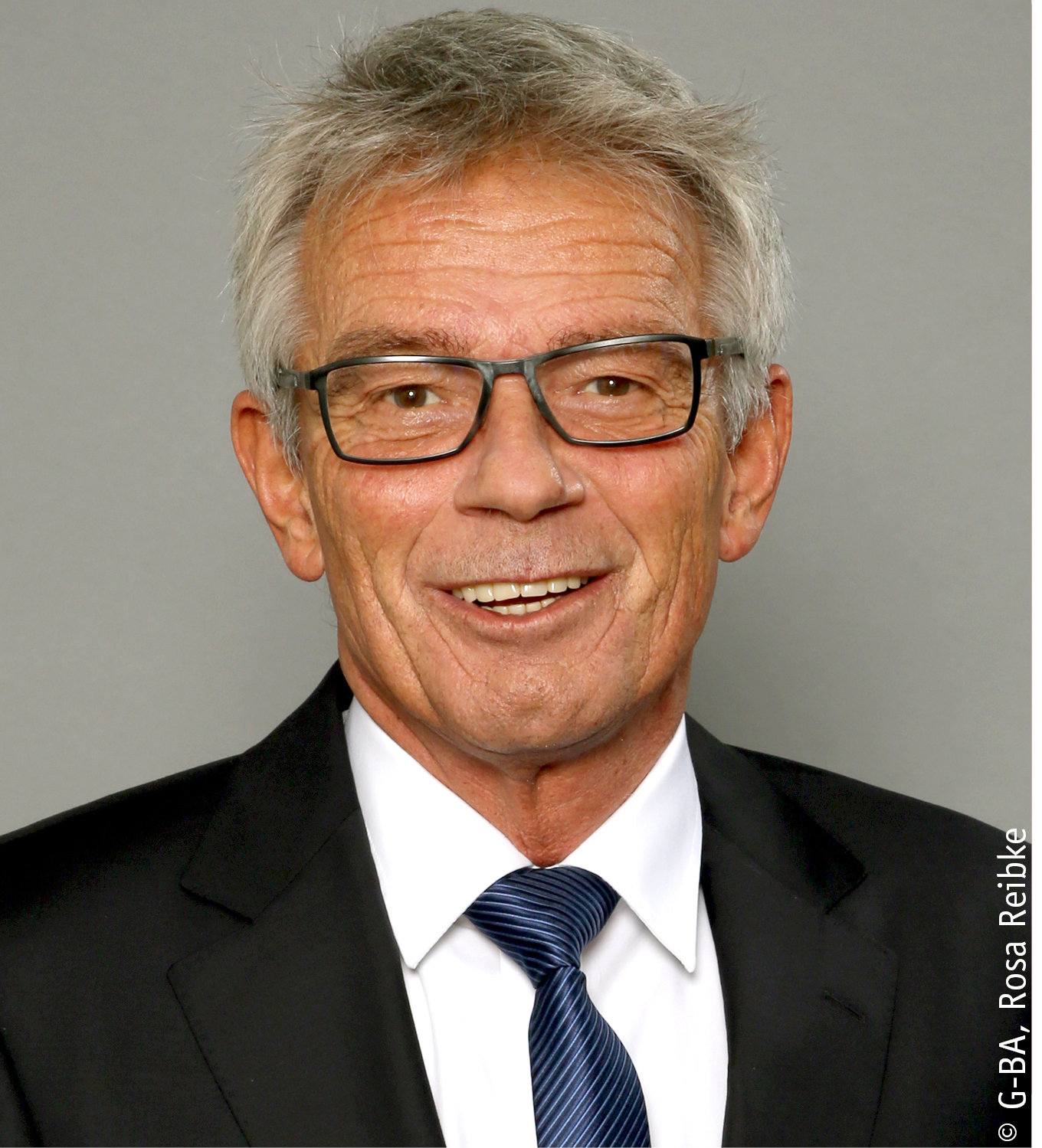
>> Prof. Hecken, at the press conference at which the 29 projects in the “New Forms of Care” area that are being funded in the first wave of the Innovation Fund were presented, you said, referring to Jesus’ last message: “It is finished .” And in that same press conference, even the representative of the German Hospital Association said that she had never thought that spending money could be so difficult.
That was actually very difficult; we had not expected such a flood of applications. As part of the first and second waves of funding for “New Forms of Care” and for health services research, almost 700 applications were received with an application volume of 1.7 billion euros. It took an enormous effort from everyone involved to evaluate them all. We will serve the second wave of funding for the “new forms of care” from 2016 in 2017.
Although, as is well known, you published two funding announcements in 2016.
The fact that we planned the decision on the second wave of funding in 2016 for 2017 is due to the lack of “real” transferability of the funds. As is well known, the Innovation Committee works according to the for principle and will therefore commit around 80 to 100 million of the 225 million that will be available for the “new forms of care” in 2017 for the second wave of funding from 2016. In this way, we can launch a new wave of tenders with 125 million euros in 2017. In my opinion, this is a sensible decision, otherwise very good applications would have to be rejected.
What did you enjoy beyond the work involved?
The very result-oriented and smooth cooperation between the expert advisory board and the innovation committee, the responsible working committee, the office and the project sponsor was extremely positive. Even before the first project outlines or applications were submitted and the first funding decisions were made, there were a lot of tasks to be completed - starting with clarifying the procurement issues under European law, tendering for a project sponsor, creating the procedural regulations and ending with the conception of the corresponding funding agreement. All in all, it was a gigantic achievement achieved by everyone involved.
Hence her choice of words at the press conference: “It is finished”
Yes, all of that played a role. But also that there were a whole series of critics who fired from bushes and hedges during the legislative process.
A nice bon mot.
It must be allowed to counter this, especially because the structure of the innovation committee, the form of patient participation and also the first funding announcements were criticized in advance.
Are you deliberately calling this a rant?
If, on the one hand, you want to see the funding spent as quickly, legally and completely as possible, you cannot at the same time have a slowly developing procedure in the style of “student co-management” in mind. Both of those things just don't work.
Criticism of the supposedly rushed process is actually off the table.
Criticism of the rushed procedure? The de facto non-transferability of the funds means that the funding available for one year must also be tied up this year. The alternative for the applicants - I would like to quote this exactly - was very simple: in the first serve...
...
Citation information: doi:10.24945/MVF.01.17.1866-0533.1997