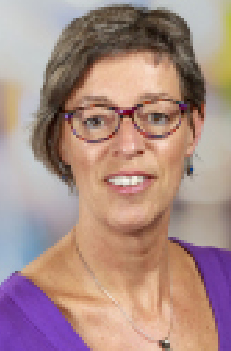
>> The Institute for General Medicine at Goethe University, where the endowed chair is located, has a rich and long tradition of health services research in the area of multimorbidity and multimedication. With the chair “Multimedication and Healthcare Research” founded in 2019, embedded in a diverse institute team, Professor Dr. Marjan van den Akker has an excellent opportunity to broaden her horizons and, after working at Maastricht University for over 25 years, move her place of work to Frankfurt am Main. But not her field of activity. Since the beginning of her scientific career, she has devoted herself to the topic of multimorbidity. Due to her background as an epidemiologist, she started with prevalence studies, identifying the consequences of multimorbidity and the risk factors for multimorbidity. Marjan van den Akker realized early on that caring for patients with multimorbidity is a challenge, especially in general medicine, because patients often visit family doctors' practices and family doctors have to keep an overview of the complex care needs. Marjan van den Akker: “Improving the quality of care for this patient target group is complex because there are no laboratory conditions for studies, especially for care in general practitioner practices. This makes the domain of health services research an exciting field of work.”
The chair is specifically designed for and on this patient target group; People with multi-medication. Most of these people also have multiple illnesses and usually have to see different specialists. As a result, treatments may be insufficiently coordinated, which can lead to interactions and side effects for patients. In this area in particular, there are increasing numbers of (digital) tools that can support doctors in prescribing or testing medications. However, according to Marjan van der Akker: “The implementation of these tools requires tailor-made and flexible implementation in practice, whereby the patient's voice must not be ignored.”
The working group working here has an interprofessional composition, consisting of employees with different backgrounds in the areas of epidemiology, health sciences, pharmacy, general medicine and geosciences, where everyone brings their own perspectives. “This creates a positive and energetic working atmosphere with inspiring exchange,” says Marjan van den Akker, who sees great added value in this: “We learn a lot from each other and achieve a high quality of work together.”
This is important and necessary. The care of patients with multimorbidity and multimedication is highly complex, both for the patients and for the providers. Patients also have many contacts with general practitioners, specialists and other service providers - such as physiotherapists, psychotherapists or nutritionists - and therefore also different drug and non-drug treatments, sometimes more and more are less well coordinated. In addition, patients often resort to over-the-counter medications and other additional aids.
average. “Some people cope with it very well, for others it is difficult to keep track of things – for example, they have difficulty sticking to the medication regimen,” says Marjan van den Akker. Doctors also sometimes lack an overview of the overall diagnoses and the prescribed therapies. In order to improve this, tailor-made, complex interventions are needed that fit the practice routine on the one hand and the patients' everyday life on the other. “Only if the different perspectives and preferences of patients and providers are taken into account do we have a chance of sustainably improving care so that both parties benefit,” she adds.
In her opinion, the greatest challenge and opportunity in the short time the chair has existed is the diversity of the work areas. “This starts with gaining knowledge through the studies we carry out through to bringing together previous results through systematic literature studies in the area of multimorbidity and multimedication,” she says. Equally important to her are the further steps in which the knowledge gained is shared with patients, service providers and subsequent generations of service providers. This is achieved through lay-understandable information materials and citizen forums, through national and international publications and presentations, but also through an interprofessional elective course on the care of patients with multimorbidity and multimedication, which is accessible to students of human medicine and pharmacy. <<
Prof. Dr. Marjan van den Akker
has been Professor of Multimedication and Health Services Research at the Institute for General Medicine at Goethe University Frankfurt since 2019, where she heads the “Multimedication and Health Services Research” work area. She has also been a visiting professor in the Department of Family Medicine, Care and Public Health Research Institute (CAPHRI) at Maastricht University, Netherlands, since 2019. Her research activities focus on comorbidity, multimorbidity, multimedication, medical, demographic and psychological profiles through longitudinal studies, the health of older cancer patients/survivors and the role of family medicine in the care of cancer survivors.
Studies:
1999: Doctorate on the subject of “Multimorbidity among patients in general practice. Prevalence, incidence and factors of multiple pathology”, doctoral supervisors Prof. JA Knottnerus, Prof. F. Buntinx, Prof. JFM Metsemakers.
1987-1992: Master of Health Science, specialization in Nursing Science, Maastricht University, Netherlands.