>> Are there any fears on your part that – as can often be read in the popular media – doctors or nurses employed at the University Hospital of Bonn (UKB) will resign en masse if a facility-specific vaccination requirement is decided?
At the UKB we have a vaccination rate of over 95 percent. There are certainly some employees who – for whatever reason – do not want or cannot be vaccinated. We talk to them intensively, thereby further increasing the vaccination rate and ultimately deciding where unvaccinated people, who of course have to be tested daily, can be used and where not. In general, when it comes to a facility-related or general vaccination requirement, it is important to weigh up two equally important goods on both sides of the scales: on the one hand, the freedom of physical self-determination, on the other hand, the protection of the general public. I think that the scales are currently tipping towards compulsory vaccination, but that will largely depend on the further course of the corona pandemic in this country. It will also be very important to implement the implementing regulations that will then also have to be decided, which would have to be carefully considered and consistently implemented.
Is this fear real or a narrative to promote a fearful scenario? Pure fear is usually a bad advisor.
Because of the relatively high percentage of those who have been vaccinated in our UKB, I am not particularly concerned that compulsory vaccination of any kind would lead to a significant increase in staff absences. On the contrary: it could well be that with even higher vaccination rates we can expect fewer absences due to quarantine periods of infected people and contact persons. However, it is overall unsatisfactory that the percentage of non-vaccinated people in Germany is higher than in other European countries.
The second fear is conveyed via maps - which are increasingly colored red - suggesting that there will soon be no more free intensive care beds in this country.
We have at least 135 intensive care places in our own clinics, which are almost always fully occupied, even before the first SARS-CoV-2 case in Bonn in February 2020. The same applies during the almost two “Corona years” and certainly also after the hoped-for overcoming of the pandemic this year, because with our third highest average case severity in Germany - also known as the Case Mix Index - we always have an above-average number of seriously ill patients in all subjects : inside and therefore have hardly been able to postpone any procedures or treatments in the last two years - apart from a few so-called "elective" ones.
Why is the case mix index at the UKB so high?
Our bed occupancy has increased at the same time as our case mix index, as we have obviously become a referral center for particularly serious cases in the Bonn metropolitan area with many good clinics, which also reflects our definition of the university's mission and close cooperation with other hospitals corresponds. In the last decade, we had the strongest increase in the case mix index in Germany, which was also in line with our strategy.
How come?
What many people don't know is that Bonn has the highest density of hospitals ahead of Munich, Hamburg and Berlin, even though cities like Munich and Hamburg have a higher density of practicing doctors. All hospitals in the Bonn region are also very good in terms of quality - as is ours - so we also maintain close cooperation with various hospitals in the region in various areas - for example through joint medical services in pediatric surgery, exchange of medical information Personnel in geriatrics, solidarity in oncology, etc. in order to increase synergisms and improve regional efficiency.
Prof. Busse would say: 40 percent of hospitals can be closed without any loss of quality.
Even if 40 percent sounds like a lot, we in Germany undoubtedly have - confirmed by current OECD statistics - a high number of hospital beds per head of the population compared to other countries. The question will be which hospitals would have to be closed without risking gaps in care. However, these will certainly not be the university hospitals, which have shown during the Corona epidemic how important they are for care by pragmatically taking on many tasks and providing coordination services even in this challenge.
Currently, around 15 percent of the beds that need to be occupied nationwide are free in Germany - around 20 percent of the occupied intensive care beds are for corona patients. What does it look like at the UKB?
With now over 1,000 patients by January 2022, our hospital is one of the largest corona treatment providers in North Rhine-Westphalia and even all of Germany. In addition, despite providing normal care to our more than 400,000 patients per year, we have not yet rejected a single case with a SARS-CoV-2 indication. As long as this is a fact - and we want to keep it that way - we do not have to disadvantage other patients with, for example, cancer, heart attack or stroke indications compared to Covid-19 patients by delayed diagnosis or treatment measures. This also corresponds to our ethical principle of equal treatment of the patients entrusted to us. During the flood disaster in the neighboring Ahr Valley a few months ago, we also cared for over 200 injured patients from the flood area and even had to take over 180 patients from intensive care at the height of the first Corona wave because an aerial bomb was found during construction work on our premises - and normal wards within half a day on our premises to be evacuated elsewhere, for example in a quickly constructed intensive care unit in an operating area underground, until the bombs have been defused. The excellent progress of this emergency measure has impressively demonstrated the flexibility of our company.
1,000 Covid-19 patients in total and currently 40: Is that a lot or even too much for a large hospital like yours?
No. Even if the current situation requires strenuous bed and operating theater management on a daily basis, this is everyday life for us and, as maximum care providers, it is a constant task that we have to master as a last resort. We have also prepared in the background to expand our intensive care capacity to over 200 places by expanding existing and creating new intensive care areas, purchasing appropriate additional ventilators, training appropriate nursing specialists, etc. Our motto is: Be well prepared for eventualities, but avoid panic and unnecessary uncertainty. The burden on the staff is nevertheless enormous. That's why this should be maximally recognized by the population, not just by clapping on the balcony. That's why we have created 1,259 new staff positions at the UKB in the last 5 years - primarily in nursing - which corresponds to an increase of 25 percent, up 5 percent from 2019 to 2020 alone.
Is a high level of utilization of the intensive care units a normal situation for you?
Absolutely. In every hospital - especially in large ones like ours - there is a kind of fluid balance between intensive care, intermediate care and the normal ward. Due to Covid-19, additional patients are now arriving and certainly put this balance to the test at the beginning of the epidemic. However, we always have to be prepared for mass casualty incidents of all kinds, such as after a bus accident on the motorway with 30 to 40 seriously injured people. We therefore regularly practice such situations with actors and then analyze the processes. Every large hospital can and must be able to deal with this with its information chains, interdisciplinary emergency centers, intensive care units, etc. Then, at short notice, transfers to the next lower care level are made, elective procedures are postponed, and so on. This is completely normal hospital management, and the current - hopefully temporary - Corona burden is such an additional one that we cannot and do not want to avoid responsibility.
In doing so, they describe a highly plausible, albeit sensitive, system that is of course capped by existing technical and human resources. Why do you think the hospitalization rate is used as one of the main rates to visualize the seriousness of the virus threat?
If, for example, only 15 percent of all intensive care beds in Germany are free at the moment, the pressure could well become even higher - depending on further developments with possibly even higher infection rates and the resulting increase in hospitalizations. Until one day the resources, of which there are many more in Germany than in many other countries, become scarce everywhere in the country. However: If the hospitalization rate were 50 percent lower with the Omicron virus variant, but there was a more than 50 percent increase in the number of infected people, the pressure on hospitals could certainly increase again. Many people are afraid of this scenario; certainly also because many people still have the images in their minds that were seen at the beginning of 2020: from Bergamo, Alsace, the USA, Brazil, etc. The intensive care units there were really temporarily overwhelmed and many of them, especially in northern Italy Patients are located in the hallway instead of in the rooms of the intensive care units. The reason was a temporary hopeless overload of intensive care capacity, accompanied by a high infection rate among staff.
However, it should be noted that in both northern Italy and the French Grand Est, the rate of intensive care beds per population is much lower than ours.
This means that the probability that such situations would have arisen was and is a priori lower for us. Of course, we were also able to be better prepared because at the beginning of the Corona epidemic in our own country we had a certain lead time and therefore better preparation time.
And have started to think across the board and manage intensive care capacities across regions.
The DIVI register has provided useful data on a daily basis. The cloverleaf principle of mutual help among different regions introduced in this country is also helpful and, as is well known, has already had to be activated. For example, at the UKB we had and have treated Covid-19 patients from Saxony, as well as from the Netherlands, Belgium, Italy and France as inpatients.
Which shows that Europe does work.
For me, this is an act of European loyalty that should be carried out simply by telephone and, of course, reciprocally if you take European values seriously.
Can you afford this loyalty?
I firmly believe that you can. You have to realize that not all hospitals can offer this kind of flexibility, but maximum care providers like us have to face such acute needs. Of course, the maintenance costs for such special situations are considerable and unfortunately only incompletely covered in our emergency compensation systems and in the DRG flat rates.
What happens if – as is currently the case – the corona numbers explode due to Omicron or a subsequent mutant?
Since the first SARS-CoV-2 case in Heinsberg, North Rhine-Westphalia, we have prepared for all eventualities. The fact that Christian Drosten had already made significant contributions to the clarification of SARS-CoV-1 during his ten years as director of our Institute of Virology at the University Hospital of Bonn and his successor in this position, Hendrik Streeck, made significant contributions to the Heinsberg study at the UKB made important early contributions to the understanding of SARS-CoV-2, we at the UKB were well positioned and were intensively involved in policy advice and education of the population from the outset and continually evaluated the new data. We now have to prepare for different scenarios, as already mentioned for Omicron. In addition to the consistent and maximum promotion of the rules of conduct, vaccinations and testing, we must quickly develop the new possibilities of timely treatments with antibodies, the intervenous and new oral pharmaceuticals that are already available and used by us, and work out the best time windows and schemes for the treatments . We have just started a specialized consultation in internal medicine at the UKB under the direction of PD Dr. Boesecke furnished
How does your balance sheet look?
Even in the Corona year 2020, the UKB was the only one of Germany's 35 university hospitals to record an overall increase in performance and had a surplus for the 6th year in a row.
However, a smaller one than in previous years. But even in the Corona year you reported an increase of around 800,000 euros.
The positive balance despite the difficult circumstances shows us that our strategy must have been correct in this respect too. Although we - like all other university hospitals and, at the forefront, our Association of University Hospitals in Germany (VUD) - are calling for higher special remuneration for the UKs in Germany because of the many special burdens on university hospitals. Nevertheless, in the current situation - as I have learned to be expedient in my 14 years in Switzerland - we always want to try to get by with the resources provided by the health insurance companies and taxpayers, which is sometimes a real Herculean management challenge.
How did you achieve this unique status?
Pre-planning. Constantly updated, creative, strategic and operational decisions are the key to successful management. Of course, the Corona aid also contributed to this, although due to our high occupancy rate and our high case mix index, we were of course able to make use of free allowances less than other clinics.
This brings us to the coalition agreement, in which university medicine was mentioned for the first time. Where do you feel as the head of one of the largest university hospitals in Germany with over 1,300 beds, over 8,000 employees and a balance sheet total of 1.3 billion euros per year?
A main problem is that the same capped remuneration system – the DRG system – applies to all types of inpatient care in Germany. This means that special burdens on university medicine are not adequately compensated, such as the much higher number of emergency patients, which are usually a deficit area for every clinic. Just to give you an idea: We have over 40,000 emergency patients per year in Bonn who are paid a flat rate that is too low. There is also an area in which all university hospitals are, on average, more burdened than others: these are extreme cost cases that are underrepresented in the DRG system - precisely because it is based on an average. But university hospitals – including ours – always get the largest share of these extreme cases. Centers such as those for rare diseases, in which the correct diagnoses are often made clinically or through DNA tests by interdisciplinary experts after a long history, are also a very useful part of specialized healthcare at many university hospitals, but are expensive due to the high level of effort involved. Last but not least, there are the training and further education problems that burden all hospitals that provide specialist training, but also university hospitals. In addition to medical students, we also employ more doctors in specialist training than other hospitals. A lot of it is just a question of dosage, and we urgently need to find solutions.
Even before Covid-19, only 7 percent of German university hospitals were able to generate an increase of more than one million euros. The collective deficit of all university hospitals in Germany is currently over 500 million euros, and in North Rhine-Westphalia alone it is over 300 million euros. Covid-19 has only increased the trend. But how have you managed to keep your plus over the years and even in 2020?
We have the same conditions as everyone else, certainly not better conditions, and in some budget titles our funding is even lower in comparison for historical reasons. Some of our buildings, for example, date back to the 1940s, which requires high investments for maintenance, renovations and new buildings, which we often have to provide from our own funds. Only our commitment to maximum efficiency and constant structural adjustments have enabled us to achieve the positive balance sheets of the last six years, after we still had a deficit of 20 million euros in 2014. We work hard to ensure that we achieve a positive balance every year, although this is really difficult under the current conditions.
Where do the resources you work with come from?
There are three main sources at a university hospital: One is for research and teaching. For this we receive an allocation of around 140 million euros per year, which is used to pay for the professorships and the basic equipment for research and teaching. In principle, this is purely a pass-through item because 100 percent of it goes towards the purposes just mentioned. The second, much larger source of financing for clinical operations is the services provided by health insurance companies, through which we have to finance ourselves on a daily basis - like every other hospital - although the DRG-guided remuneration per service in inpatient care is no higher at any other hospital in the world different levels of care.
That means: It's the sheer amount of performance that counts!
Of course, the volume of services, which is also largely linked to the reputation of a hospital, plays an important role. We treat around 50,000 inpatients and more than 350,000 outpatients every year. We are of course pleased about the latter because in Germany medicine in the outpatient sector can still increase in favor of the inpatient sector, although good financing models must be in place again for this. We want to take a leading role in outpatient medicine in Germany, among other things because our comparatively good overall health system in Germany must be maintained and continually redesigned to be future-proof, which will only be possible with courageous reforms and consistent further developments.
What do you expect from the new government?
We are of course pleased that university hospitals are recognized as the fifth level of care in the coalition agreement, which may at some point lead to a gradation, for example of DRG remuneration. Until such changes can be agreed upon and implemented by all committees, we must first continue to try to make do with what we have, because health insurance payers, especially hard-working citizens with low incomes, are already heavily burdened by non-wage labor costs are. We were only able to successfully meet the tough demands of sufficiency that we set ourselves because everyone – from the hospital directors to the nursing staff and the administrative staff – shared this philosophy. We can really rely on great commitment here - the employees are motivated to avoid deficits in the future, which I think is an important basic attitude towards the general public. By the way, the topic of sustainability is particularly important to our employees and we invest a lot in it. Likewise, our employees always come up with new ideas to avoid waste and maintain a beautiful environment on campus.
How are you doing with digitalization?
We have had our own electronic medical records for a long time, which unfortunately is not yet a matter of course in Germany today and only exists in a minority of clinics. We also use a patient data management system (PDMS) with which we can electronically record and evaluate all data in our intensive care units and transfer it to the billing system. In administration, we use software called PEGA, which electronically maps the different administrative processes in human resources management and other areas. But what is even more important is that IT, in the best case scenario, helps to improve the quality of life of patients. We have great examples of this where special apps have been developed that really improve the quality of life of patients.
Patient apps?
I think that is very important. For example, in the area of hemophilia treatment, where we operate the largest center for hemophiliacs in Europe and probably even the world. We look after patients who – when I was studying – still had severe limitations, including a reduced life expectancy. Until the medical breakthrough came that made it possible to replace the factor 8 that was missing in these patients. However, they had to come to the outpatient clinic very often, which was quite annoying and time-consuming. Now the treatment options have gradually improved significantly through research and development, and our institute director Prof. Oldenburg and his senior physician Goldmann have developed an app that - of course with the consent of the patients - contains practically all the parameters important for the treatment of hemophilia in daily life recorded. For example, if they discover a bruise, they record it with the camera and immediately send us the picture, sporting activities are recorded, etc. An algorithm then recognizes which measures, e.g. a visit to the ambulance, a change in the number of factors or Even a change of preparation is necessary due to antibody formation. We provide the telemedicine that comes with this app 24 hours a day, 365 days a year, and the quality of life of the patients is significantly improved simply because they have to come to the outpatient clinic less often.
Digitalization for the direct benefit of patients.
The example of hemophilia shows that digitalization means that home treatment acts as an extended arm of the specialized clinic department, meaning that patients are not left alone at home after the medication has been dispensed in our pharmacy, coupled with detailed advice, but rather they have it at the times Dispensing medication and constant contact with top specialists virtually via the app, which is also very much appreciated by patient organizations and health insurance companies. The goal of digitalization must not be an end in itself, but must always strive for a benefit, such as increasing efficiency, saving time and costs, providing better online information, etc., and thus ultimately increasing the patient's well-being and satisfaction .
From a hospital perspective, does it make sense from an income perspective to do something like this? In the end, you still live from volume, not from value.
We have no problem with either. Good quality usually results in high demand due to the resulting good reputation, which has resulted in continuous increases in performance in the outpatient and inpatient areas - including in the Corona years 2020 and 2021. This also means that, despite our bed capacity, we repeatedly reach our limits and then have trouble finding a free bed. On the other hand, this means that we do not have the problem of having to keep inappropriate cases hospitalized, which can also be cared for differently - at a lower threshold and in a more patient-appropriate manner - with high quality.
This is a look into the future of medicine: on the one hand, enabling process optimization through digitalization and, on the other hand, being able to offer value-based medicine.
This is a continuous process and a core element of our strategy. For example, we have been fully digitalized since the end of 2021 when it comes to the use of electronic patient files in all of our clinics. I am often surprised that although there is a lot of talk about it, only less than 50 percent of the clinics in Germany actually have an EHR across the board. Here too, university hospitals like us are pioneers and can then network better with other hospitals, as we are currently doing in oncology with the Johanniter Hospital in Bonn, in order to be able to evaluate an even larger number of cases with uniform software, especially in studies - for example Advantage of international research.
Which is certainly also supported by the research activities carried out here.
Certainly. Digitalization has long been part of everyday life for us in the research sector. Among other things, we operate one of the largest sequencing units in Germany in Bonn in collaboration with other centers in the West German Genome Center. This is an absolute big data business with very large amounts of data, in which diagnoses, associations and predictions for certain diseases are examined at the gene level. Prof. Jonathan, who returned to the UKB from Boston, was responsible for SARS-CoV-2 diagnostics
Schmid-Burgk and his team have just developed a mass test based on next generation sequencing that is much more reliable than the rapid antigen test, but cheaper than the standard PCR test. A lot of IT went into this development, and now we would like to make this available for very large, regular series of tests, for example in companies, through a spin-off GmbH. Thanks to a joint project with Telekom, we are also the first 5G campus in Germany, which means we can transmit large amounts of data via Wi-Fi to various locations on the campus where it is needed. For example, for the necessary surgical treatment of a child in the parent-child hospital with noticeable abdominal pain, for which several special imaging sequences from MRI, CT, PET or even molecular biological examinations are quickly brought together for the diagnosis on the symptomatic child. All of this data is now available at the point of care in seconds via 5G. This is also a positive application of digitalization for the benefit of patients.
Do you also expect to be able to improve the outcome?
I am convinced of that. But the benefits start on a small scale. For example, with medication orders during visits with the EHR, where an algorithm recognizes that certain medications interact with others, and deciphering illegible handwriting is a thing of the past. This increases patient safety and improves the treatment result. But we are also working intensively on the use of artificial intelligence, where e.g. B. in neuroradiology the use of contrast agents in the examination of cerebral vessels in the event of strokes can be reduced.
You now maintain various collaborations, including with clinics based in Bonn, but also with the University in Siegen. What's behind it?
All cities in the world with university hospitals are surrounded by other good clinics in the cities but also in rural areas, some more, some less. This is also the case in North Rhine-Westphalia. If you look at the map of North Rhine-Westphalia, you can see enormous metropolitan areas in the Ruhr area and on the Rhine from Düsseldorf to Bonn. The university clinic, which has long been established in Westphalia, is my alma mater in Münster, in the Ruhr area Essen and Bochum have central functions as university clinics and in North Rhine Aachen, Düsseldorf, Cologne and Bonn, also known in oncology as the ABCD network. But cities like Bielefeld, where I was able to complete my internship, and Minden in East Westphalia or Siegen with the neighboring Sauerland, where I was born, also have good clinics and excellent universities. The University of Siegen, for example, has a focus on digitalization, which offers us interesting opportunities for collaboration in research and teaching as well as in health care. Now we – the UKB and the University of Siegen – have set up a joint scientific institution for digital medicine and health services research in rural areas with the help of funding from the state of North Rhine-Westphalia. Our goal is to further develop digitalization together, especially in rural areas, in order to develop even more manageable and useful programs, as shown in the example of hemophilia, and to evaluate them.
Including data exchange between each other.
Of course. You can only collaborate if data is transferred continuously and easily in certain areas, for example from practices in rural areas where patients are cared for to our university systems. This requires very good know-how, which is available in Siegen and Bonn through several digitization professorships, some of which have recently been filled.
What do the people of Siegen get from the cooperation?
Specialists from both institutions can work closely and institutionally together and participate in our systems from Siegen. During teaching, students get to know both locations, and the regional attractiveness can be strengthened through such an exchange. However, such collaborations should not be assessed purely quantitatively. Especially in research, it is becoming increasingly important to collaborate institutionally with as many good clinics as possible in order to be able to work as closely as possible in a multi-professional manner and to control studies on the largest possible collectives uniformly with the help of a highly professional study center. Internationally, such collaboration between university hospitals and other good hospitals is common practice, such as in Sweden with the Karolinska Institute, in Great Britain with the Imperial College or in Belgium with the University Hospital in Leuven. Such academic medical centers, some with very large networks, are the future of research. However, instead of mutual vanity, this requires a strong shared will to work together, mutual respect and the always necessary dose of humility.
The well-being of the patient should always be in the background.
This must be the guiding principle for all of us, ultimately not only in health care, but also in research and teaching.
How can this happen in a system in which so much is purely performance-oriented and not value-based?
We are already one step further in university medicine, in part, because we have pushed forward the formation of centers, for example with the formation of heart centers, oncology centers, trauma centers, stroke and neurovascular centers and many others. For all of these centers, the G-BA has defined various regulations to specify the special tasks and the necessary quality requirements for the fulfillment of these tasks. The regulations in accordance with Section 136c Paragraph 5 SGB V determine nationwide what, for example, a heart center must have in order to receive center recognition. This in turn is rewarded in that the so-called fixed cost degressive discount - which is very burdensome for a house like ours with a high case mix index - is suspended and center surcharges are paid by the cost bearers. Of course, this is only possible if the quality delivered is good enough, for which the G-BA has set its own criteria. This means that in Germany “value” is already being rewarded, but the system should be expanded further.
Are these centers, which you also have in Bonn, supported accordingly?
North Rhine-Westphalia was relatively late in defining centers, but Minister Laumann and his very competent employees are now putting positive pressure on hospital planning in general, and always in good cooperation with the Ministry of Culture and Science.
One last number about the UKB: In 2020, you were once again able to take first place in NRW when it came to performance-based allocation of funds. What makes research in Bonn seem to be a successful concept?
This is part of our general strategy. For us, university clinic means that we strive for excellence in three core areas: firstly, health care at the highest level, secondly, research and thirdly, teaching with the same standards of excellence. Everyone benefits from each other to the greatest extent: teaching, care and research, and patient care. And research and development must in turn draw their inspiration from the unresolved questions of health care. In my opinion, the ideal situation is achieved when all three core areas are balanced at the same high, possibly even highest, level and work together without mutual competition for the best interests of the patient. Health care is the hardest to evaluate. This topic can be approached, for example, by evaluating routine data and surveying patients and doctors. And although one can criticize rating lists such as the annual rankings in Focus magazine, there are highly regarded similar rankings in many comparable countries, such as the one in the American magazine US News and World Report.
Where is the UKB?
In the “Focus” ranking this year it was number 1 in North Rhine-Westphalia. We are also pleased by the evaluation by the Ministry of Culture and Science in North Rhine-Westphalia as part of the performance-oriented allocation of funds, which includes third-party funding and publication ratings. Here too, we have been at the forefront for years. This confirms the close collaboration between the university hospital and the medical faculty at our location. The University of Bonn also ranked first in Germany in the last excellence initiative with the largest number of approved clusters of excellence, so the UKB naturally has excellent partners in many subjects in research and teaching at the university.
What is the status of health services research?
We have had a research center for health communication and health care research since 2016, which focuses on studies on the quality of care for people with oncological or mental illnesses. These studies are funded by, among others, the German Cancer Aid, the Innovation Committee of the G-BA, the German Pension Insurance and the Federal Ministry of Health. I would also like to mention the very successful Global Health master's degree program that was introduced four years ago, which is an excellent fit for Bonn as a location because many international and internationally active organizations are based here, such as GIZ, the Center for Development Research (ZEF) at the University of Bonn, various federal ministries with headquarters or secondary headquarters in Bonn and, last but not least, 20 agencies with over 1,000 United Nations employees as well as the United Nations University in Langen Eugen. Together with all of these organizations, we have launched a continuing education master's program in global health, which attracts students from all over the world and is primarily concerned with improving care structures internationally through research, implementation and evaluation.
How about a separate department for health services research?
The appointment for a W3 professorship is currently underway. In first place is Professor Nicole Ernstmann, who heads the Research Center for Health Communication and Health Services Research, which was founded in April 2016. By the way, we founded the first professorship in Germany for patient safety in Bonn six years ago in collaboration with the Alliance for Patient Safety in order to be able to work on central questions of quality and safety in patient safety, which we consider to be particularly important at the UKB.
Prof. Holzgreve, thank you for the interview. <<
The interview was conducted by MVF editor-in-chief Peter Stegmaier.
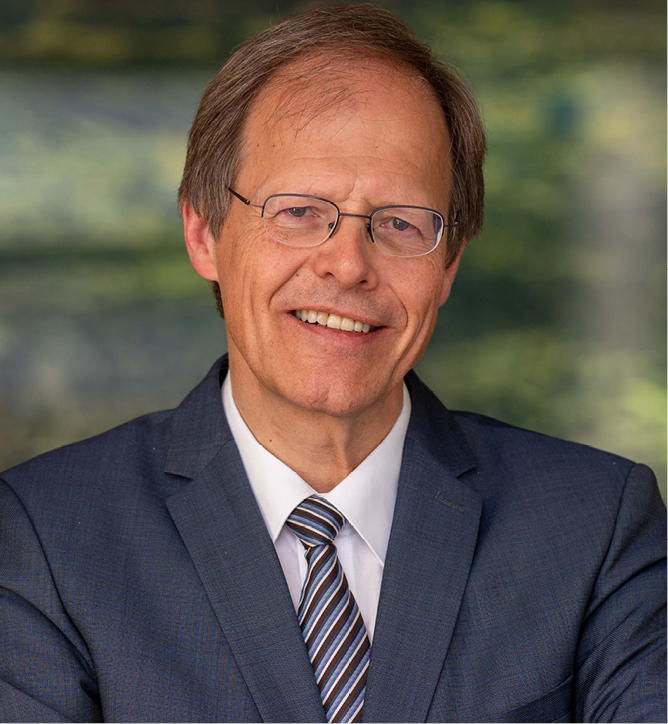
Prof. Dr. med. Dr. hc mult. Wolfgang Holzgreve, MBA
studied medicine in Münster and also earned a master's degree in public health at UC Berkeley in 1976. After passing the state examination, licensing and doctorate in 1979, he completed specialist training in obstetrics and gynecology as well as a fellowship in reproductive genetics at UC San Francisco. After completing his habilitation in 1986, he became a professor in Münster in 1991. From 1995 to 2008 he was full professor of gynecology and head of the University Women's Clinic in Basel and earned an MBA in 2007. Since January 2012 he has been medical director and chairman of the board at the University Hospital of Bonn.