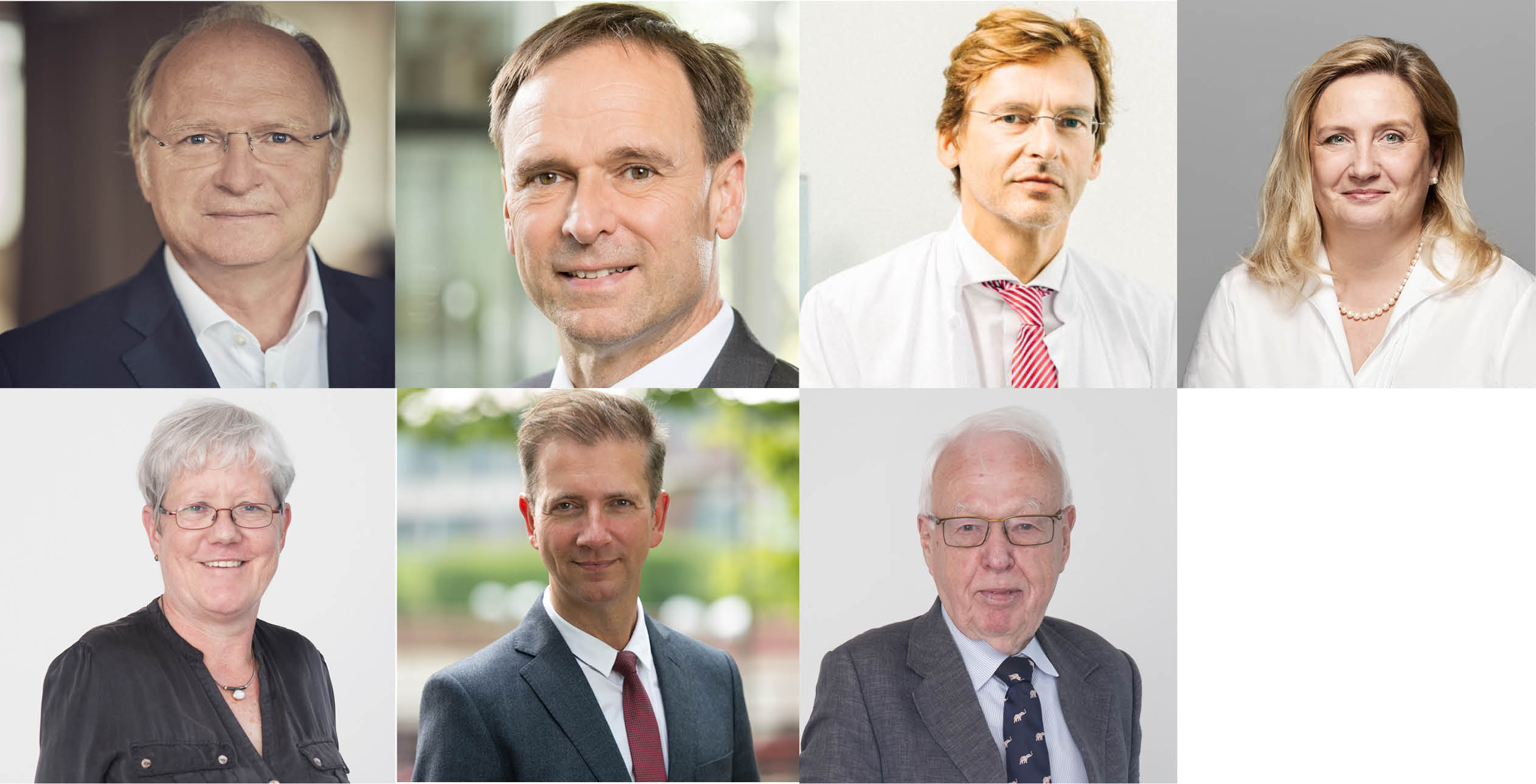
>> Please complete the following sentence: preferably with a single, preferably slightly longer subordinate clause: Innovative approaches in healthcare are those that...
Amelung: ... directly benefit patients, contribute to greater efficiency in the system or – and this point is becoming increasingly important – increase the job satisfaction of those who work in the healthcare system. Ideally, an innovation meets all three points at the same time.
Dembski: ... based on the needs of the patients, creatively find novel solutions for existing problems or gaps in current care, so that, for example, a better quality of treatment is achieved, services can be provided with less use of resources or patients can use their skills and thus autonomy can be strengthened.
Gerhards: ... sustainably improve the quality of care and efficiency while being customer-centric and maximizing the benefits of health data.
Grandt: ... create patient-relevant additional benefits compared to previous routine care and thereby increase care efficiency and patient sovereignty.
Greiner: ... say goodbye to the well-trodden path, but still remain practical and have a measurable benefit for patients.
Hess: ... advance medical care through new examination and treatment methods or through improved structures and communication channels.
Wendel-Schrief: ... have shown concrete, relevant patient benefit or care processes - ideally without additional costs - are optimized, scalable and economical.
In a scientific article published in this MVF issue, the lawyer Dr. jur. Dr. rer. med. Thomas Ruppel and the healthcare researcher Prof. Dr. rer. med. habil. Neeltje van den Berg from the University of Greifswald concluded that “the transition from research projects to standard care is currently not subject to effective legal protection”. There is “neither legal protection against negative recommendations from the Innovation Committee nor against inadequate implementation after a positive recommendation”, as well as “no legal right to perpetuation apart from innovation fund projects”. What do you think would be the prerequisites for perpetuation?
Amelung: In my opinion, the aim of pilot projects should be to provide ideas for the further development of the healthcare system. It is not about transferring research projects one-to-one into standard care. Most pilot projects are characterized by very specific supply situations and sometimes also by specific actors. In order to be transferred to general care, they would have to be adapted in many corners. An important key is to think in terms of blueprints and to identify supply elements that appear again and again in various pilot projects and prove themselves there. Examples of this include pilot models, the use of telemedicine tools to provide care to regions that are difficult to care for and are threatened by a shortage of skilled workers, or apps that strengthen the involvement and self-responsibility of patients.
Gerhards: The basic prerequisites for the continuation of innovation fund projects are scientifically based evidence of improved supply with improved efficiency. This must be taken into account when perpetuating the innovation fund and developing a path for the transfer of projects into standard provision, as anchored in the traffic light coalition agreement. Making the relevant determinations is clearly within the competence of the joint self-government.
Grandt: Care innovations with patient-relevant additional benefits must be treated like new drugs with certified additional benefits: the patient must have a right to this care.
Greiner: The transition from project status to standard care is actually problematic, as even with a positive evaluation, many months can pass before a recommendation for inclusion in standard care is made. By then, proven structures could no longer be in place. So far, the health insurance companies and other project participants have usually made do with contracts for integrated care as a bridging measure. This procedure has proven itself in principle, although here too there are problems in the details: evaluation results are usually only available at the end of the project and interim results are almost always not very meaningful because the necessary number of cases has not yet been reached and the observation period is insufficient. This dilemma can only be overcome through trust and a certain willingness to take risks from all partners.
Hess: The Innovation Fund was deliberately set up independently of the Federal Joint Committee (G-BA) in order to test promising innovations in the healthcare system for their suitability and efficiency for providing services in standard care and to financially support this testing process and in particular its evaluation. The decision about continuation can only be made by the G-BA in accordance with the legally specified criteria or by the health insurance companies in contracts they can conclude for special care in accordance with Section 140a SGB V, although they cannot be legally obliged to do so. After the funding from the Innovation Fund has expired, there is therefore no legal right to continued funding from the health insurance companies, even if the evaluation is positive.
If these conditions are met, what would politicians have to do to not only promote the translation of successful innovative approaches in the healthcare system, but also to make it a requirement?
Amelung: In my opinion, there should be no direct and complete right to the transfer of innovative projects into standard care. It is the task and duty of politics and self-administration to deal with best practice models. The impetus for the translation of innovative approaches ideally comes from the success of a project. If an innovation is convincing, people will be happy to develop it further and transfer it. So the focus should be on wanting, not on having to.
Gerhards: The Digital Supply Act is certainly an important component here. As part of the DVG, the innovation fund was extended until 2024 and provided with a funding volume of 200 million euros per year, so that innovative supply approaches can be promoted. With the planned continuation of the innovation fund by the traffic light coalition, I see a constant basis for promoting innovative projects and, if necessary, transferring successful projects into standard care. In addition, the legislature has taken the right path with the changes to Section 68b within the DVG, so that health insurance companies have more opportunities to promote digital innovations in the interests of patients and to inform insured persons about innovative care offers. It is important to continue on this path in order to establish innovative care solutions as a differentiating feature within the statutory health insurance system across the board and at the same time individually tailored to the needs of the insured in the healthcare system.
Grandt: Cost-efficient new forms of care with patient-relevant additional benefits must be declared the standard of care and patients must be given the right to these forms of care. Once a new drug is shown to be superior to existing therapy, it becomes the standard of care. This must also apply to new forms of care for which additional benefits compared to the usual routine care have been proven. Particularly because the bar for new forms of care is significantly higher than for new drugs: While the latter can be significantly more expensive than the appropriate comparative therapy if there is a corresponding additional benefit, new forms of care should be cheaper than the previous routine care, even if there is a significant additional benefit. Which, by the way, is neither understandable nor sensible from the patient’s point of view.
Greiner: In my opinion, there cannot be any entitlement to be included in standard care in the future. The projects are usually too complex for this and must be assessed on an individual basis. Political opportunities certainly also play a role, but the focus of the decision should be transferability to other regions and the result of the evaluation. In my opinion, it would be more important to make the findings from a project more easily available than before as a basis for a follow-up project within the innovation fund. Corresponding follow-up projects would be easier to implement than the larger step directly into standard care if individual questions remained unanswered and only arose during the course of the project.
Hess: In the DVG, the legislature introduced financing by health insurance companies for so-called health apps, also known as DiGA, if the BfArM, as the responsible higher federal authority, has entered them in the DiGA directory after CE certification and proof of a positive healthcare effect. A regulation that is comparable to the system could be that the projects funded by the Innovation Fund are entitled to a benefit assessment by the G-BA after the funding has expired and become part of the standard care if there is evidence-based proof of a benefit. However, such a benefit assessment cannot be implemented for structural innovations because the approval requirements for participation in care are not defined project-related, but rather provider-related (e.g. MVZ) and are made by the approval authorities and not by the G-BA.
They are jurors for the MSD Health Prize, which has been offered year after year for a decade and for which around 100 innovative healthcare projects have been nominated. What were real flagship projects for you and why?
Amelung: For me, lighthouse projects are those that are very close to the patients, strengthen them in their situation and offer real help in everyday life. In addition, in the past I have repeatedly been impressed by projects that promoted the interaction between different actors and broke down wagon-castle mentalities. In this context, another point also seems important to me: In my opinion, projects that succeed in improving care and at the same time releasing positive energy are particularly successful. Our healthcare system has recently been characterized by too much blockage over long stretches - silo mentality, demands for protection, hierarchy behavior. The fact that there is so much dissatisfaction among those working in the healthcare sector today is also a result of this mentality. However, in view of the large and diverse challenges we are currently facing in the healthcare system, this attitude is no longer appropriate. In other industries it can already be observed today that success happens where people work in a network, where they can help shape things and see their own contribution as valuable. The enjoyment of work results automatically from this - and where work is enjoyed, it is usually done particularly well.
Dembski: Every year, numerous highly interesting and successful projects apply for the prize that contribute to improving care in their individual subject areas. Since I have been on the jury since 2017, I have tried to assess around 200 projects' worthiness since then. It's really difficult to highlight a few special projects here. The projects that strengthen patients and support people in crises are particularly important to me. One of my personal highlights was the project “Outpatient parenteral antibiotic therapy in the Cologne metropolitan region” (K-Apat) at the Cologne University Hospital in 2021.
Gerhards: For me, the term “lighthouse project” primarily stands for innovative digital solutions that promise help for a large part of the population in dealing with a severely debilitating or even life-threatening illness. In particular, Easy Oncology at the University Hospital of Cologne with Dr. For me, Elter is a true flagship project because it addresses acute problems in oncological care, such as overloaded tumor boards and excessive demands on patients. This model shows what is possible with real-time data analysis to support tumor boards and suggest the right therapy or optimal standards of care. This saves time for doctors, but also for patients, provides security and orientation, translates the medical therapy approaches in an easy-to-understand manner, thereby increasing compliance, improving care, saving patients the wrong treatment paths, which can potentially have fatal consequences, and reducing costs thus the suffering of the sick. And it is not an issue of competition between individual suppliers - this can and must be available to the general public. This project illustrates how the available data and its analysis can support doctors in their treatment and how digitalization and data can be used for the benefit of patients.
Grandt: Innovative projects that resolve supply deficits and that have been implemented on their own initiative by a motivated team, taking into account the patient's perspective, are the champions. These were also awarded.
Hess: Cross-sector networked organizational structures that ensure one-stop care in general or for specific illnesses, especially for chronically ill insured people. Research projects aimed at improving the diagnostic and therapeutic treatment of rare diseases. Digitalized programs that enable communication within networked structures to improve the quality of care or that enable continuous care for chronically ill patients in their home environment, including using telemedical procedures.
Wendel-Schrief: Many of the projects were outstanding and it is therefore difficult to “pick out” individual ones. I would like to name three lighthouse projects in which MSD is actively involved as a cooperation partner beyond the health award in scaling the projects:
• Easy Oncology: a quality-assured decision-making aid that provides doctors with quick, guideline-oriented support for the diagnosis, therapy and treatment of cancer.
• My pediatrician & adolescent doctor app: a digital, professional vaccination recall system to promote STIKO recommended vaccinations in collaboration with the Federal Association of Pediatricians and Adolescent Doctors.
• Dimini: a project funded by the Innovation Fund for the early detection and primary prevention of type 2 diabetes.
The attribute “successful” has just been added to the term “innovative approaches”. Question: What is successful for you?
Amelung: Success can happen on very different levels. Measurability is an important factor here, but at the same time we experience again and again how difficult it can be to translate things like patient satisfaction, quality of life or job satisfaction into valid numbers. In my opinion, benefit at the patient level or the sensible and efficient use of scarce resources in the healthcare system are important success criteria. The human resource in particular is currently becoming increasingly important. For example, a project would be particularly successful if it helped nurses stay in their jobs longer because their job satisfaction was significantly increased.
Dembski: A project is successful when it verifiably achieves its goals. If I were to describe “success” in terms of content, I would define it: A successful project changes the supply landscape for the better.
Gerhards: For me, the projects that are particularly successful are those that improve healthcare and focus on “users” – often doctors – and “recipients” – often patients – and include them in the conception of innovative healthcare approaches. Ideally, the improvement in health care occurs without significant additional effort, e.g. B. through improved (automated) use of existing data. Ultimately, of course, in addition to improving supply, the aspect of economic efficiency must also be present so that innovative approaches can be successful.
Grandt: Being successful has several aspects: It is the effectiveness and acceptance at the level of the individual patient, but also the practical suitability for roll-out into routine care
Greiner: Successful projects are characterized by the fact that they have achieved the recruitment goals and have a positive result with regard to the predetermined result parameters.
were able to show effective health benefits for patients. It should also be clear that a successful transfer to other partners and regions appears possible.
Hess: Innovative approaches are successful when, according to the criteria of evidence-based medicine, they have a greater benefit for medical care than the structures or procedures used to date.
Wendel-Schrief: For me, successful means
Among other things, a project improves or even solves a relevant care problem and, on the other hand, increases the outcome in terms of patient benefit. In addition, scalability must be feasible and practical,
but also the benefits for the health system as a whole and can be demonstrated economically.
How do the criteria just mentioned flow into the evaluation framework further developed by the jury in 2021?
Amelung: A “lesson learned” from ten years of the MSD Health Prize is that the evaluation framework must be designed in such a way that not all criteria are equally relevant for all projects. That's why we needed the opportunity to make choices about which categories we particularly wanted to evaluate or, conversely, which dimensions might not play a role for a project. For example, some projects do not pursue any economic goals, so the criterion of profitability must not have a negative impact in the evaluation. I think that the new evaluation framework takes better account of the diversity of applications and the associated complexity.
Dembski: The evaluation framework further developed by the jury in 2021 assesses the factors that influence a project if it has the potential to bring about positive changes in care: patient benefits, (impact on) the care and health system, health economics and evaluation, management of the Project and professionalism and, as a special category, support for digitalization. Each of these factors is assigned criteria that the project impacts if it has a positive effect on care. The patient benefit is mentioned first. A patient benefit can be demonstrated by patients having added value through the project and by improving their quality of life and ability to deal with the disease (empowerment), etc. In order to have this effect on an individual patient, a project must also have the health system as a whole, for example focusing on a problem relevant to healthcare, optimizing structures or processes and/or breaking down sector boundaries. Saving human or financial resources can also be the goal of a project and does not contradict potential added value for patients.
Gerhards: User experience, degree of digital innovation, interoperability and optimal handling of data protection and security are parameters that have been newly incorporated into the evaluation framework. For example, user-friendliness is a core element for the willingness to use an innovative supply solution and therefore a basic requirement for it to be effective. Semantic and syntactic interoperability are also imperative to avoid “lock-in effects” in healthcare. To do this, binding data standards must be enforced so that data can flow seamlessly between different sectors, organizations, systems and applications.
Wendel-Schrief: The MSD Health Prize increasingly addresses digital healthcare innovations. This was used as an opportunity to fundamentally revise the evaluation criteria. Successful projects impress with their concrete benefits for patients and benefits for the health and care system. They can be supported by digital supply components. The medical and/or economic benefits must be scientifically supported and convincing through professional and care-oriented management.
From the beginning, an important focus of the jury was always on the question of scientific evaluation. It is now known that scientific studies for complex interventions, as “innovative approaches” usually represent, are anything but trivial; In addition, it may be that even studies with the highest level of evidence are not, or only to a limited extent, able to identify the true success parameters. Which study approaches/types have impressed you the most so far?
Amelung: Study concepts must always be measured by how well they are suitable for the respective question. The randomized controlled trial (RCT) is by far the best study design for many questions. However, it is completely unsuitable for some questions. What I find particularly exciting are the mixed methods approaches required for complex interventions. From a health services research perspective, we are still at the very beginning - but that is what makes this field of research so interesting. It is crucial that an accompanying scientific evaluation takes place at all. It should be taken into account when designing the project. Without evaluation, it is ultimately impossible to make any statements about the effects of a new care approach.
Grandt: The gold standard is and remains the RCT. But the best RCT is of no use if the endpoints or the study group are not chosen precisely. It must also be taken into account that these are usually complex, multifactorial interventions, the presentation and evaluation of which must be carried out in a differentiated manner.
Greiner: I do not believe that fundamentally different evaluation standards or designs must apply to complex interventions than to more simply structured research questions. However, the complexity of the interventions requires a greater degree of study preparation, because it must be carefully examined in advance which measurable result the project should be judged on. As a rule, it will not be possible to precisely determine the influence of individual components. However, it should be possible to define individual measurement variables for the overall program to assess the overall success. The control group represents a particular problem in this context. Patients can often hardly be expected to be randomly assigned to one group or the other. We have had good experiences with waiting list designs here, otherwise a comparison with another region and matched pairs or a stepped wedge design is a second-best solution.
Hess: The internationally scientifically recognized and therefore legally secured standard for scientific evaluation are the criteria of evidence-based medicine, whereby RCT is the highest, but not the only, level of evidence and, depending on the innovation to be evaluated and study options, lower levels of evidence are also accepted.
The MSD Health Prize would like to give a stage to outstanding and innovative care solutions and further advance their development up to standard care. Did the MSD Health Award meet this self-imposed claim?
Amelung: Absolutely! The MSD Health Prize is one of the most important platforms for the visibility and appreciation of innovative forms of care in Germany. What particularly fascinates me is that the quality – analogous to the innovation fund – has not decreased at all over the years and new, exciting concepts are added every year. This also shows how lively and diverse the healthcare system is at the basic level. While the major media usually only report on what is not working well in the healthcare system, the MSD project database shows a different excerpt that gives courage and conveys a spirit of optimism.
Dembski: I think so. The MSD Health Prize attracts a lot of attention. This is also demonstrated by over 50 applications every year, the integration of the award ceremony into the forum's specialist event, the inclusion of projects funded by the Innovation Committee, the audience award, the project database, and, last but not least, the many films that represent the nominated projects and by the project owners can be used to promote your project. These are measures that, in my opinion, generate the attention of the professional public for the prize and thus the projects.
Gerhards: In my opinion, the MSD Health Prize has absolutely fulfilled this self-imposed claim. The sheer diversity of the almost 100 projects nominated since 2012, all of which address and improve healthcare-related topics, illustrates the importance of the MSD Health Prize for innovative healthcare solutions. In addition, around 58 percent of the projects have entered into standard care or another contractual commitment. In addition, the MSD Health Prize also has a positive impact on the projects and their further development. 79 percent of all nominated projects surveyed as part of a scientific evaluation confirmed this (1).
Grandt: Definitely. Not only does it provide motivation and a platform for committed healthcare workers, it also helps project partners align and self-assess by specifying criteria. It is therefore helpful for all projects applying and of course helps the nominees in particular to achieve greater distribution.
Greiner: Every year, the organizers of the MSD Health Prize manage to encourage participation in currently relevant projects with innovative care approaches. As a jury member it is a great pleasure to get to know all these interesting projects and every year it is difficult to put them in order for the award. The award ceremony event then gives the award winners and those who have at least been shortlisted the stage to make the ideas contained therein known to a broader public and perhaps provide the impetus for new innovations or the tried and tested processes for others regions apply. The festive and professionally organized setting of the award ceremony also means that the participating projects receive the recognition they deserve.
Hess: The MSD Health Prize offers innovative projects a platform for evaluating and, if necessary, presenting their benefits in a prize-winning manner. The MSD Health Prize thus provides incentives for the further development of award-winning projects. Prize winners from previous years often report on this further development, which has also included integration into standard care or the expansion of contracts with health insurance companies for special care.
Wendel-Schrief: For MSD, the health award is a true success story. Every year we are surprised by the multitude of innovative and groundbreaking supply projects. The MSD Health Prize makes a demonstrable contribution to the further development of our healthcare system. And that's why it's with great pleasure that we're once again awarding the MSD Health Prize for the twelfth year.
What priorities do you expect in 2022? Do you expect the trend towards digital projects and/or those with significant digitalization components to continue to increase?
Amelung: There are very few innovative supply projects today that do not also include digital components. However, digitalization is not an end in itself, but rather a tool to achieve certain goals. I expect more projects with a digital focus that aim to make everyday life easier for healthcare workers. I also assume that in the future we will see more projects that deal with the social determinants of health, i.e. in which health and social policy aspects flow more closely together. On the one hand, this affects the area of mental illnesses, but on the other hand, topics such as health and new forms of living or health and climate change will also become more important.
Dembski: I expect that the trend towards digital projects and projects with a significant proportion of digitalization will indeed continue to increase. I could imagine that projects for the rehabilitation of patients with Long Covid will play a role.
Gerhards: We are still at the beginning of digitalization in the healthcare system. Accordingly, I expect a further increase in ideas/models that deal with data-supported analysis, often also with artificial intelligence, and that significantly support and improve therapy and patient pathways. It is the responsibility of politicians to create the legal framework so that health data, and the associated use of AI, can be used effectively. A first step towards this has been taken with the coalition agreement, in which a health data usage law is agreed.
Grandt: Digital support is important in order to remedy supply deficits, but it is not an end in itself, but rather just an aid as part of a new form of care. With greater spread of information technology in patients' hands and a better understanding of the opportunities for technical support, projects with digital components will certainly increase.
Wendel-Schrief: It is to be expected that the trend towards digital projects will continue to increase and even accelerate. Today, a good three quarters of all care projects nominated for the health award already integrate digital components. In view of the acute strain on practices, hospitals and the financial situation of health insurance companies, it will be increasingly important to implement digital care solutions in a (cost) efficient and user-friendly manner. There can neither be a single universal health application that combines all conceivable care scenarios and user demands, nor will we be successful if every app and every selective contract requires its own web portals, interfaces and plug-ins. There is a need for a digital health ecosystem that goes beyond the service providers, in which all participants can safely and trustworthy share quality-assured data via standardized interfaces and also communicate with each other. We need a level playing field for competition over the best supply solutions, which ultimately benefits us all. <<
The Fifth Social Code requires in Section 12 Paragraph 1 SGB V that “the benefits must be sufficient, appropriate and economical” and “may not exceed what is necessary”. On the one hand, this means that insured people cannot claim services that are not necessary or uneconomical, and on the other hand, they are not allowed to provide service providers and are not even allowed to authorize health insurance companies. Despite all the necessary desire to save, how could the available budget be allocated in such a way that the minimum requirement of §12 SGB V becomes as maximum as possible?
Amelung: Healthcare differs from other areas of life and economic sectors in that the simple causality “the more expensive, the better” does not correspond to reality to a large extent. Innovative care models have shown in the past that better care for people with diabetes or mental illnesses can, if not necessarily, be cheaper, for example because it avoids hospitalizations. Therefore, the health policy agenda must always be aimed at achieving the best care possible.
Dembski: However, it seems to be becoming apparent that health insurance companies are happy to use new types of care projects and measures as a competitive tool and to embed them in selective contracts. This means that these innovations do not benefit all patients. The supply landscape in Germany is fraying. But apart from that: In principle, as a member of the GKV, it seems to me to make sense that the “proof of economic viability” represents the “entrance ticket to standard care” via Section 12 SGB V. The controversial individual health services, or IGeL for short, show that services can come into the system whose benefits and thus economic viability have not been proven if the limit of Section 12 SGB V does not apply - to the detriment of insured persons and patients.
Gerhards: Observing the principle of cost-effectiveness is fundamentally correct so that insured persons' contributions are used carefully and effectively. Economic efficiency also includes using the innovative potential of a care solution to alleviate, cure or prevent illness from occurring in the first place. This can be done by leveraging digitalization potential. For example, a comprehensive electronic patient file filled with up-to-date information could help connect the sectors or avoid duplicate examinations. In addition, the possibility of better use of data offers considerable potential for providing insured people with care offers tailored to their respective needs at an early stage. This is the path from reactive treatment to preventive health maintenance. In addition, patient-reported outcome measures, or PROMs for short, offer a promising opportunity for the effective use of resources by taking greater account of the quality and success of treatments in service expenditure.
Grandt: This is not a minimum requirement, but a maxim that is derived from the principle of solidarity. The restriction on reimbursement of services whose effectiveness and cost-effectiveness has been proven has nothing to do with saving, but rather with acting on the basis of evidence.
Greiner: The principles laid down in the aforementioned Section 12 of SGB 5 have proven themselves very well over the decades. They open up very broad possibilities for the provision of benefits by health insurance companies, as can be clearly seen in an international comparison with other countries. The financing of contributions requires that the funds collected as part of compulsory insurance are used economically, because the financing of ineffective forms of therapy would certainly not be reasonable for the contributors. The norm is therefore not an expression of an exaggerated desire to save money, but rather protects the comprehensive social system from unjustified claims to benefits. A claim against an insurance system should not be a maximum anyway if you are interested in its long-term financial viability. Of course, difficult decisions have to be made when weighing up what is demonstrably appropriate, sufficient and economical, especially when it comes to very cost-intensive therapies or therapies for which the study situation is still insufficient. The question of the extent to which the principle of cost-effectiveness should apply in life-threatening situations also always requires a decision on a case-by-case basis. Although there is now extensive case law on this matter, there remains a certain degree of uncertainty, which is ultimately unavoidable.
Hess: German social health insurance is characterized by the principle of solidarity and the entitlement of the insured to benefits in kind. The solidarity community uses solidarity contributions to cover the costs of the services used in the benefit-in-kind system at the expense of the insured person's health insurance, regardless of the health and marital status of an insured person. This results in the solidarity community's claim that its contributions may only be used to finance necessary and appropriate services. It's not about saving. Even the most expensive services must be provided at the expense of the solidarity community if they are necessary and there are no equivalent alternatives.
Wendel-Schrief: The MSD Health Prize takes the idea of “optimal use of resources” into account right from the start in the catalog of criteria: “Improving the quality of medical and/or economic results”. Projects that demonstrably improve medical care and are cost-effective are desired. If the outcome is right, then those involved in the care also want to consolidate innovative care projects. This is also underlined by the already mentioned publication (1) on the MSD Health Prize; around 58 percent of the projects have entered into standard care or some other contractual commitment.
Can digitalization help to avoid over-, under- and incorrect care? And how?
Dembski: In my opinion, digitalization has great potential for improving treatment. Telemedicine, for example, can bring the special expertise of selected experts to patients over distances. It's not the patient who travels, but the information. However, I am unable to assess whether digitalization can help to fundamentally avoid over-, under- and incorrect care. Especially since increasing digitalization will create new problems.
Gerhards: Clearly: Yes! And I would even say that it is almost negligent not to use the possibilities of digitalization. For example, by submitting billing information quarterly, as in the outpatient sector, we lose valuable time. Data should be usable as soon as it is collected to detect over-, under- and incorrect care, to identify intervention points at an early stage and to provide individualized healthcare offers.
Grandt: This is particularly the case with drug therapy. With 1,860 active pharmaceutical ingredients prescribed on an outpatient basis in 454,012 combinations of 2 active ingredients prescribed at the same time, it is evident that even the most qualified doctor cannot manage this safely without electronic support (2).
Wendel-Schrief: Digitalization is already a strong driver in healthcare. But it is not an end in itself. It must benefit the patient! That's why the ePA is so important. From the perspective of patient safety, there is no alternative, e.g. to avoid double examinations, enable faster diagnoses and prevent incorrect medication. In the future, we want to use AI to detect expected side effects early and increase treatment adherence. At the same time, the trend is towards personalized therapy. The first pilot projects in the field of immunotherapies show how the evaluation of large and diverse amounts of data helps to discover commonalities between previously inadequately responsive patients. And therapeutic approaches are increasingly no longer aimed at individual organs, but rather are based on specific mechanisms of action in the body. Supply data has already helped to obtain approvals for other indications in the short term.
Thank you for the talk!
The interview was conducted by MVF editor-in-chief Peter Stegmaier.
1: Amelung (corresponding author), Dembski, Fiedler, Göhl, Hecker, Hess, Koschorrek, Schwartz, Scriba and Wendel-Schrief: “Do award ceremonies promote innovation?”, scientific article in “Market Access & Health Policy” 01/2019, p. 26-30.
2: BARMER drug report 2018