In mid-2018, Michael Müller, the Governing Mayor of Berlin, had a high-level meeting led by Prof. Dr. Karl Lauterbach (SPD) led a future commission entitled “Health City Berlin 2030”. The results report was presented in March of this year, containing many insights into Berlin's demographic development and the resulting challenges for health care; but also with recommendations that are sometimes difficult to implement. For example, the Future Commission recommends establishing an institutional collaboration between Charité - University Medicine Berlin and Vivantes - Network for Health. This could start with a common electronic patient file for all patients at Charité and Vivantes and extend to cooperation in research and transfer, the establishment of a task network and even coordinated strategy development. Former State Secretary Boris Velter, head of the “Health City Berlin 2030” office, which is jointly financed by Charité and Vivantes since August 2019, addressed the commission report in a keynote speech at the “Regional Forum Demography and Care Berlin – Brandenburg” and explained what needs to be done to gradually fill it with life.
The “Regional Forum for Demography and Supply Berlin – Brandenburg” was founded more than seven years ago in order to provide ideas for the special supply situation - on the one hand that of the capital and on the other hand that of the surrounding area of Brandenburg - and on the other hand to build bridges of discussion in the long term to achieve a better distribution of care offers and needs. The aim is also to present or develop unconventional concepts with which care capacities from Berlin can be used for patient care in Brandenburg on a selective contractual basis and also across existing borders.
Or, as at the last forum at the beginning of November (as well as at the BMC background discussion “Challenges & Trends in Hospital Care” at the end of November), to address the final report of the future commission “Health City Berlin 2030”. This can be understood as a kind of development plan for the structures in the area of health care and medical research that have so far grown historically and in a rather uncoordinated manner in Berlin (as in other cities).
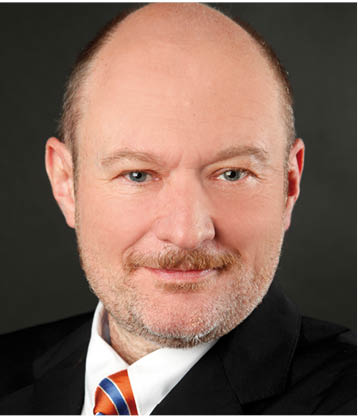
Former State Secretary Boris Velter, head of the “Health City Berlin 2030” office, spoke on this highly complex topic, which is both political and health-related.
When Velter was appointed, Müller explained in his dual role as Governing Mayor of Berlin and Senator for Science and Research: “The establishment of the office is the next important step in implementing the proposals made by the Future Commission for the further development of Berlin as a health city submitted its final report.” In it, the experts also recommended that a competent person be entrusted with accompanying the upcoming process. Müller continued: “With Boris Velter, we have now been able to recruit a proven health expert for this task who has the necessary many years of experience, is networked nationwide and knows the health sector in Berlin very well.” Now it will be a matter of combining the commission’s recommendations to transfer a coordinated action plan and implement it consistently.
Which is anything but easy if you know a little more about Berlin's health policy structures and their sensitivities that have evolved over the years. In addition, it is a very challenging range of tasks that the final report of the Future Commission sets out.
Suggestion 1: Better cooperation
First of all, the commission's experts are suggesting closer cooperation between the two large Berlin hospital groups, which together have almost 10,000 beds and over 34,000 employees (16,700 at Vivantes, 17,500 at the Charité). To this end, the establishment of a cooperative structure as an umbrella company as a wholly owned subsidiary of the State of Berlin should be examined.
As if that wasn't already a mammoth task, there is another structure that has been growing over the years: that of the German Heart Center Berlin (DHZB) with around 1,300 employees. Charité and DHZB had already agreed in January 2018 that to merge their respective cardiovascular facilities into a new scientific, clinical, legal and economic unit - the University Heart Center Berlin (UHZB). “I am pleased that we were able to bring the negotiations about the establishment of the University Heart Center to a successful conclusion,” Müller said at the beginning of last year when the result of the negotiations was announced. In November 2019, almost two years later, the Bundestag decided to contribute 100 million euros to the 390 million euros for the construction of the UHZB building. However, the start of the project was postponed until 2021.
The results report of the future commission “Health City Berlin 2030” presented in March naturally could not address this fact, but explained: “The presentation of those responsible to the commission showed the importance of the DHZB in clinical care. Particular emphasis was placed on the advanced cooperation between Charité and DHZB, which is to be supported infrastructurally by a completely new heart center.” However, in the opinion of the experts, Vivantes should also be included in the already planned closer cooperation between DHZB and Charité within the framework of the UHZB in the medium term be integrated. In the opinion of the commission, this would make it possible to “create an institution in an important future field of inpatient medicine that is internationally competitive”. The Commission also expressly welcomes the fact that, in addition to joint governance, an ambitious new construction project is also planned for the heart center, which would lead to a flagship for national heart medicine. According to the commission experts, the combination of organizational reorganization with structural development planning could be an example for future development. Yes, we are in Berlin: The new building on the Virchow Clinic campus is still in the planning rather than completion stage.
Proposal 2: Translational research structure
However, this is by no means the only construction site that Berlin has in the health sector. In the Commission's opinion, the role of the Berlin Institute of Health (BIH) or - in German - the Berlin Institute for Health Research (BIG) should also be clarified. Although the establishment of the BIH/BIG - founded by the Charité and the Max Delbrück Center for Molecular Medicine (MDC) in the Helmholtz Association - as a pillar of excellence within the Charité is welcomed by the commission, the focus should be “on translational research and ensure further collaborations and partnerships.”
In terms of content, it is suggested that translational research should be promoted - on the one hand, based on current research results, and on the other hand, with the help of the Charité's options. The commission writes: “If this administrative agreement were signed by the state of Berlin and the federal government, the translation of research results into clinical practice would be structurally established in a German university medical center for the first time with funds from the Federal Republic.”
The MDC, with its 1,660 employees, is a research institution of the Helmholtz Association of German Research Centers and is therefore jointly financed by the federal government and the state of Berlin. Located on the Berlin-Buch campus, the MDC particularly researches the molecular basis of health and disease in order to improve prevention, diagnostics and therapy. Because the BIH/BIG is now devoting itself to systems medicine for better predictions and new therapies, the commission sees the possibility of transferring results from the MDC laboratories to health care, which can still be expanded - through closer cooperation here too.
Proposal 3: Infrastructure for international competition
The expert commission describes the main challenge of the coming years as being beyond all that is still to be built.
The cooperation structures reflect the competition in biomedicine that will become more intense in the coming years. According to the commission report, the Leibniz Research Institute for Molecular Pharmacology and the Charité are already active in this area. According to the expert council, the competition will particularly revolve around recruiting excellent scientists. In order to be successful in this area, it is essential to offer an internationally competitive infrastructure. In addition to buildings, this infrastructure also included devices and technical equipment as well as powerful information technology that allows the processing of large amounts of data.
In the field of biomedicine, the translation of basic research results into clinical application will play a particularly important role. In order to be able to accomplish this process, the experts believe that appropriate structures are essential. Here too, the Commission recommends close cooperation between all partners involved. However, it is not problematic that the individual partners in such a community each have individual research priorities, but there should be a common research strategy. The commission writes in its report: “In order to be able to derive improved medical approaches from the joint research strategy, it is important that the Charité, for example, further develops its research strategy by going beyond a definition of the fields of activity and looking at how synergies are created and can be used and how an appropriate investment can be made for the research directions in view.
infrastructure can be guaranteed.” This should also apply to institutions such as Vivantes, so that research activities can be linked and considerations can be made in the area of health services research or integration into clinical studies.
It would also be recommended that “long-term strategic research cooperation” be established with the other research institutions at universities and non-university institutions to a greater extent than before.
beard. In this way, without restricting the freedom of individual research, the “absolutely necessary infrastructure that no single institution can provide to its researchers” would be guaranteed.
However, the expert commission goes one step further by advising that it should be possible to address fundamental problems in biomedicine in the greater Berlin area through close cooperation between various partners. In terms of content, “biomedical hotspots” would be created which, according to the experts, would focus on specific clinical pictures and could thereby “make targeted use of the unique research landscape in Berlin”. By defining such “biomedical hotspots” and strategic cooperation between public institutions providing inpatient care, it should also be possible to integrate the industry, which is increasingly represented in the field of biomedicine in Berlin.
As a target, the expert commission formulates a vision that is at the same time Velter's maxim and description of action: “The goal must be for the Charité and Vivantes locations to be among the 30.
The most successful medical universities in the world.” This is ambitiously formulated when you consider that there is currently not a single German university location in the top 30. But with “sufficient cooperation and investment,” Berlin has the potential to close this gap. <<
from:
MVF editor-in-chief Peter Stegmaier
The background to Boris Velter
Boris Velter has been working in health policy areas for over 25 years and as head of “Health City Berlin 2030” has neither an easy task nor an easy position. This is because the SPD politician and state secretary was temporarily retired at the end of 2018 without giving any reasons. According to a report on aerzteblatt.de, there was a substantive disagreement with Berlin's Health Senator Dilek Kalayci (SPD). In August of this year, however, the Governing Mayor Michael Müller (SPD) made Velter - at that time a former State Secretary - the founding head of the “Health City Berlin 2030” office, which also began work at this time. The office, set up and financed jointly by the Charité and Vivantes at Müller's request, is intended to support the implementation of the Future Commission's recommendations, accompany the implementation process and also fulfill a hinge function to the Berlin Senate. This means that Velter has to do primarily with two important business areas of the Berlin Senate: on the one hand, with Health Senator Kalayci's house, and on the other hand, with the Senate for Science and Research, which is conveniently headed by Müller.