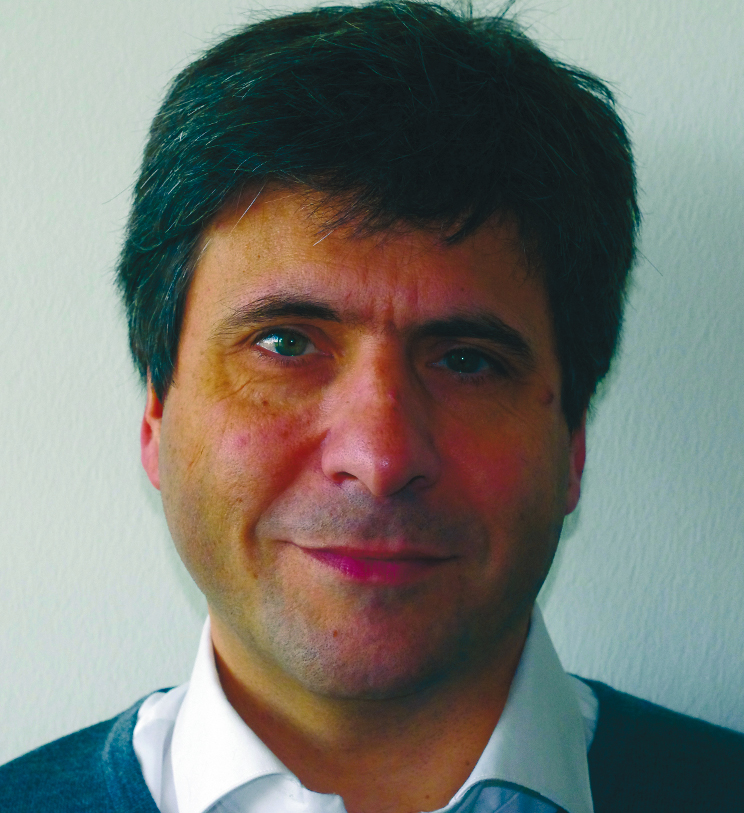
Prof. Dr. Holger Pfaff, 1st Chairman of the German Network for Healthcare Research eV (DNVF eV) and Prof. Dr. Sebastian Harder, 1st Chairman of the Society for Drug Application Research and Drug Epidemiology, were conference presidents of the 10th German Congress for Health Services Research. Hundreds of lectures and poster sessions (you can find a brief insight on pages 12 to 15) dealt with the topics “Medicine use in the focus of health services research”, “Methodology of health services research”, “Health care research in clinical disciplines” and “Health care research in context”. The two professors gave a joint interview to “Monitor Health Services Research” in which the current political dimension as well as issues of demarcation between health services studies and health services research studies, but also the open question of financing and the lack of organizational power were addressed.
>> Do you expect the AMNOG, which was also widely discussed at this congress, and the upcoming GKV Care Structure Act to provide new impetus for health services research as well as a higher acceptance of the key function of drugs in the therapy regime?
Harder: Thanks to the AMNOG in particular, many questions of health care research and health care studies in the area of drug use will play an important role. The comparative effectiveness studies required for this are the core area of drug application research and epidemiology. The aim will be to obtain truly reliable statements about the effectiveness of drugs from data sources of all origins - whether through classic phase III clinical studies, whether through cohort studies or other instruments.
You have just mentioned a key word that Mr. Pfaff should respond to: When it comes to the term “health care studies,” he is certainly missing the important word “research.”
Pfaff: We have to understand health care research studies as distinct from pure application observation studies, which are also called health care studies.
Where's the difference?
Pfaff: In the future there will be two quality levels of studies in the benefit assessment. The first stage is the care study, as previously provided for in AMNOG. There are no quality criteria set for them. The better second stage would always be the health services research study, in which clear criteria for high quality and evidence are set.
Don't you think the legislature was just a little careless when it omitted the word "research"?
Pfaff: That could certainly be the case. However, a new study product was created in which it is unclear whether it is simply the old application observation study that does not meet scientific standards. From our point of view, a health care study is more of an application observation, but proper health care research requires health care research studies. Only these meet the criteria of scientific research.
That sounds like a purely academic view.
Pfaff: It is, but it is important for quality assurance. All studies as part of the benefit assessment must be carried out at the quality level of health services research.
Harder: I wouldn't even want to use the word "health care study" because the mere mention of it brings health care research as such close to application observation. I am therefore just as strongly opposed to calling application observations health care studies, because the latter are carried out with an ambitious scientific approach. This does not always have to be a randomized approach, because there are also very good other methods such as cohort studies that achieve quasi-randomization.
Does this approach actually help us at all?
Harder: No.
Why not?
Harder: Simply counting pills, as is sometimes done in drug application research and health care studies, doesn't help us much. But product-focused application observations are also ideally suited to pharmacovigilance when it comes to recording drug risks and the topic of drug safety. We've done all of this long enough. We should actually recognize that only approaches that compare treatment regimes can help us advance the issue of quality of care.
But AMNOG is all about the benefits.
Harder: I don't think it's permissible to derive any information about the benefits from these health care studies - apart from those regarding safety. This would require proper health services research studies with a comparative approach.
Is that your opinion too, Mr. Pfaff?
Pfaff: Yes. I share this opinion. But the industry is more likely to carry out supply studies because they can simply be done faster and more cost-effectively. You can't blame the industry for this, but rather the legislator, who first introduced the term. That's why we really wanted to add the addition "research" to make it clear that the studies resulting from the AMNOG must also take place at the quality level of health services research. We have defined this high level of quality in the memoranda on methods for health services research.
Is this just a problem for the pharmaceutical industry?
Pfaff: Not only. As part of the supply management of health insurance companies, there are departments that carry out supply analyses. Here too, the quality criteria that apply to health services research studies should be adhered to, which is certainly the case in many cases.
So it's not just a Sawickian “sponsor” bias, but also a requirement bias?
Pfaff: We always have to differentiate between quality that is sufficient for decision-makers; and a quality that satisfies reviewers in scientific journals. A manager on the cash or industry side may be satisfied with the suggestion that a certain intervention has an approximate effect, because this is still better than completely poking around in the fog. A study on a lower level is certainly sufficient for this statement, but it does not deserve the name of a health care research study, but can rather be described as a “health care analysis”.
Harder: A health services research study, on the other hand, is a study that can be published in international and national journals and must therefore meet the necessary quality criteria.
This brings us to the question of who can and should finance these health services research studies if they are not necessary as part of the AMNOG. Another danger of AMNOG is that the studies triggered by this law will be very drug-related and will completely neglect questions of the therapeutic regime or even the interaction of different therapeutic options.
Harder: I do believe that the legislature actually had comparative studies in mind, but unfortunately failed to specify that.
Maybe also because health services research finds it difficult to represent complex systems with the currently available instruments? Let's think about the DMP area. In order to represent and evaluate this complex care system, one would need very, very extensive instruments.
Pfaff: We have these available in health services research. That's not the problem. For example, you could carry out cluster-randomized studies. However, this presupposes that you already have the intention to carry out such evaluations in advance. This means: You have to have a sufficient number of complex analysis units in the form of clusters from the outset - such as: B. Regions, doctor's practices, hospitals - define. Then these clusters - in the case of DMP, for example, regions or doctor's practices - would also have to be prepared to submit to a randomization process in which, for example, 40 are randomly included in a DM program and the same number of comparable people are not randomly included.
Politically, that would probably be a very difficult undertaking.
Pfaff: That's the problem.
What's missing?
Harder: As is so often the case, there is a lack of organizational power.
Pfaff: An example: A head of a rehabilitation clinic can very easily compare a new procedure to be introduced with an existing one if he randomizes properly. Because he has the organizational power in his house to enforce the necessary study conditions.
And in the case of the DMP?
Pfaff: There are many sectors and professions working together here, and their influences need to be properly evaluated. Of course, health services research could do that if it was politically wanted.
Accordingly, there are also overarching approaches within AMNOG.
Pfaff: Sure. The AMNOG refers to drug therapy. However, this medicinal health service is provided in different care contexts, such as various doctor's practices. Health service and context service together result in the complex care service. The evaluation of health services is the task of therapy-oriented health care research. Researching the role of the care context, on the other hand, is the task of context research. This is currently neglected. Unfortunately.
And will certainly be neglected even more by AMNOG.
Pfaff: Absolutely. But even if real health services research studies were initiated through the AMNOG, a lot of money would flow into drug impact and drug application research, but still very little would flow into the contextual research that is also necessary.
Harder: Drug-focused research is also important, but its knowledge is quite limited. The boundary and environmental conditions of drug use are probably the more determining factors. But we are actually still at the very beginning of this question. For example, it is quite unknown how doctors really deal with complex medication management.
Pfaff: This also becomes very complex very quickly. Just with a drug alone: In what form should it be administered? How long? Should there be advice at the same time? What advice? There are probably 10 to maybe 20 possible consulting styles here alone. All of this would have to be determined in a study. The whole thing becomes much more complex when the patient comes into play. The patient often requests participatory decision-making and, at the end of the decision-making process, may decide against the medication or the conditions established by evidence-based guidelines. This makes it increasingly difficult to distinguish the influences of a single medication from those of additional constellations.
Harder: The complexity described here is directly related to the total number of prescribed medications. It may sound a bit rabulistic: but sometimes fewer drugs would be better, because that would reduce the complexity accordingly.
We are only talking about medicines here, not about therapy options.
Harder: Admittedly, focusing on the drug issue has the disadvantage that the space for other therapy options is initially reduced. That's exactly why we tried to balance these approaches at our joint congress. On the other hand, there is always a great risk that the medicine will always be directly associated with costs, especially due to the drug focus. It's easy to forget that other, non-drug-based therapies can also be very expensive, if not much more expensive.
This leads us to the data necessary for health services research. Do you have everything you need?
Pfaff: We don't have all the data we need for comprehensive health services research. Above all, we need a data infrastructure that enables us to conduct health services research straight away. To do this, for example, the existing cash register data would have to be pooled and linked to other data sets. We currently do not have such an urgently needed data infrastructure. As long as it is not available, it is necessary to work with isolated health insurance data in health services research.
Mr. Straub and Schlenker from BarmerGEK rightly emphasized at their congress that the health insurance companies actually have no budget for health care research.
Pfaff: That's the problem. We all - and especially IQWiG - would need a lot more studies from the German-speaking area in order to not only have to practice evidence-based medicine on the basis of American or Asian studies. But where are these studies? Of course, some are funded by the BMBF, industry or funds. But at the end of the day, with the current form of research funding, we lack the critical mass of German studies that would allow us to draw firm conclusions.
Harder: That's also because a large part of the data, especially in the pharmaceutical sector, belongs to pharmacies and is then sold for money through their billing centers. This is a hurdle that I do not consider to be conducive to research.
Of course, this is data without indications, while the health insurance companies can also assign patients to their data.
Harder: If the data traffic were a little less complex, that would certainly be very helpful, taking data protection into account. I was impressed by a presentation by a representative of an American HMO who, in principle, can feed a hypothesis into her data warehouse at the push of a button and then have the solution thrown out at the push of a button.
This is what you dream about, right?
Pfaff: Of course. But the question remains: Is this healthcare research or healthcare analysis? I would say this is a high level supply analysis.
Harder: In principle, this is already possible - albeit to a limited extent - in Germany today. I'm thinking here of large hospital groups. They have all the inpatient data, drug management data and also the context. These companies would be quite capable of initiating study projects - even randomized ones, for example if an intervention was carried out in some houses in the form of a stepped-wedge design and not in other comparable ones.
Above all, there is the open question of financing healthcare research. When you look at America, it brings tears to your eyes.
Harder: What did they add up? 1.8 billion dollars!
Plus $400 million!
Pfaff: That didn’t even mean comparative effectiveness studies. The Americans have another $1.2 billion available for this.
How can a country like America, where the health system is not necessarily one of the best, invest so much money?
Pfaff: Because the health sector is seen as an economic factor there. There is not only advertising for detergents or cars, but also for public health, hospitals and universities. Americans realized earlier than we did what it meant when cars and laptops were manufactured in the Far East. Then all we have left is service.
So people in the USA have better recognized that health is a growth driver in the service sector.
Pfaff: You can see it that way. In our country, healthcare is seen primarily as a cost factor, while in the USA the prevailing view is that healthcare is an industry like any other that costs but also provides jobs.
And we are trying to save even more through even more caps and budgeting. Saving is certainly not wrong. The only question is how these caps affect the overall system?
Harder: Of course that has a tradition of 120 years of social legislation. Ultimately, our health system has always been integrated into a political function. In other countries, such as the USA, there has always been more emphasis on free market forces being able to develop. In addition, the various market partners in our system are not confident enough to handle the goods entrusted to them. Doctors, for example, are not trained for this: They are trained to treat patients, but not to always run business or even macroeconomic calculations in the background. Even if the KV does some of this for them, the end result cannot be a happy solution.
This is exactly why the upcoming Care Structure Act actually de-economizes the medical profession by only prescribing active ingredients.
Harder: Which is an option that many colleagues will certainly welcome. On the other hand, we also know that this can cause problems in individual cases.
Why?
Harder: Substitution may be possible without any problems in 8 out of 10 patients. But two patients could just as easily have significant problems if the pharmacist gave them one box and another. For every active ingredient you always have to specify the release or at least the dosage form. Of course, the affected patients come into practice again and again and, in addition to reducing their quality of life, also cause economic problems. In my opinion, anyone who propagates something like that should first open the net calculation.
Are there any studies on drug regulation?
Harder: They just don't exist.
Again something was introduced without knowing the consequences.
Harder: Policy impact research wouldn't be so bad.
Pfaff: In principle, we need basic research and application research to mesh together. General operating principles would have to be worked out in basic research. In this case, it would first have to be clarified how the doctor will react in principle if he is only allowed to prescribe active ingredients. If the active principle is known, a care concept based on it would have to be developed, which would first be tested in practice as a prototype and then finally tested in a cluster-randomized study after testing. For this we usually need the organizational power of the federal and/or state governments. Only after successfully passing this test should the tested care concept be written into law.
Harder: It remains difficult. This is a lot of work and requires a large investment, because it requires study centers and the willingness of doctors to participate, which in turn entails some form of remuneration.
So it always depends on money and the ability to take action.
Harder: And about the lack of conducting: you have to do research now!
Pfaff: That’s what they do in England.
Harder: And we ask whether anyone would like to participate altruistically in this or that study...
Politicians should actually link fees to transparency.
Harder: I won't say anything about that now.
Mr. Pfaff, you are not a doctor.
Pfaff: I still wouldn't want to bully people too much, but I'm in favor of voluntary transparency. I advocate creating transparency through publication requirements. That would be the ideal case for me. You have to distinguish two things in this whole transparency debate. One thing is to create transparency regarding the performance of the individual healthcare facility, for example a doctor's office or breast center. It is quite another to take the data from each individual facility to find relationships that apply to all of these healthcare facilities. This would mean that no one is being pilloried and would also come closer to the core task of health services research, namely the attempt to illustrate connections. As a healthcare researcher, I am only of secondary interest in whether the individual doctor's practice is good or bad. Determining this is the primary task of quality assurance. I'm more interested in what causal relationships exist and how these can be used to develop better care concepts.
Harder: Unfortunately, transparency is often equated with public pillorying.
Pfaff: There is an instrument of anonymization for this. If you do this right, no one needs to be afraid.
However, this fear still prevails among the people involved: fear of transparency and fear of responsibility for their actions, which, if evaluated, can quickly lead to recourse. If health services research were interpreted as an evidence-based benchmarking module, it would be much better viewed and used.
Pfaff: Health services research is there, on the one hand, to generate knowledge and, on the other hand, to enable fair comparisons, for example in the sense of benchmarking.
Harder: However, there is definitely a risk that data that exists in a system will at some point come back to you.
Pfaff: There are possible gradations. There is also always the question of the form in which results are presented. It's good when a doctor sees where he stands when using a certain therapy and realizes: "My colleague is better at this, that probably won't work, I have to try harder." The next stage becomes more difficult when a sanction is attached to the underperformance. The transparency problem should be handled as in the case of the subsidiarity principle. Health facilities should first learn voluntarily. Only when nothing happens or no progress can be seen should more centralized external quality assurance measures take effect and/or measures such as “pay for performance” should be taken.
Should health services research be seen as the basis of a learning system?
Pfaff: That's how I interpret it.
Mr. Pfaff, you are one of the founding fathers of the German Congress on Health Services Research. Has the content changed in the ten years?
Pfaff: For example, the fact that the German Research Foundation set up a specialist committee for “medical services research” was an important success. This may sound trivial to people outside of science, but it is a sign that health services research has become scientifically established. And if even the FAZ reports on the latest news from health services research in the area of natural sciences - as happened recently - that is also a good sign. I wouldn't have dared to dream of this just a few years ago. But the content has also changed: health services research is not only dedicated to applied research, but increasingly also to basic research. This is also because basic results can be easily published internationally.
This will not necessarily reflect the reality of care or the needs of health care research on site.
Pfaff: That's only partly true. The basic results are obtained on the basis of German reality. As with pharmaceuticals, basic results are the foundation on which new concepts and products can be built. Without a foundation, there is no house - without basic results, there is no better care.
Does the foundation work not satisfy your professorial needs?
Pfaff: You have to see it this way: Publishing the health services research results in international journals ensures that the results are based on the international state of science. So far, I don't know of a better quality check in the sense of "finding the truth".
But this truth does not have to be what the local supply system needs and demands in terms of knowledge.
Pfaff: Yes, in the long term, yes, because a rational health policy must be based on the “true” basic principles that have been developed in basic research. This is no different in drug research. University health services research institutions only manage the balancing act between scientificity and unscientific practicality with difficulty. It may be that in order to carry out supply analyzes that serve to prepare supply management decisions, non-university supply analysis institutions are required that do not have to pay as much attention to impact points. However, their results cannot be the basis for health policy decisions. Due to its scope, the highest quality standards must be met. These can only be provided by university health services research institutions, as they have to submit themselves to international experts.
Building two levels would certainly not be very effective.
Pfaff: But it won't work any other way if you want both: scientificity and practical suitability. Science is closer to the truth, but expensive and appropriately slow. If you need it faster and cheaper, you have to look for non-university institutions, which are not allowed to call themselves health care research institutions.
Accordingly, like in America, we would need a kind of health services research study center that has to pursue a specific social task, legitimized by politics.
Pfaff: Exactly. And given the big tasks, that would have to be able to spend a lot of money. But I currently don't see any structured approach that would point in this direction. The money that the BMBF and the DFG are investing in this area is remarkable and enormously useful, but it would not be enough to carry out the urgently needed “comparative effectiveness research” in Germany.
And the approach is not structured enough.
Pfaff: The BMBF would be able to do this because of its research funding philosophy. The DFG less so. The DFG funds “researcher-initiated” research. This is also important because you can only be excellent in a field if you are 100% familiar with your field - and that's exactly what you need to be able to do research for. It is logical that a structured approach to healthcare research can never arise from the accumulation of individual flashes of inspiration. We need both: unstructured, innovative, brainstorm care research and structured program care research.
Harder: But there are also positive examples, such as the GANIMED project to improve care based on, among other things, genetic markers - keyword personalized medicine. Around 15 million euros were invested in this project in Mecklenburg-Western Pomerania. By our standards, this meant a lot of money was spent on reshaping an entire supply structure for a structurally weak area for the next few years and, of course, evaluating it accordingly. From telemedicine to personalized medicine to other approaches to community-based care.
Finally a flagship model of health services research.
Harder: Absolutely. We therefore gave the project space at the congress.
Keyword: Congress: What were your highlights for you?
Pfaff: For me, the highlights were the meeting on the 10th anniversary of the German Congress for Health Services Research, the international workshop on the international status of health services research and the panel discussion on the 2020 Agenda for Health Services Research.
Harder: I don't want to single out any individual event here. The highlight for me was the successful composition of the program, which kept the tension tight for over 500 participants from start to finish in a very multifaceted manner. This is of course also a great success for my specialist society, the GAA, as we only have around 120 members ourselves. I was also very pleased that around 250 research contributions were submitted as abstracts, meaning that every second participant made an active contribution to the congress. I think that it was also possible to not just turn the variety of contributions into a junk shop, but rather to remain thematically stringent and to make the common thread through the program clearly visible. The program commission made up of GAA and DNVF worked very well.
The interview was conducted by MVF editor-in-chief Peter Stegmaier. <<