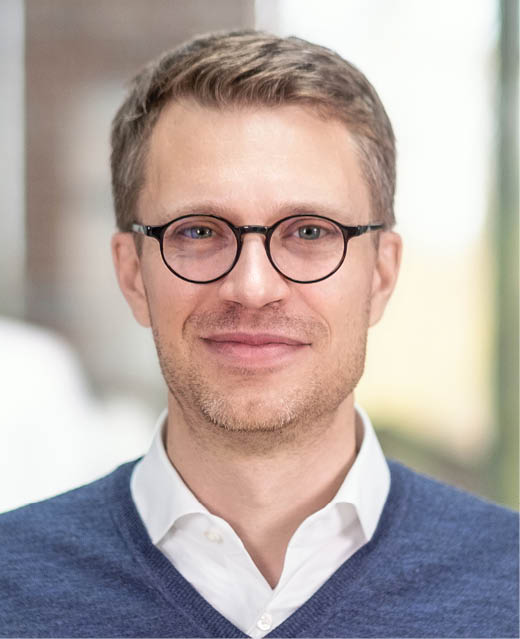
>> Founded 20 years ago, Vivantes is now Germany's largest municipal hospital group and also Germany's largest state hospital group with a capacity of 6,020 beds and more than 17,800 employees and 580,000 inpatient and outpatient patients treated annually. There is another special feature: Vivantes is a 100 percent state-owned company in Berlin and is therefore not obliged to generate profit, but rather to make a profit. Can this be achieved with the number of elective services falling due to Corona?
Vivantes is also suffering from a decline in the number of cases due to corona. This was unavoidable because we have changed a lot of things in favor of inpatient Covid-19 care in order to create sufficient capacity. That was a good thing, because Vivantes was and is still the hospital provider in Berlin that has treated and is currently treating the most inpatient Corona patients.
How many were there?
We have had around 8,000 Covid-19 patients in our wards so far.
Which sounds very small compared to the approximately 250,000 patients who are otherwise treated as inpatients every year. That's not even three percent!
Quantitatively, that's true. Three percent is basically nothing compared to what we normally provide inpatient care. Nevertheless, immense care capacities for other disease entities had to be limited in order to be able to care for this number of Covid-19 sufferers. This also included us completely stopping and redirecting elective care right at the beginning of the first wave, which was Friday, March 13, 2020. Tandems were built and everything was made possible to really secure the care that would have to be provided due to Covid-19.
What does that mean for the financial result?
Overall, we have seen a decline in the number of cases, even with acute illnesses. To date, far fewer patients are arriving than were previously cared for in our hospitals.
That means: There is a permanent decline.
At least it seems that way. Nevertheless, we have to ask ourselves whether and how we in Germany should generally adapt our health care systems - as Vivantes is one of many, albeit a large one - to the new “post-corona”.
One might add, which is perhaps something we should have done a long time ago. What does that mean for Vivantes now? In the end, you too are driven by the number of cases.
True. Since the legislature introduced flat rates per case, all hospitals and those responsible for them have been driven by a system in which you can actually only do two things: close or flee into growth. We're still doing well at Vivantes. As the largest municipal hospital operator in Germany, we have managed to produce very balanced results over the years since the merger in 2001.
Until 2020 ff.
True. A balanced result was and is no longer possible under Corona conditions. And without the money from the “Covid-19 Hospital Relief Act”, which the federal government passed in March 2020, the situation would be even more dramatic.
Where does the path lead? Maybe it will even lead to better hospital care?
The Corona pandemic has made it clear that “business as usual” can no longer exist. That's why we had already been working on a new target image during the first two Corona waves, which we called "Vivantes 2030 - Life in Berlin". This describes in great detail how we imagine healthcare to be in less than ten years.
How come?
Fundamentally different! The healthcare provided by Vivantes will – as we imagine and have developed today – be more centralized, more specialized and more digital.
Why centralized?
Expertise about minimum quantities is a frequently observed phenomenon that simply cannot be denied. We therefore try to set up and promote competence centers wherever possible, so that our individual companies become more specialized and therefore even better in certain service segments. We are already taking big steps along this path.
It's amazing how detailed your vision paper describes steps and backs them up with measurement criteria and timelines.
Our strategy paper consists of two components: Firstly, a rather prosaic “Target Image 2030”. Here, using six fictitious people who represent our main clientele, we try to illustrate what care in a network will look like in ten years and, above all, what benefits each patient will benefit from it.
Let's take the fictional person “Hildegard Meyer” described in the Vivantes strategy, who grew up in Berlin-Pankow, is 89 years old and has lived alone since the death of her husband Helmut five years ago. At the beginning of 2020 she had a stroke and was treated in the stroke unit at the Vivantes Humboldt Clinic. Due to the global corona pandemic, rehabilitation following the inpatient stay was not possible. Therefore, she accepted the offer to take part in telerehab using the Caspar app, where she received support in using the app from a (also fictitious) boy from the neighborhood, Erdem Yilmaz. Our Hildegard is an example of a clientele that we often serve. So far, however, there have been all sorts of system breaks and problems that begin long before you are admitted to one of our hospitals.
How should care work in the future?
For example, Hildegard constantly wears a wearable that, in combination with data that she previously gave us with her consent, is able to trigger an alarm in the event of certain events. This is immediately classified by a patient guide and is the reason for a previously defined care cascade. For example, the controller decides by telephone with Hildegard that a preclinic should be initiated as quickly as possible based on the parameters transmitted.
This means that the media and system break is already inevitable.
Was and still is. Preclinical means so far that Hildegard is picked up in the emergency ambulance operated by the fire department in Berlin and taken to the nearest or quickest hospital. So far, neither the emergency doctor nor the receiving clinic have any data on Hildegard, which means nothing other than that medical history, anamnesis and master data are entered several times on notebooks, which then travel through the system with the patient - printed out on paper - in order to then be billed and to be filed. But since we are already dealing with a fully digital hospital at Hildegard, the whole thing is now different: the control center already has all the necessary data - from the master data to the last doctor's letter and, if necessary, around 500 recorded individual data per previous hospital stay , which allows the emergency doctor to make a much better decision on the patient's further care right there. Determined by the data, the emergency ambulance is not directed to the nearest clinic, but to the clinic most suitable for treating the illness. This is already informed in advance so that the emergency room and staff can be prepared accordingly.
Sounds too good to be true.
The future begins now. We are currently in the process of starting a project with the Berlin fire department in order to be able to exchange data bidirectionally in the future. This is not a dream of the future; if everything goes well, it will probably work in just a few weeks. The same thing is already happening with the Charité, with the aim of being able to offer better, more informed care everywhere in Berlin - always for the benefit of the patients and of course only with their consent.
A very ambitious goal.
We certainly have ambitious goals. But these are not just visions, but packages of measures that are backed up with exact schedules and, above all, with key figures - KPIs in modern German - with which we can measure how quickly and with what degree of goal achievement we are on the way.
You actually need an R&D department for this.
Exactly. For this purpose, we have set up a new department within corporate development that we have called “Health Care Development”. Here, together with IT and other areas, the steps and building blocks that we need to bring our target image to life are developed.
Where does the money for this come from?
From our own funds, but also from the budget of the Hospital Future Act, an investment program launched by the BMG for the digitalization of hospitals. Vivantes will receive at least 61 million euros from the KHZG, which we want to invest over the next three years in a targeted manner and beneficially for our patients.
Digitalization is also called ePA.
For us, it is primarily about introducing a digital case file that is of course compatible with the ePA. As of today, we are not yet completely finished with all of the building blocks for this project, but we are pretty far along. The next construction site is the patient app, which enables digital networking with patients to support a holistic, intersectoral treatment process - starting with prevention, through diagnostics and therapy, to aftercare and support.
A holistic intersectoral treatment process also means control?
Quite clearly. We can't avoid addressing the topic of patient flow control, which brings us back to our fictional patient mentioned above. If we want to optimally admit Hildegard into one of our hospitals and then guide her through the many wards without her having to endure long waiting times, multiple anamnesis and data queries or even double examinations or diagnoses, we need a workflow - a patient flow.
Doesn't it exist yet?
Of course it already exists. But so far there is no one that has been jointly defined and then adhered to by everyone - with justified exceptions. It was and is a long, sometimes rocky road for us to identify the important process components in order to be able to develop such patient flows. It is also particularly challenging to store meaningful process metrics that occur along a patient's journey through our hospital - of which we have not just one, but nine with 450 to 1,200 beds. If we succeed in optimizing these processes, the “data lakes” created will make it possible, in the best case scenario, to predict a patient’s possible outcome as soon as they are admitted – at least with a certain degree of probability.
Ultimately, the outcome should improve through a better organizational and process structure.
That is the goal. Although one has to honestly say that the path to get there is sometimes quite difficult. When we talk about patient flow control - or "patient journey" - we have to agree on care paths and "standard operating procedures" - SOP for short - with bindingly defined and documented descriptions of processes and procedures. We are currently in the process of asking our doctors about all the standards currently used. There are many, very many.
Let us guess: Many are unable to provide an SOP for their top medical conditions.
They haven't had to do that yet. Until now, it was and is the case that, for example, ten senior physicians treat a specific clinical picture in five of our clinics. As of today, we cannot say exactly which care path or SOP they follow, although some differ significantly, but have developed historically and worked. But in a precisely defined, unique setting of a single clinic or even ward. But in the future, if care in a network is to work even better than before, processes from the patient's arrival to discharge must be described precisely and justified in an evident and standardized manner using guidelines.
One could now say: Where is the medical art?
Nobody has anything against sensible process steps. That's why most of the doctors and nurses who work with us are enthusiastically taking part in this project. Also because they have the legitimate hope that process optimization will give them more time to pay attention to the really important things, to be able to concentrate more on a patient again, but to have to worry less about paperwork or day-to-day business. For example, because someone once again forgot to call radiology or the patient transport in-house was not ordered early enough. If we succeed in defining and agreeing on the “patient journey” in accordance with the guidelines, the admission diagnosis will determine which path - let's say - 95 percent of our patients will take in order to achieve the highest possible outcome for them at the lowest possible outcome for them to be able to create time burdens - if possible without unnecessary waiting and travel times. The art of medicine, on the other hand, begins at the point when the remaining patients deviate from the “patient journeys” – to be understood as paths with certain leeway. But then with the corresponding, written reasons.
Anyone who understands a hospital as an entire complex would expect that there are long-defined SOPs so that the outcome does not depend on the doctor - who is currently on duty - and therefore on chance.
That's exactly what it's all about: improving outcomes and increasing patient safety by applying standardized processes.
Actually, a doctor who has abandoned a standard procedure would not only have to justify this step, but also be responsible for it. This is the only way we will move from volume-based to value-based medicine.
The standard saying “he who heals is right” still applies. But a doctor must firstly have healed and, secondly, have reasons why he left a scientifically based path. These reasons can and will exist, but they will certainly be the exception rather than the rule.
How great do you estimate the resistance to such a concept is?
You will never be able to convince everyone. All we can do is try to reach as many as possible, to follow a transparent, comprehensible and scientifically based path together and for the benefit of the patients we care for.
How do you want to convince your employees?
With the greatest possible transparency. We made our various projects publicly visible on the internet, presented them in kick-off events and brought them to every location with many roadshows - in Corona times via Zoom. We entered into discussions with many of those who came forward and incorporated much of what was brought to us and incorporated it into a development process. However, it has to be said that there were many detailed issues where we really opened the door because they had been bothering many colleagues all along or hindering them in their respective work. For example, this concerns, on the one hand, inaccessibility and, on the other hand, non-availability, because there is currently no complete and timely data overview.
From a health services research perspective, one might ask: Why didn't you use a stepped wedge design by not starting Vision 2030 in a house, trying it out, evaluating it and then scaling it?
The impatience at other locations should not be underestimated. Once you have started such a large project, you have to implement it everywhere as quickly as possible. However, this does not mean that precisely defined sub-projects can only be tested, learned from and adapted in one or two houses. You also have to remain realistic, because large IT and change projects require enormous capacities and resources.
The healthcare system is actually now learning change management using the example of hospitals.
Out of necessity. Almost every larger hospital now has some kind of change or development department, but the change department is
Thought is usually not expanded towards the larger goal of better care, as we do.
Which sub-projects have you already had good experiences with?
For example, our patient app is already largely finished as an interoperable data system. Self-check-in is already possible in a test environment - prediction of waiting times will follow soon, communication and survey tools as well as PROMs will also be activated. Discharge planning will soon be able to be more automated so that people no longer have to deal with their follow-up treatment over the phone, because this has already been determined, regulated and reserved from the moment they are admitted.
Otherwise, what do you do with all the data?
We try to summarize structured data in a data pool and evaluate it using AI and algorithms. A useful application for this is, for example, waiting times and route management. This includes tracking systems. Because if we know exactly where every bed is, we also know where the corresponding patient is. We can, for example, base cleaning processes on this, determine bed occupancy – free or not free – and even organize patient transport planning right up to the operating room. All of these use cases along patient flow control are important and have a certain share in the overall outcome.
How do you pre-sort and filter the necessary data?
This is a difficult topic because until now – apart from data-based billing – it didn't really matter which data was entered and how. But that's not surprising, because until now no one was clear about what you could do with it.
Would you make your primary care provider data available for health services research? Of course, strictly anonymized, pseudonymized and GDPR standardized.
It depends on. It is best if this data creates a benefit for us, so that health services research should perhaps first tell us what we as a large hospital provider can expect from such data release. For example, if we were able to achieve an even better outcome through practical data evaluation, that would be beneficial – for our patients and for us as the clinic.
Do you expect a significant improvement in terms of outcome?
Of course we hope so. As is often said, digitalization is not an end in itself. It would be desirable if all data from as many sources as possible were openly available for research. This would benefit the patients, because they would then know exactly which hospital is the best, but also the hospital operators themselves, because only then would meaningful benchmarking be possible. And, that is the real challenge: Everything we do must bring added value for everyone, for patients as well as for doctors, nurses, patient transporters, cleaners or whoever.
How do you define added value?
In direct outcome improvement or qualitatively: For example, in the form of more time for doctors and nurses to do what they were trained to do.
Also in the sense of better working conditions?
With the working conditions we have in German hospitals, you can't necessarily score points and convince many people to work here in the future. Any altruistic or intrinsic motivation, no matter how high, will eventually be consumed by reality. If we can use process optimization to ensure that the many people who work in a hospital can do what they once did when they decided to do it, we have already achieved a lot. The term shortage of skilled workers is often overused, but nursing is rightly protesting because things can no longer continue as before and better conditions must be created for them, for us, for everyone. This is the only way to get more care at your bedside again.
Can you prove that this transition from volume to value works?
We're not there yet, but we're on the way there. The question will be whether we can survive in the current DRG flat rate system long enough to make this vision a reality.
Dr. Danckert, thank you for the interview. <<
The conversation was conducted by MVF editor Prof. Dr. Reinhold Roski and MVF editor-in-chief Peter Stegmaier.
https://www.vivantes.de/unternehmen/vivantes-2030
https://www.vivantes.de/fileadmin/Unternehmen/Strategie_2030/vivantes_strategie-2030_A4_210x297mm_210216.pdf