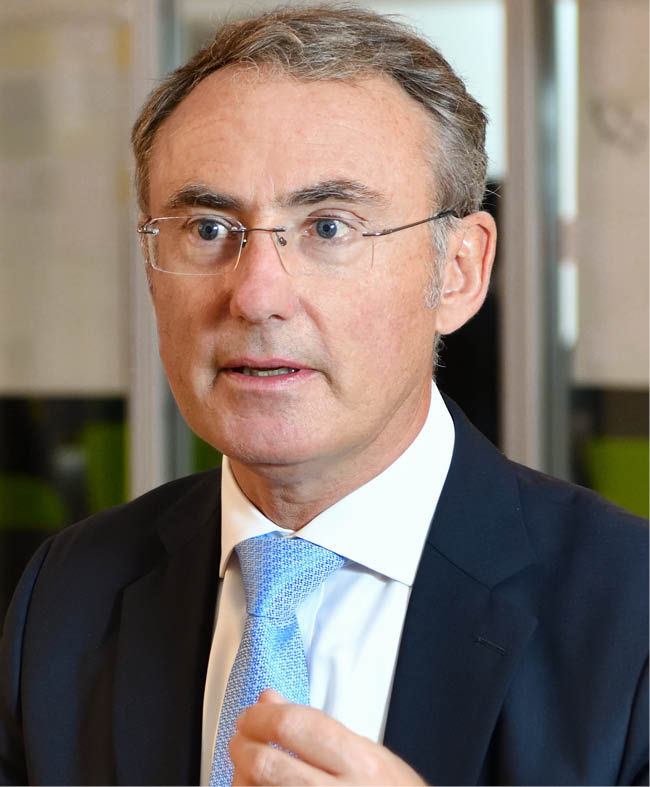
>> What motivated you to recently found the BARMER Institute for Health System Research, or bifg for short, as a scientific institute and competence center for health care and health system research for your health insurance company?
BARMER has a long and successful history in health services research. The first drug report was launched in 2001 by the then GEK. This was followed by hospital and doctor reports and the first care report in 2008, as well as the dental report from 2011 - a topic that had hardly been presented until then and actually not at all by the health insurance company.
What prompted you to found bifg as an independent institute?
The trigger for founding the institute was, on the one hand, that we publish a lot ourselves and, on the other hand, we receive more and more frequent inquiries, either from scientific institutes or from ministries and politics. The healthcare industry is also showing increasing interest in cooperating with us. For the scientific work required here, we need a stringent internal organization that is able, on the one hand, to convey a clearer picture of what we do to the outside world and, on the other hand, to provide a better interface to the inside.
TK has discontinued its WINEG and AOK Nordost's GeWINO is practically no longer active. Only the AOKs still have their jointly supported WIdO. Why are you taking a different path with the bifg than other large health insurance companies?
I knew WINEG from its founding phase. The experiences I had with WINEG on the TK board back then were incorporated into the current founding. This also means that we did not institutionalize the bifg, but rather founded the institute by merging two specialist departments. The bifg is not formally a separate legal personality, but rather a new unit within BARMER.
Why did you make that decision?
Because I know how difficult it is to recruit the best know-how for an institute like this, who also know their own business. These are exactly the people you need for your own operational business because they have the highest level of expertise. That's why you always have an inherent conflict in an institutionalized institute. That's exactly what we didn't want. That's why we created the bifg as part of the line organization of a BARMER department, which is intended to bundle what we have done so far in research, but with a clear special role and function.
How many people work at bifg?
23 employees currently work at the institute, but only four positions were created in connection with the founding of the institute; The latter was independent of the founding, because external parties had approached us in advance who had expressed their interest in active collaboration with us. An important point in this context is that the whole thing only works because it can be built on our scientific data warehouse. From 2011 to 2017, we rebuilt this data warehouse several times and have recently modernized it again in order to be able to use it much more efficiently than before.
What do you mean?
This means that our scientific data warehouse, on which the new institute can base its work in many areas, is a demilitarized zone.
Why this?
Simply because data that is generated during regular checkout operations is subject to statutory deletion periods and we are not allowed to store certain data for a longer period of time, which makes longitudinal evaluations almost impossible. In our specific scientific data warehouse, however, we are allowed to store the data for a long time, so that we can now access time series of up to 15 years, which is quite unique for a fund.
The WIdO also has a lot of great data.
We have the greatest respect for the work of the WIdO, but our homogeneous data set is something special because this time series allows for many interesting analyses. A second point is that the scientific data warehouse, with its own database, relieves us of the obligation to export special data sets from the fund's own data base each time for processing for reports and to always have to get new data protection approvals.
Which is certainly an extremely complex process.
Exactly. And an equally lengthy one. In the past, it could take an average of up to nine months before we were even able to export data. This meant that two internal employees were tied up and could only take care of it. The data storage had to be checked, the deletions documented and quite complex contracts had to be concluded for each individual request.
And with the data warehouse?
Today we allow science broad access to our science data warehouse. But we can control access very precisely. We know who accesses what data and looks at what. But this process is significantly accelerated and also much easier than before. The bifg should also manage this access because we have noticed an increasing interest in our data base for years, especially when it comes to health services research or community effectiveness. With the bifg we are giving the data warehouse a new look, making it more recognizable and addressable for everyone who is interested.
Seen from the outside, this is a clear message that says that BARMER is becoming more active in health care research, simply by bundling its various activities under the new bifg brand.
It can be said like this. Although we are currently not doing as much more research than we did before. But our approach to generating “data for action” is becoming more recognizable. For this purpose, a separate website was launched in which analyzes are stored and freely accessible. We will continually expand this.
What budget is the bifg financed from?
From part of our administrative cost budget. Since the institute is not a separate legal entity, we do not need our own funding for the institute. In addition, the activities of those employed there are carried out within the framework of our legal mandate. Which has been the case for many years.
If we look at the bifg's first field of work, which is called: “Financing and insurance systems”.
This topic is a vital interest of our fund. Thank God we have some experts who deal with this topic and who can routinely produce analyzes that are important for ongoing business operations. The institute's employees regularly work with renowned scientists; an example of this is the collaboration between one of our employees and an employee from Professor Wasem's scientific institute. They published a scientific paper together. These really highly qualified people that we employ in this area - more women than men, by the way - are real experts because they can not only carry out routine evaluations for ongoing business operations, but are also able to think further and draw important new conclusions from them pull. They should have exactly this opportunity with and in the bifg. You could therefore also call this “job enrichment”.
What benefit does the BARMER insured person have from this?
The first advantage is that, due to our size and our positioning, we can quickly detect and analyze dramatic developments and then respond with appropriate measures. This may sound a bit abstract at first glance because the individual does not have an immediate advantage, but on a meta level it looks different. At the beginning of the Corona crisis, we set up a Corona dashboard using the resources pooled in our new institute. On the one hand, we monitored hospital admissions in order to get a very quick picture of what is happening in care during this crisis: Where is care being provided? How often is it relocated? Or: Why isn't it being relocated? We then analyzed the hospital discharges documented in our health insurance data in the same way in order to get the best possible picture of the course of care during the crisis. This may not have any direct benefit for the individual, but everyone affected by Corona benefits indirectly if they are insured with a health insurance company that is able to evaluate such data and to draw the right conclusions from it . However, our many reports, which have always pointed out deficits - or, in positive terms, revealed potential for improvement in care - have very concrete benefits for each individual.
Please give an example.
For example, two years ago we created a care report in which we examined the situation of caring relatives. For this purpose, not only social data was analyzed, but also a survey of a very large number of those affected was carried out. The result that many caring relatives signaled to us was: We can't make it much longer, we can't carry on as before for much longer.
But an analysis alone is not enough.
Exactly. That is why we have changed internal processes based on the experiences of this report. Based on a customer journey, in German a “customer journey” – i.e. from the perspective of our insured persons who care for others – we have revised our cash register offering. For example, applications to the health insurance fund were designed in such a way that even medical laypeople can fill out an application very quickly. We have also initiated offers for caring relatives in which all aspects of caregiving - from the actual medical content to self-protection and strengthening resilience - were taught in weekend seminars.
That's certainly great, but...
...may sound banal, but it is an absolutely useful offer for our insured persons in such an extraordinary situation. The same also applies to medical cases, such as bariatric operations. With an analysis based on our data, we were able to clearly show that it is advantageous in every respect to have surgery in a certified center: lower complication rates, significantly lower mortality and lower overall utilization are the result.
Of course, the immediate objection will come that you are only doing this to save money.
Of course, a low consumption of resources after a successful operation without complications is a good thing for the solidarity community of the insured. Above all, an unproblematic operation is a very clear indication that the patients are doing better, simply because they received better care initially. That is a very direct benefit. Incidentally, we were also able to do the same for the surgical treatment of abdominal artery aneurysms. We also used data analyzes to find out that young people in particular are experiencing a sharp increase in headaches. We then developed corresponding offers for students - on the one hand, there is the “M-sense” app, with which the user can document their headache situation and recognize triggering patterns and thus avoid them. The app also provides information that is necessary for therapy.
“Data for action” is a quote attributed to Professor Glaeske.
That's correct. We try to achieve this declination as a rule by deriving actions from reports wherever possible. For example, a few years ago we were able to show based on the billing data available to us that for the edentulous lower jaw, which is still very common in older age groups, a treatment with two implants is much better than what is currently covered by the statutory health insurance. This is an interesting message for everyone, for politics and society as well as for your numerous readers from science and health care: Let us pay for those services that may be more expensive, but which are supported by scientifically proven health care data. This is the only way we can gradually achieve better and better care.
How do you see the role of health services research?
Since I used to work at an institute for health system research for several years - the head of the institute was chairman of the Advisory Council at the time - I am personally very interested in the topic. In my opinion, health services research has the power to change the regulatory framework that affects our healthcare system. To do this, its protagonists must convey the evidence created by health services research in such a way that they understand society and politics. This may not always be the case, but I am increasingly getting the impression that scientific knowledge is being used more and more to get legal initiatives off the ground. A concrete example of this is the order given to the Advisory Council to deal with the issue of emergency care. In general, the inclusion of the contents of the Expert Council reports in the legislation must also be clearly demonstrated. My clear vote, also based on my own biography, is of course that, wherever possible, the findings of health services research must be made the basis of every decision; especially whenever the regulatory framework is changed.
Has there really been a change in consciousness?
I guess so. Particularly when it comes to the question of sector balance, a lot can be objectified or corrected on the basis of evidence.
A specific case would be?
If you look at the care of those suffering from Covid-19 in Germany, one of the reasons is that we only got through the crisis so well because the majority of patients were treated in outpatient, contracted medical settings. Even if the statement is not yet based on a final, validated analysis, the proportion of non-hospitalized patients was the highest in our country compared to other surrounding EU countries. However, initial analyzes show that around 40 percent of those with Corona in Italy only became infected in hospital. I know that's a polarizing statement, but for me the picture is very clear. These infections did not occur because of poor work in hospitals! Wherever many people who are already ill are relatively close together and those who are infected are integrated into normal hospital care by the health care system, the risk of infection almost inevitably increases.
What are you demanding?
For me, one insight from the crisis is that, despite the importance of the inpatient area, the main burden of care - if we look at the number of patients and not the severity of their illnesses - is handled very well by the contracted outpatient area in Germany. You have to recognize that and reward it accordingly.
And in the hospitals everything should stay as it is?
But no. The fact that we have successfully managed or contained the Corona crisis so far is by no means conclusive evidence that the hospital structure in Germany is future-proof. I believe that the crisis is teaching us exactly the opposite. According to initial preliminary, but not conclusive, analyses, around a third of the clinics in Germany have not treated any corona patients at all. These were almost all small houses providing basic and standard care. The burden of caring for corona patients fell on larger hospitals with several intensive care departments and corresponding teams with sufficient experience with ventilation, which is good and right. If we carefully analyze the care provided during the crisis, the first conclusion must be this: The Corona crisis has not proven that the previous hospital structure is correct.
We have too many beds instead of too few, but need better competence centers?
I can sign that.
Another current topic is the provision of patient and care data through the PDSG, which has just been passed by the Bundestag, which finally introduces the electronic patient file, or ePA for short, and the possibility of data donation.
The establishment of a research database should not be forgotten. We should make better use of the advantage that 90 percent of the population in this country is insured in a system that, compared to other industrialized nations, is already optimal in terms of data technology because it is set up uniformly. This concerns the part of general health services research and the data analysis of routine data. A special topic, however, is the ePA and data donation. I see this as an important area of development in which we as a fund are involved, but which has not yet been covered within the framework of the bifg. As a fund, we have already started an initiative by intensively supporting an innovation fund application that aims exactly in this direction.
What is it about?
With the electronic patient file and the telematics infrastructure, we will soon have an internationally outstanding and technically unique basis for collecting, communicating and analyzing data. But modern research also requires data other than routine billing and diagnostic data that is transported via this system. Depending on the question, it needs highly specific data in order to be able to successfully participate in the increasingly rapid development from bench to bedside in international competition. With the current legislation, we can give the whole thing a real boost if we also use the technical infrastructure that is now available to us.
And how?
My personal idea is a satellite EHR. What we need in research can be poorly integrated into the standard EHR; What we need is a vehicle with which, depending on the research field, specific additional and further medical findings data can be collected and used in the networks of research institutions in Germany. The interesting thing is that an existing and soon to be widely used technology could be used as a basis for data-tracking patients from a research location into the respective routine care on site - of course everything is highly anonymized and pseudonymized.
Pure music of the future?
But no. One example that we are already working on is a project by the Charité Capital Urology, together with the Berlin and Brandenburg urologists. In this network, all prostate cancer patients are recorded on a uniform IT basis in order not only to better recruit them into studies, but also to be able to support them better. The second is the innovation fund application just mentioned, which, using the example of bronchial carcinoma and together with the genomic medicine network, attempts to develop the technical basis for data collection - docked to the telematics infrastructure and the ePA. If we actively approach such projects and carry them forward, we can really advance Germany as a research, science and business location. And by the way, forget about German small states and the “Not Invented Here” syndrome, which always plays a major role when more than three universities and three federal states or three health insurance companies are involved.
Suddenly everyone is pretty much the same.
Unfortunately. We just have to agree on a goal and the necessary standards. One thing is: There must be an open, transparent technology platform that can be freely used by scientists.
What would be interesting questions that could be analyzed in relation to Corona if such data were more easily accessible?
The first and most important step is the subsequent analysis of care during the crisis. There are a number of interesting aspects here. I had already addressed one thing in a deliberately provocative way: What conclusions should we draw about the appropriateness of the existing structures? During the crisis, for example, a register of intensive treatment places was created by reporting daily to the authorities in the federal states - then cumulatively in the federal government - where which treatment capacities are available and how they are occupied. I am of the opinion that not only intensive treatment places should be monitored in the future, but also other treatment places and hospital beds that were occupied in the aftermath of the crisis.
In order to get a map of the diseases currently being treated and their distribution?
Exactly. A second aspect that should be looked at after the Corona crisis is that epidemic-related changes and restrictions in care often lead to these being “paid for” with poorer care for other patients. This means that chronically ill people often suffer disadvantages in times of epidemics and can even be harmed in such a crisis due to poorer care. This
The collateral damage of what is certainly the right focus on the topic of Covid-19 must be analyzed, but not because of any kind of blame, but rather in order to learn from it how the supply system can be better managed in the future.
It is said that during the Corona peak phase there were suddenly significantly fewer heart attacks, strokes and significantly fewer femoral neck fractures. How can that be?
Why should all of this have changed during the crisis? One hypothesis may be that there were fewer heart attacks because working from home caused less stress or that excessive exercise simply did not occur. But the fact that there were fewer femoral neck fractures is completely implausible to me. That's why we clearly need to know what is happening in this crisis and why something happened. And above all: what effects did it have on individual patients and on the healthcare system? We should then draw conclusions from this, for the benefit of everyone.
The aim of the investigation, as it says on the bifg homepage, is “particularly questions of health care, financing and insurance systems”. What topics are these exactly?
I have already mentioned a current example: the creation of a Corona dashboard that is intended to identify, secure and validate data sources and use them to create ongoing statistics for a certain phase. Another topic is the large area of RSA. For this purpose, we have a cross-funding project with several replacement, company and guild health insurance companies. In the area of classification systems in general, we are already active in innovation fund projects, for example in a specific project on population groupers, i.e. to develop a method for measuring the population's supply needs. Another area is dedicated to the already mentioned system question of outpatient and inpatient care, but in general care system questions of all kinds, which can then also relate to individual disease entities, or to the use of telemedical procedures for the care of specific patients.
In terms of head count, the largest bifg area is “Medicine and Health Services Research”.
There, the content of the reports is accompanied and many questions that arise from operational business are answered. The design of selective contracts and the innovation fund projects are also analyzed and supported here. We are involved in around 20 percent of all innovation fund projects and have had to learn that it is not just about initial support of an application process, but generally also about ongoing support of the project work, also to ensure that there are good results at the end.
With the large topic area of “medicine and healthcare research” one could also assume that this range of topics is about doing the original work of the service providers.
We do not claim to be better at medicine or to be able to judge it better than those who provide medical services day in and day out. If it says medicine here, then it simply signals to the outside world that we have a place where everyone can turn to with medical questions and where they can meet medical colleagues who speak their language, but who also know the world within the health insurance fund, which many people are more familiar with is closed.
Like, for example, the fund's own data warehouse structure.
And above all, handling it properly. If you don't know the changes in the law over the last 15 years, you can quickly trip over your own feet when analyzing data warehouses and draw the wrong conclusions.
Why is that?
Because every amendment to the law can result in changes to the billing and/or reimbursement system, but this has absolutely nothing to do with any changes in medicine or the illness status of patients. Our experts know this very well. That was also one of the reasons for founding the institute. A standard experience with external parties who want to work with us is that hasty hypotheses and conclusions can arise.
Which findings of a health care research type would be particularly important for you in the area of nursing?
Here we work with Professor Rothgang* from Bremen, who publishes the nursing report, and is undoubtedly a very experienced scientist in this area. Over the last eight years, we have looked at a wide variety of topics in the respective reports. An example of this is the situation of young people in need of long-term care. We analyzed these in 2017.
With what questions?
How are they cared for? Where are they cared for? What are their preferences? How well are these preferences taken into account? Of course, the issue of care is primarily a problem for older age groups, but not only. Unfortunately, there are a large number of younger people in need of long-term care, about whose situation little is known. We will change that by creating valid figures and data and thus facts as a basis for a qualified discussion. We will also continue to support general care, for which the legislature has already done a lot within the framework of the laws to strengthen care, through our health care research.
Since nursing has so far been relatively poorly represented, it needs even more evidence to prove its benefits.
And to be perceived accordingly. Unfortunately, there is so far too little good health care research in nursing.
So that people don't just clap at the open window or make noise with frying pans and pots.
That was right and important. But the good will shown must now actually result in a structurally stronger position for nursing, right down to budgets and salaries. All of this needs to be backed up with evidence-based facts. That is why we will be particularly committed to this area.
Prof. Straub, thank you very much for the interview. <<
The interview was conducted by MVF editor Prof. Dr. Reinhold Roski, edited by MVF editor-in-chief Peter Stegmaier.