Series (Part 42): “Research Area Quantitative Health Services Research” at the Institute of General Medicine at the University Hospital Jena
“Reducing oversupply is the focus of research”
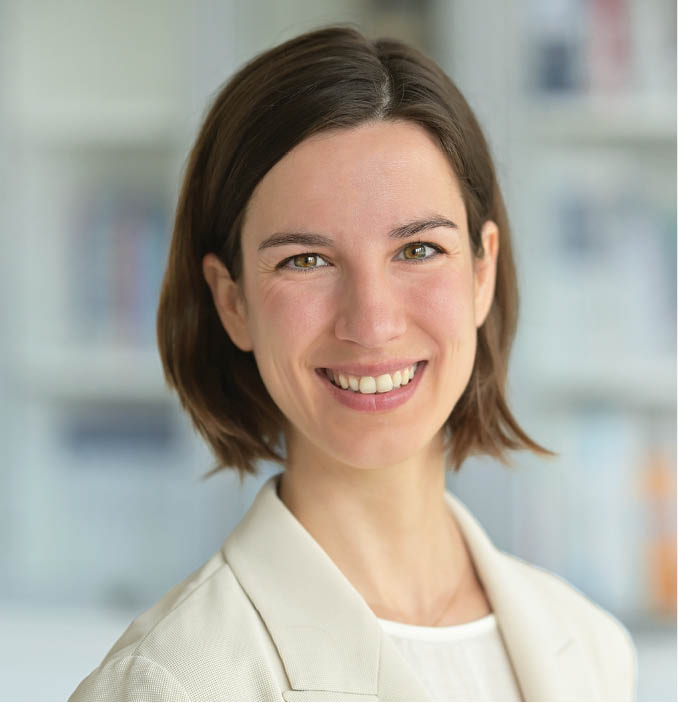
A new Center for Health Services Research (ZVF) has been established at the University Hospital Jena (UKJ), bringing together the expertise in health services research at the University Hospital Jena (UKJ). Embedded within the center is the professorship for Quantitative Health Services Research, which has been held by Prof. Dr. Verena Vogt since June 1, 2023. Prof. Vogt heads the research area of Quantitative Health Services Research, which MVF presents in this episode of the series "Health Services Research Made in...". The research area is located at the Institute of General Practice at the University Hospital Jena (UKJ), which is headed by Prof. Dr. med. Jutta Bleidorn.
>> The ZVF, under the direction of Prof. Jutta Bleidorn (spokesperson) and Prof. Verena Vogt (co-spokesperson), aims to pool expertise and promote interdisciplinary cooperation, develop young scientists, and answer healthcare-related questions.
The professorship for health services research was first held by Prof. Christian Vollmar, who has headed the Department of General Practice at Ruhr University Bochum since 2018. The professorship was re-advertised in 2021 and has been headed by Prof. Dr. Verena Vogt since June 1, 2023. The Quantitative Health Services Research research area works closely with the working group for routine data analysis, led by PD Dr. rer. Pl./habil. med. Antje Freytag, which is also located at the Institute of General Practice. Both groups cooperate closely to describe, analyze, and improve health care.
The team focuses on the following research areas:
1. Care in a regional context: We investigate how sociocultural and structural characteristics of a region influence health care, with a special focus on Thuringia.
2. Measure and avoid oversupply
den: We analyze how often over-provision occurs in the German health care system
system, identify areas for action and develop strategies to reduce inappropriate medical services.
3. Classify care pathways and processes
sify and visualize: We research who receives what medical care, when and where, by classifying and analyzing care pathways to better understand the care situation.
4. Evaluate complex care interventions: We support complex
Care interventions from needs analysis to evaluation and concen-
We focus on how these projects can be sustainably integrated into practice, particularly with the aim of reducing over-provision and addressing regional challenges.
To address these research priorities, data science methods are used to evaluate large volumes of data, particularly routine data from statutory health insurance (SHI) providers, and to describe healthcare provision. Verena Vogt explains: "For example, we apply techniques from bioinformatics and genome sequence analysis to classify and map healthcare pathways." Since the research questions addressed in the "Quantitative Health Services Research" research area generally transcend the boundaries of individual disciplines, expertise from medicine, sociology, psychology, and economics is combined with methodological knowledge from epidemiology, mathematics, econometrics, and statistics to address the inherent complexity of health services research.
Verena Vogt acquired her scientific skills on her path into health services research, which began with her bachelor's degree in Health Communication and her master's degree in Public Health at Bielefeld University and the University of Sheffield. However, she discovered her true fascination for the healthcare system and health services research during her time as a research assistant in the Department of Health Care Management at TU Berlin under Prof. Busse (see MVF 02/2019). "The application-oriented nature and practical relevance of health services research particularly attracted me. Furthermore, health services research allows me to indulge my passion for statistical analysis, especially for large data sets, while simultaneously gaining relevant insights into healthcare," Verena Vogt continues.
She ultimately moved to Jena to accept the professorship for Quantitative Health Services Research, which she believes perfectly matches her research profile and personal interests. However, the connection to the Institute of General Practice and Jena University Hospital (UKJ), as well as the highly collaborative environment, were also decisive factors, as Verena Vogt finds proximity to healthcare and clinical practice invaluable in health services research. She also says that the family-friendly city of Jena, with its beautiful nature and excellent daycare and elementary school offerings, played a major role in her decision.
The "Quantitative Health Services Research" research area is still very new at the University Hospital Jena. Nevertheless, the first year since the professorship was appointed has already seen significant success. Among other things, several third-party funded projects were acquired, collaborations with university and non-university partners in Thuringia were established, and courses on health services research were successfully introduced at the University Hospital Jena. Verena Vogt: "Our health services research symposium on 'Too much here and too little there – Overprovision in times of structural underprovision' was a successful start. Here, we were able to raise awareness of health services research at our location with a high-level group of participants from politics, academia, and clinical practice."
In the long term, Prof. Dr. Verena Vogt's research aims to contribute to improving the framework for healthcare in Germany. Indirectly, this means describing the healthcare situation, identifying potential deficiencies and areas for improvement, and – where possible – conducting root cause research to develop scientifically sound measures to address these deficiencies. "A particular vision of mine is to advance research into overprovision. I'm concerned with the question of why we invest so many financial and human resources compared internationally, yet still perform relatively poorly in outcome quality indicators," says Verena Vogt, explaining her own motivation. In her opinion, reducing overprovision is essential to ensuring the sustainability of our healthcare system, and she wants to contribute to this with her research.
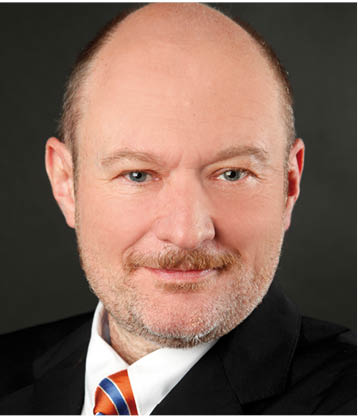
Richard Schmidt,
scientific Assistant
>> Why do you work in the field of quantitative health services research?
During my medical studies and subsequent medical practice, I regularly encountered deficiencies in healthcare provision. I enjoy being able to use analyses and their results to paint an accurate picture of healthcare provision as a research associate in the field of quantitative health services research and to make a concrete contribution to its sustainable improvement.
In your opinion, what distinguishes this research area?
Quantitative health services research is characterized by its interdisciplinary nature and the use of data science methods from a wide variety of sources. It brings together expertise from medicine, social sciences, and economics, as well as statistics and computer science, to comprehensively analyze complex issues. Increasingly larger and higher-quality data sets present us with new challenges, but above all, they offer the opportunity to gain in-depth insights into health care processes. The analyses developed and their results often have the potential to be directly translated into health care.
What topics and questions are you currently working on?
I am currently analyzing healthcare-related data, particularly routine data from statutory health insurance (SHI), to evaluate the effectiveness and efficiency of diagnostic and treatment processes. My research interests include investigating regional differences in healthcare provision and evaluating diagnostic and treatment concepts in Thuringia. Furthermore, I analyze longitudinal healthcare processes and the utilization of healthcare services using methods from the field of (bio)informatics.
What would you personally like to achieve with health services research?
Through my work in health services research, I personally want to contribute to sustainable change in healthcare and align it with the well-being of patients. My goal is to use unbiased, data-focused analysis to paint a realistic picture of existing healthcare structures and improve the quality of medical care. I want to present healthcare processes in a comprehensible way and develop innovative healthcare concepts to enable improvements for everyone involved in the healthcare process.
Meik Hildebrandt MSc,
scientific Assistant
(with the intention of pursuing a doctorate)
>> Why do you work in the field of quantitative health services research?
During my master's degree in business mathematics at TU Berlin, I worked as a student assistant in the Department of Health Care Management. The Innovation Fund project IndiQ provided me with my first contact with quantitative health services research and Professor Vogt. These experiences motivated me to take further health economics modules and ultimately to research health care in detail as a research assistant, initially in Berlin and, since 2024, also in Jena.
In your opinion, what characterizes the research field of quantitative health services research?
Quantitative health services research answers qualitative questions with concrete numerical results. Using descriptive and statistical methods, we aim to provide a sound assessment of the reality of health care provision. This research area is characterized by the systematic collection and analysis of data, which we use to visualize efficiency, quality, and outcomes, with the goal of identifying health policy needs and deriving corresponding recommendations.
What topics and questions are you currently working on?
Currently, I am primarily working on completing the analyses for the Innovation Fund project IndiQ. This involves measuring indication quality in routine statutory health insurance data and deriving insights into the causes and distribution of overtreatment. In addition to ongoing project work, I am involved in the planning and implementation of future projects and new initiatives. This includes, among others, the follow-up project DIAMANT, which aims to establish measures to reduce inappropriate thyroid diagnostics.
What would you personally like to achieve with health services research?
With evidence-based care
Through my research, I personally want to ensure that healthcare in Germany becomes more efficient and remains sustainable, without having to accept limitations in provision and quality of care. Through my work, I hope to contribute to ensuring optimal use of available resources and the continuous improvement of innovative approaches to healthcare.