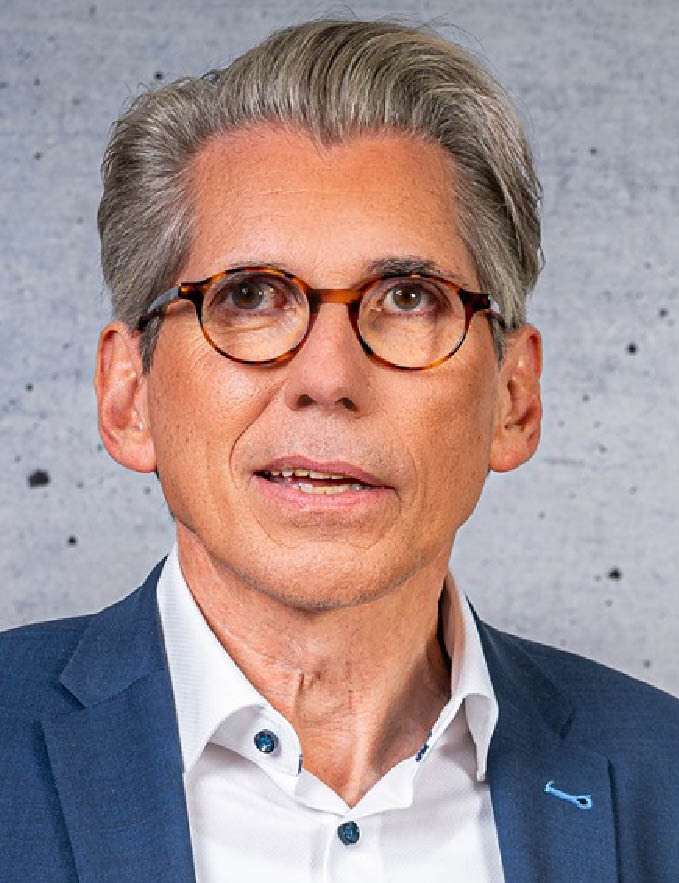
Andreas Storm, economist and chairman of the board of DAK-Gesundheit, presents his thoughts and demands for a better and more resilient healthcare system in an interview with "Monitor Versorgungsforschung" (Monitor Healthcare Research). He identifies the reasons for the contribution tsunami he predicted three years ago and outlines a number of urgent tasks for the new federal government that must be addressed quickly in its first six months. At the top of the list is the reform of long-term care insurance, as it could be "the first branch of our social security system to collapse.".
A key indicator for assessing the quality of healthcare systems is the development of average life expectancy. According to the latest OECD report, Germany's life expectancy has declined sharply in recent years compared to other European countries and is now even below the OECD average. This means nothing less than that our expensive healthcare system – after all, we spend the most on healthcare in Europe – is delivering below-average performance, which in turn points to inefficient organization. However, there have been efforts in recent years to make the system more efficient.
There have been some individual efforts, but they simply weren't enough. The main problem lies in the fragmentation of the system and the isolation of the sectors. There is a lack of constructive cooperation, which on the one hand leads to an unnecessary loss of quality of life, and on the other hand to high and ever-increasing costs. What I expect from the future government is, first and foremost, the insight and then, above all, the courage for a truly sustainable reform of our healthcare system, which must function better regionally and become more efficient and resilient.
What is needed here is certainly the courage to tackle precisely the core problems that have ultimately caused almost all efforts of recent legislative periods to make our healthcare system more efficient to fail.
Absolutely. The core problem has been known for a long time: those who maintain multiple sectors and allow them to simply close off their borders shouldn't be surprised that there's virtually no exchange between them. Even worse, however, is the fact that vast sums of money are lost between sectors, undoubtedly resulting in a significant loss of quality of life.
What are DAK's plans for establishing a more efficient, resilient, and future-proof system that is also better for patients?
A key factor is undoubtedly the fact that the German healthcare system is virtually unique in Europe in terms of free choice of doctor. This means that there is almost no oversight in the outpatient sector, which almost inevitably leads to inefficiencies. Therefore, it is very welcome that even the German medical profession is now calling for a regulatory function as a key factor for improving the quality of the healthcare system. The second most important factor is the access to financial resources, which is largely prevented by the extreme isolation of the sectors – here we urgently need more permeability at the sectoral boundaries. The third point is the restructuring of our hospital landscape with regard to the internationally established practice of specialization and quality optimization. Therefore, the most important reform measure of the last legislative period was the decision on a fundamental hospital reform. Whether this will be further developed after the federal elections is another matter. But now we at least have the chance for a paradigm shift towards a more specialized and, above all, quality-oriented hospital system in Germany. Our collective goal must be to finally move forward consistently and, in doing so, modernize our healthcare system so that we no longer need to shy away from systematic international comparisons.
However, the reform of emergency care is still open.
The failure to reform emergency care thus far makes the dire state of German health policy tangible and visible to all. It is truly disheartening that the third legislative term of the German Bundestag has already had to grapple with this issue, and we still lack emergency care reform. For me, this is further evidence of why we have fallen further and further behind in international comparisons in recent years. Alongside regulatory mechanisms in outpatient medical care and a modernized hospital landscape, a reformed emergency care system will unlock considerable potential, making our healthcare system significantly more efficient and, above all, better for patients.
This leads to the question of how patient-centered care is doing and what the status is of PREM and PROM, which were the topics of our last specialist congress in December.
An optimally structured healthcare system must place people at its center by implementing care and case management tailored to the needs and requirements of patients. If we are to embark on the path to implementing this rather visionary idea for Germany, we need a management approach, such as the one recently proposed by the medical profession, but this must be done in partnership with health insurance companies. Furthermore, we need to leverage the new opportunities offered by digitalization, particularly regarding the evaluation of information about patients' health status and their self-reported experiences. This also means that by digitally recording patients' health status via electronic health records, we can achieve a completely new level of structured and comprehensive quality in diagnostics and diagnosis. It is, of course, also possible to use this wealth of data for the benefit of the patients themselves, provided they consent.
Recently, the pilot phase for the electronic patient record was launched in the model regions of Franconia, Hamburg and its surrounding area, as well as in parts of North Rhine-Westphalia, and promptly the usual criticism arose concerning the much-discussed issue of data protection. This will certainly unsettle many patients.
I consider it a crucial breakthrough that we have finally achieved a model like the electronic patient record (ePA) for everyone. International comparisons also show that the opt-in approach previously used in Germany is doomed to failure if we want near-universal adoption of the electronic patient record. Many of our European neighbors have been demonstrating for years what can be achieved with an opt-out model, simply because the vast majority of patients want to participate in the electronic patient record system. It would be utterly absurd to believe that we are virtually the only country in Europe unable to offer an ePA for everyone. Therefore, I am confident that we will achieve this breakthrough in 2025. However, for acceptance to be successful, it is absolutely essential that all potential security risks and concerns are addressed during the pilot phase and that any errors are systematically eliminated. The principle here is: thoroughness before speed. The crucial factor for the nationwide rollout is not that it begins just four weeks after the end of the pilot phase, but that it – ideally a few weeks later – can contribute to the successful dissemination of this important technological innovation to improve the performance of our healthcare system.
At our congress in December, Olaf Meyer from the Royal Danish Embassy explained that in Denmark, not only are PROM and PREM used to manage the healthcare system, but it is also fully digitized. We are still miles away from that, even with the electronic patient record (ePA).
And thus, we are almost at the bottom of the list in Europe. This applies not only to healthcare, but also to many other areas of economic and social life. Here, too, we must catch up in the coming years, otherwise our country will fall even further behind and could no longer assume the leading role we once held in Europe. This is particularly regrettable because, from a global political perspective, Europe will only play a significant role if the two largest countries at its heart – Germany and France – can once again assume a driving force. Therefore, it is crucial not only for us in Germany, but also for Europe as a whole, that we catch up. As I said: this extends far beyond healthcare.
This requires money, lots of money. What is the financial situation of the statutory health insurance system? The Green Party's candidate for chancellor, Robert Habeck, is even proposing the taxation of capital gains.
First of all, at the turn of the year, we experienced the highest increase in contributions in the history of the Federal Republic of Germany: Supplementary contributions rose by an average of more than 1.2 percentage points, and the average effectively collected supplementary contribution has been 2.9 percent since the beginning of the year. This brings the total contribution rate for statutory health insurance to 17.5 percent. In addition, the contribution rate for long-term care insurance was also increased by 0.2 percentage points. Thus, we have experienced the contribution tsunami that I predicted three years ago – in the event that, unfortunately, it has come to pass, politicians failed to act. This tsunami is the result of a combination of above-average spending growth on the one hand and the underfunding of statutory health insurance on the other. This, in turn, inevitably leads to massively rising contributions. Politicians have not only ignored these well-known facts but have actually exacerbated the crisis.
In what way?
The necessary restructuring of the hospital system is being ignored, as is the plan to establish a transformation fund for this purpose. However, the fact that this fund, amounting to 25 billion euros, is to be financed by the contributions of those paying statutory health insurance is a mistake. Therefore, after the federal elections, this serious burden on the statutory health insurance system, which many experts consider unconstitutional, must be corrected. This is also necessary because the undeniably needed restructuring of the hospital system is largely investment-based, and the responsibility for this lies with the federal states and the national government. We health insurance funds already finance our ongoing expenses with the money of our insured members. Adding another burden to the health insurance funds is neither legally nor policy-wise justifiable. Anyone who acts in this way shouldn't be surprised when another significant increase in contribution rates is inevitable at the next turn of the year. I consider this unacceptable and unreasonable for both the insured and the economy.
So they are demanding…
…a financial reform of the statutory health insurance system is imperative after the federal elections. One principle is indispensable: In the future, we must not spend more than we take in. This means we must return to a revenue-oriented spending policy. However, this does not mean that we have to cut or freeze benefits. Rather, a revenue-oriented spending policy means that if revenues are projected to increase by – let's say – four percent per year, spending must remain within this range and not be allowed to increase by seven or eight percent as before.
A noble goal.
But it is achievable by introducing physician-led governance in outpatient care, as mentioned earlier, reforming emergency care, and modernizing the hospital landscape in the medium term. Everyone must understand that all structural measures to unlock efficiency reserves require considerable lead time. This, however, also means that we must finally begin, otherwise we will never finish. With bold steps, it will be possible to stop the spiraling cost of healthcare contributions. But we will only succeed if this issue is among the priorities of the new federal government after the federal elections.
Health issues play virtually no role in the election campaign, except for the Green Party's chancellor candidate, who proposed broadening the tax base by including capital gains. He was subsequently subjected to an unprecedented level of verbal attack for this.
This just shows that nerves are extremely frayed among many stakeholders in health policy discussions.
What do you think of Habeck's proposal?
The proposal is not new and has been discussed for many decades. At first glance, the proposal sounds appealing, but it has some quite serious problems.
Such as?
The first problem is that the otherwise sound idea—that people with higher capital income should contribute a correspondingly larger share to financing healthcare spending, not least for reasons of fairness—will fail simply because most people with high capital income are not covered by statutory health insurance, but rather by private insurance. If I combine this with high tax-free allowances for those with statutory insurance and low capital income, it simply becomes unprofitable and also involves an extreme amount of administrative work. These reasons alone suggest that this approach is not truly feasible. Added to this is the current discussion about broader wealth accumulation opportunities for people with low and middle incomes. This otherwise valid discussion becomes skewed when it is linked to the assertion that the very capital gains being accumulated would then be subject to additional levies to keep health insurance contributions more stable. In short: I advise against pursuing this proposal any further.
Although it can certainly be justified from a regulatory policy perspective.
Certainly. If one wants to limit the burden on earned income, one must logically also consider increasing the burden on other types of income besides wages. However, this theoretically compelling idea is unlikely to find societal acceptance.
It is surprising that the topic of universal health insurance has not come up again.
We may be on the cusp of a paradigm shift in the political debate. Around two decades ago, at the height of the first wave of support for the universal health insurance model – championed at the time primarily by Professor Karl Lauterbach himself – there was a standard argument against universal health insurance.
The question was: Ageing reserves?
That too, but I mean something much more mundane: Germany has one of the best healthcare systems in the world! Even if someone with statutory health insurance might have to wait a few days longer than someone with private insurance to get a doctor's appointment, they still receive – so the narrative goes – good and prompt medical care. Because this is the case, because it was better, it would be almost absurd to change this successful system. With that, the discussion ended very quickly.
But nowadays the situation is completely different.
It's not just the OECD study that suggests our once highly praised German healthcare system has fallen behind many of our neighboring countries in international comparison. From the public's perspective, the efficiency of the healthcare system has also declined significantly, while waiting times for specialist appointments have increased in many regions. This has turned the quality of healthcare and the issue of scheduling appointments into a socio-political powder keg. The argument that we have a two-tier system, at least with regard to appointment allocation, now has far greater socio-political relevance than it did 20 years ago.
What do you expect?
My prediction is that while we won't see a debate about introducing a classic universal health insurance system like 20 years ago, we might see a discussion about aligning the conditions between privately and publicly insured patients in outpatient care. This is the key area where statutory and private health insurance still differ today.
However, the purely subjective impression of the population that the quality of care has declined compared to the past is not limited to the outpatient sector.
Contradiction. The main reason for the perceived two-tier system in outpatient care – as we know from surveys conducted by the Allensbach Institute for Public Opinion Research every mid-year for many years – is primarily the unsatisfactory appointment scheduling. Until the start of the COVID-19 pandemic, we even had a very high level of public satisfaction with the German healthcare system itself, regularly exceeding 80 percent by international standards. Last year, however, this level of approval dropped significantly and now stands at just over 60 percent. Several early indicators now suggest that approval will decline further. It should be noted that last year's survey was conducted before the surge in health insurance contributions at the turn of the year. Therefore, I expect that the next survey, conducted after the increased contribution burden, will be another driver for a further decline in public approval of the healthcare system's performance.
Essentially, these demographic findings merely reflect, with a certain time lag, what the OECD statistics convey.
Exactly: We are falling behind in terms of performance. The system is inefficient, and the population is naturally aware of this.
Doesn't the perceived inadequacy of health performance pose a threat to the understanding of democracy?
I fear that if we don't implement a comprehensive healthcare reform, as discussed earlier, very quickly after the federal elections, we risk the healthcare system reaching a tipping point. It could become a factor that the population, through their own experiences, repeatedly reinforces the impression that our once excellent healthcare system is now one of the deficient elements that characterize our country. We absolutely must prevent this. Therefore, I am strongly committed to ensuring that healthcare policy is given high priority on the agenda of urgently needed reform areas.
The closure of more and more hospitals in rural areas will certainly not have a positive impact on public satisfaction.
Even after two years of intensive public debate, we're seeing the almost irrational finding that the population clings to the primary criterion of proximity to one's residence. This is despite the fact that the Federal Minister of Health and many others have explained in numerous talk shows how crucial it is to be treated in a specialized hospital in the event of a serious illness, and that proximity to one's residence should be the very last factor to consider. Unfortunately, this hasn't increased public acceptance of the quality of treatment in most German states. When you then see how the political parties outdid each other with promises of hospital locations during the last state elections, you can't help but seriously doubt whether Germany is even capable of initiating far-reaching structural improvements to our healthcare system. Nevertheless, I am optimistic, even though it will take many years until the restructuring of the hospital landscape has progressed to the point where we can, firstly, actually unlock efficiency reserves in financial terms and, secondly, make significant progress in improving important outcome indicators in international comparisons.
We'll certainly need a lot of patience for this.
However, it gives me some hope that we are finally having a discussion about quality again, instead of continuing to cling to the narrative that our healthcare system is inherently of very high quality. Unfortunately, that hasn't been the case for a long time.
Doesn't a paradigm shift towards pay for outcome, or better yet, pay per result, also need to be considered?
In theory, this is a very convincing approach, but in practice, it's a minefield. It's almost like the idea of including capital gains in contribution calculations for reasons of fairness. However, it would be a real game-changer if we could implement a more quality-oriented compensation system. If we succeed—and let's be optimistic—we should do it, even if the path is complicated and arduous. Until then, we should tackle the measures mentioned earlier first.
Finally, let's turn to another current discussion: the currently high rate of sick leave.
We have several phenomena to consider here. We conducted an in-depth study with the IGES Institute, which analyzed that the increased sick leave rate – to put it simply – can be attributed to two reasons. The main reason is simply the switch to electronic sick leave notification.
Like that?
Well, with electronic sick notes, these are automatically forwarded to the health insurance company, which wasn't necessarily the case in the past when we still had paper sick notes. Therefore, we simply had an underreporting of illnesses in the past. In other words: While we don't currently have an increase in sick notes, because they were actually already higher before – nobody knew this, because some sick notes didn't reach the health insurance companies. This accounts for about 60 percent of the effect compared to the pre-COVID period.
This only applies, of course, to those sick leave notifications where the health insurance companies haven't yet had to pay sick pay, which only happens after a certain number of days of illness. What about the increase in "genuine" sick leave notifications?
Of course, these problems exist. They primarily relate to two conditions: mental health issues and respiratory illnesses. Data from everyday practice shows that we are indeed seeing a significant increase in cases of illness in these areas. However, what definitely cannot be proven is a significant increase in misuse – the so-called "false sick" phenomenon often reported in the media, supposedly triggered by sick leave certificates issued over the phone. Naturally, there have always been people who call in sick even when they are not ill, but the proportion of this group – at least according to the statistical analyses available to me – has not increased due to sick leave certificates issued over the phone. Therefore, I would consider it a disastrous signal to want to abolish sick leave certificates issued over the phone. We learned, especially during the COVID-19 pandemic, that it makes sense not to go to the doctor's office for certain illnesses, but to obtain a sick note through other means – not only for our own protection, but especially for the protection of others.
What about the waiting day that has also been brought into play in the current discussion?
From a purely economic policy perspective, a sick day might be a tool for companies to save costs. However, from a public health policy standpoint, I don't consider it a suitable instrument. It prevents sick people from doing precisely what they need to do to recover as quickly as possible. Therefore, I also think it sends a disastrous message when more and more companies pay bonuses to employees who don't call in sick. A holistically organized workplace health management program would be far more sensible.
The current federal government has initiated numerous reform projects. Which reforms or components thereof do you consider the most important, and which major problems have been left unresolved?
The most important measure did get passed: the hospital reform. However, there is a risk that it could be unconstitutional because, firstly, the federal government may have given too little consideration to the constitutional rights of the states, and secondly – as already mentioned – it is financing the restructuring of the hospital landscape through the transformation fund in an unconstitutional manner. I see a significant constitutional risk here. Therefore, it is crucial to rectify these shortcomings in the hospital reform concept as soon as possible and to make corrections very quickly. Furthermore, it will of course depend on the federal states doing their homework so that the restructuring of the hospital landscape can begin promptly. Otherwise, I can unfortunately name relatively few areas in which we were able to achieve significant progress in the last legislative period. This is primarily because Federal Health Minister Lauterbach started his reform projects so late in the legislative period, and as a result, they could not be completed before the collapse of the traffic light coalition.
Such as?
For example, I'd mention the reform in outpatient care with the Healthcare Strengthening Act. Then there are all the important reforms in the field of nursing care, such as the structural reform of long-term care insurance, the upgrading of nursing professions with the Nursing Competence Act, and the improvement of nursing training with the Nursing Assistant Act. And, of course, the crucial emergency care reform, all of which were launched but didn't quite make it to the finish line. These reforms absolutely must be revived at the very beginning of the next legislative period.
What is your conclusion regarding the health reforms of the 24th federal government?
This legislative period was very disappointing for statutory health insurance. The reason is that the financial stabilization of statutory health insurance, as well as long-term care insurance, was not only neglected, but a number of measures were implemented that further exacerbated the precarious financial situation of the statutory health insurance system. I deeply regret this. Therefore, the list of issues to be addressed by the new federal government is even longer than it was in the previous legislative period.
Please name some key issues that need to be addressed quickly in the first six months of the new federal government.
The first issue is the reform of long-term care insurance. We are facing an acute funding crisis here, which could lead to long-term care insurance being the first branch of our social security system to collapse. Therefore, it is crucial that a fundamental reform of long-term care insurance is initiated within the first six months. In the area of statutory health insurance, we also need to set the course within the first six months if we want to prevent the spiraling contribution rates from continuing virtually unchanged into the next year. Furthermore, we should address the corrections to the hospital reform I mentioned very quickly, as well as the emergency care reform and the enhancement of nursing professions through a nursing competence law. In the second half of the year, the reform of outpatient care should then also be tackled.
The crucial question is: Does the political sphere finally want to tackle this task in a real way, or will it continue to postpone it?
It is with great regret that I must note that the priority given to health policy is not yet where it should be everywhere. I am most optimistic that fundamental reforms to long-term care insurance can be addressed in the first few months, because some of the major political parties' election manifestos propose far-reaching measures in this area, so a swift agreement should be reached. However, we still have a great deal of convincing to do, especially regarding the urgent need for action to stabilize statutory health insurance, so that these issues don't fall by the wayside again.
Mr. Storm, thank you for the interview.
The interview was conducted by MVF editor Prof. Dr. Reinhold Roski and MVF editor-in-chief Peter Stegmaier.