>> The fourth memorandum of the health services research network in 2016 dealt with the theoretical and normative foundations of health care research. Since then, the topic of theory and normative foundations has virtually disappeared from the scene. Why actually? Or perhaps health services research can do quite well without theory and what was stated in the DNVF memorandum six years ago that – quote – “theoretical and methodological foundations are part of the fundamental ethos of scientific work, to which health care researchers are also committed” is not the case after all important?
Pfaff: It's not as if there aren't any theories that could be used in health services research. They have so far been used too little.
That was the short answer. The length?
Pfaff: The DNVF working group “Organizational Healthcare Research”, for example, analyzed the abstracts of the DVKF 2021 and saw that of the abstracts that explicitly or implicitly dealt with healthcare organizations, seven percent explicitly referred to a theory (note: Nöst et al. submitted).
Sydow: Which is extremely little.
Pfaff: In fact, that's not enough. We should achieve better values here in the future.
Since health services research relies on many, often very different, sub-disciplines, it could use the theories of these sub-disciplines if, on the one hand, one knows them and, on the other hand, sees meaning and benefit in them.
Sydow: One could assume that because this is the case, health services research does not need its own theories. Accordingly, the theoretical deficit raised by Pfaff ultimately refers to the fact that the theories of the sub-disciplines are not sufficiently highlighted or that it is simply forgotten to make it clear that they are related.
Pfaff: My primary concern is not for health care researchers to develop their own health care research theories - that would be a long-term goal. My point is rather that healthcare researchers often fail to draw on the theories of the reference disciplines. This is probably due to the fact that health services research is a highly interdisciplinary scientific field and most health services researchers come from courses with different theoretical approaches. That is exactly one of our problems at the moment.
Sydow: I wouldn't call it a problem, but it's definitely an obstacle. For example, in my field of science there is industrial relations research, a field in which business administration, law, sociology and psychology come together. Nevertheless, it is possible to refer to the theories of the sub-disciplines here. Although, it has to be said quite openly, the very different scientific socialization represents one of many obstacles that clearly stand in the way of the postulate of more inter- or transdisciplinarity.
What to do?
Sydow: I have simply said goodbye to this postulate and tell my doctoral students, despite all the transdisciplinary openness that I preach like no other business economist in Germany, that you still need a foundation. And for us, business administration with its clear disciplinary focus is the theoretical foundation.
But this does not (yet) exist in health services research because it is highly interdisciplinary and usually very application-oriented.
Sydow: In my opinion, health services research has always been very application-oriented, but on the other hand it is often associated with a very quick exploitation interest - for example to improve care processes. This very application-driven research may leave a little too little time for in-depth theoretical work, with appropriate funding to be obtained from the federal and state ministries or the innovation fund.
Although this is explicitly required by the DFG, for example.
Pfaff: At least in the economics and social sciences colleges.
Sydow: Anyone who submits an application without a clear idea of theory will be rejected from the start, but this is primarily about basic research.
Pfaff: From my work as a DFG fellow, I know that theoretical foundations were not necessarily emphasized in medicine, but economics or social sciences were. But there is another problem: When I talk to sociologists from the WISO faculty in Cologne about possible cooperation projects, I notice that application-oriented research is not very well received. There is a fundamental conflict between basic and applied research.
Sydow: Which is a problem for the discipline itself.
Pfaff: But this does not apply to all subdisciplines of the social sciences. There are also exceptions. But the majority limit themselves to analyzing and diagnosing the given situation and shy away from making concrete suggestions for improving the situation and evaluating them. The special feature of health services research is that it takes a different path and becomes more specific.
In other words, basic sciences practically do not care about application and translation.
Pfaff: Right. This describes the gap between pure basic and applied research. In pure basic research, the context can be excluded from consideration because the context is kept constant in laboratory experiments. This approach is not possible in application research because every researcher is always confronted with the complexity of the environment. Healthcare researchers therefore need not only theories about the effect of a specific intervention, but also a theory about the context in which this intervention is embedded.
MVF now lists almost 30 in its “theory kit”, some of which have already been described in MVF editions. As a management and organizational researcher, you could certainly name a bundle of theories for health services research?
Sydow: That is a very realistic number if you only extract those theories from a wide range of disciplines that are really applicable in health services research. The argument I present to students is: “It doesn't work without theory.” In my opinion, it is always worth approaching this question very explicitly, because theories work like an intelligent magnifying glass: you know exactly what you can see more clearly. But you also know what you can't see clearly.
Pfaff: I can only agree with that.
Sydow: Who among us would voluntarily give up such a magnifying glass or just a pair of glasses if we needed one? Which one you ultimately set up - i.e. which theory you use - is of secondary importance, but certainly not arbitrary. In any case, the view of something becomes clearer when you do it with a theory.
Pfaff: Theories have to be viewed as tools. First of all, you have to know which ones exist and, above all, how and where to use them. It's like in real life: some theories help, some don't. It always depends on the problem and the context.
Sydow: From management and organizational research alone, you could easily name almost two dozen theories (note: see box on the right) that could be tested for their applicability from the perspective of health services research.
One could also say: There are an infinite number of theories. The question, however, is: Which theory is relevant and what criteria should one use to select it? In the cover interview of the penultimate MVF issue (02/22), Dr. Martin Albrecht from the IGES Institute, for example, talks about the disagreement between the Federal Cartel Office and the IGES when looking at hospital concentration.
Pfaff: One of the reasons for this is that the two actors - whether they say so explicitly or not - apply different economic theories and therefore come to different results.
Sydow: That's exactly what would be crucial. There must be good and understandable reasons why one theory is used - and another or several others are not. If you take, for example, a market or competition theory that the Federal Cartel Office has apparently applied, I would have my doubts as to whether this theory can really be effectively applied to the German hospital system and the concentration tendencies at work here. With this theory, all intra-organizational processes are actually left out, but they are important to ensure a certain quality. No matter how often you can argue from an economic point of view that competition will take care of it, but the reaction will
ality cannot be grasped.
If an institution – like the Federal Cartel Office (1) – applies a theory, how can one argue against it?
Sydow: You have to try to argue against it with another good theory that is more applicable to the question.
Pfaff: In my opinion, there will be more and more competition between theories in the future. Professor Schmidt from Dresden and I described this in an article on the organic turn in evidence-based medicine (2). In a time of great dynamism, traditional evidence-based medicine is, for reasons of quality assurance, too slow for a policy that is under time pressure to act. In such a situation, theories can be used to supplement the sparse evidence and arrive at a politically safer decision. In such a situation, it is important to select, from among the various competing theories, the one that best suits the situation and is of high quality as a basis for decision-making.
Then each researcher must disclose and justify which theory they have based their considerations on.
Pfaff: Exactly. Then the scientific community must also make the effort to analyze why one theory is of higher quality than another. Mr. Schmitt and I suggested using two formal criteria: the degree of empirical confirmation of a theory and the degree of acceptance of this theory in the scientific community. If both are given, it can be assumed that the quality of the theory is relatively high.
There are many, probably most, that have survived their empirical testing for decades.
Pfaff: Good theories don't get old. We could use them more. The problem, however, is that the application of the methods of evidence-based medicine - for example in the context of the evaluation of innovation fund projects - does not require any theory as a basis. EBM as a method also works without theory. For example, you can use a randomized controlled experiment to test whether homeopathic remedies are effective without having to have a theory about how homeopathic remedies work. However, a theory is needed at the latest if you want to explain why people buy and use homeopathic remedies despite a lack of evidence. Behavioral theories could help here.
Why doesn't health services research have its own?
Pfaff: The methodological designs of evidence-based research, which have also been used in health services research for years, enable the trial and error principle to be applied. In this case, researchers or practitioners can have an idea for a solution to a healthcare problem and test it using high-quality designs. Applying trial and error can lead to creative insights. But it is also very complex and risky. It would be more effective and efficient to replace the trial-and-error principle with the principle of theory-driven research. In this case, we would have a theoretical map that helps us find promising innovations.
Such as in the trial-and-error process of the Innovation Fund.
Pfaff: In which many millions in funding are spent on ideas that, in many cases, make practical sense, but are not or insufficiently theoretically based. This untheoretical trial-and-error approach can be very successful. However, it naturally means that many attempts have to be made and financed in order to achieve individual successes. Innovation fund projects that - as the previous expert advisory board recommended in an article (Blettner et al. 2018) - base their innovation on a proven theory or develop impact models, increase the probability that the innovation has a higher chance of being positively evaluated to become. The reason is that proven theories tell us where to start and how to do it. This reduces the risk of – as the saying goes – going down the wrong path.
Sydow: This brings up a rather unpleasant question: What is evidence in evidence-based medicine? Or also: What exactly is evidence in evidence-based management? Both have the same abbreviation in German and English, namely EBM, but also the same problem: What about the evidence, validity and reliability of the qualitative and quantitative methods? Quantitative researchers can supposedly say very precisely – methodologically sound – what constitutes convincing evidence, but what about qualitative researchers?
What about it?
Sydow: Qualitative research primarily works with case studies, from which you can sometimes learn a lot, for example to design an intervention strategy or certain organizational processes. Wouldn't we need a second or third or seventh case study with many more subjects in order to be able to measure not only qualitatively but also quantitatively? Here there is a more conventional view against a more radical view, which is represented, for example, by Starbuck (3). He pointed out decades ago that unique cases are the really exciting things from which you can learn something. And if you process the resulting findings sensibly and carefully, you would come up with a new or at least more elaborate theory.
How do we get from health care research to theory-forming health care science?
Pfaff: By teaching health care science during training and by placing empirical health care research on a theoretical foundation and taking a critical look at health care. We have perhaps not done enough of the latter so far.
Because you don't like to see potential nest polluters.
Pfaff: That’s true. A key goal of health services research is the optimization of medical care. This improvement-oriented goal has contributed to healthcare research being recognized and gradually established as a subject at medical faculties. That wasn't a given. In my reference discipline, medical sociology, - according to my somewhat daring thesis - in the past the more critical chairs were no longer filled after the chair holders retired from the medical faculties.
Health services research was more cautious.
Pfaff: Yes, definitely. However, the success achieved as a result has so far at least come at the expense of a critical eye. That is starting to change. In the long term, health services research also needs power and conflict theories that take a critical look at the care structures and the power constellations on which they are based.
Where can health services research primarily borrow theories?
Pfaff: When healthcare researchers examine hospitals or doctor's practices, you need organizational and management theories in order to be able to explain what happens in these organizations and how these organizations act.
Professor Sydow, you are actually a healthcare researcher without knowing it.
Sydow: What you can become. In any case, I am someone who can learn from individual cases. The problem is: You have to know that it is an individual case from which you can derive generalist arguments, the empirical implications of which you may not yet know. For this you need more individual cases: 7, 8, 9 or maybe even 70 and corresponding methods that can handle larger amounts of qualitative data.
Pfaff: Surely, on the basis of such individual case analyses, insights could be gained that could be used to develop or optimize theories?
Sydow: Absolutely. This is how theories emerge, much more readily than, for example, through quantitative studies. I would almost be inclined to say that you can't actually do theory development with quantitative research. But you can certainly do something like theory testing or – perhaps better – theory laboratory. This means, for example, that another variable is added to an existing set of variables, which - for whatever reason - has suddenly become relevant. However, it will not be possible to address fundamental questions in this way.
Ultimately, this also applies to business administration.
Sydow: Right. We too are sitting between two chairs. I envy the doctors who still have their patients sitting or lying right next to or in front of them. Imagine if an entrepreneur, employee or trade unionist were always sitting at our desk, the office would quickly become full. All joking aside: In principle, business administration, like health services research, is an application-oriented science that does not develop theory for itself, but sees it as a tool or instrument for gaining superior knowledge. This is even more true when we talk about organizational health services research, which more or less combines both scientific disciplines - with the positive aspect that suddenly makes business economists - the species to which I feel I belong - capable of communicating with health care research.
Because it's about organizations and organizing supply processes and chains.
Sydow: In Anglo-Saxon countries there is a significant part of management and organizational research that operates in the health sector for purely economic reasons. In the USA, this is not only the largest service sector, but also the one in which most social problems arise and have to be overcome. Business or interdisciplinary management and organizational research must deal with the sector there. But here in Germany we are – as so often – lagging behind.
Also because we don't believe in health system comparisons in this country.
Sydow: There is certainly a lot that is unique in Germany and is difficult to compare with the National Health Service in Great Britain or the largely privatized or network-based health care industry in the USA. That's just the way it is, but in principle it also applies to many other industries, but that's precisely why it forms an interesting research context of its own: for the study of international management. With the increasing economization, more and more German business economists are discovering the healthcare industry in this country and getting involved in its research. That may take a while, but it will come. As is already evident in Anglo-Saxon countries: there it is not at all detrimental to a scientific career if you build it up in the health sector and still become a respected management or organizational researcher without immediately calling yourself a health care researcher.
Professor Sydow, what can health care research learn specifically from your field of management and organizational science?
Sydow: The label of “organizational health care research” is exactly right. This is, so to speak, an invitation to dialogue for management and organizational research, together with the healthcare
research to reflect all the theoretical questions that are frequently discussed in our scientific field. If you pick maybe just a dozen from a whole bunch of possible theories that you think would be applicable, you would definitely be further along than you are now and, as a healthcare researcher, you would perhaps see more than you have seen so far.
Which theory is most important to you?
Sydow: The theory of social practice in its various forms, for example, can be applied very well in cross-disciplinary communication (4). Another tried and tested example is “sociological neo-institutionalism” (5), which has replaced “economic institutionalism” (6) in management and organization research. This goes back to Oliver Williamson, who achieved great importance in the 1980s and 1990s with his transaction cost theory, especially in Germany, because it was believed that he could use economic approaches to research personnel and organizational problems for the first time. This was less common abroad because approaches from psychology or sociology were used. On the other hand, there are some institutionalists who also speak of a “practice-driven institutionalism” (7), which consequently tries to bring together the various approaches, which in turn has largely pushed out purely economic approaches in management and organization research.
Pfaff: Sociology is more important again.
Sydow: Absolutely. The big names here are Pierre Bourdieu, Anthony Giddens and Theodore Schatzki. The book “Practice Theory, Work and Organization” by Davide Nicolini (4) is highly recommended. This shows the possible uses of theories of social practice for management and organizational research and demonstrates this very well using the example of studies in the medical field.
Please elaborate on the practical theory in more detail.
Sydow: The practice theory is based on an idea that seems quite simple at first glance: you examine the recurring actions of practitioners and ask yourself how they manage not only to act, but also to make it look like a routine when repeated. which is also recognizable as such? In English this is called “Effortful Accomplishment”. This focuses on the competence and ability of actors - individual and collective actors - to use appropriate practices and to either reproduce them more or less and, if necessary, even transform them in and through their actions. What looks quite easy for individual practitioners becomes more difficult for collective actors such as organizations or even interorganizational networks with their highly complex structures. Nevertheless, if you want to measure quality, for example, you have to take a close look at how the structures found in the organization or in the network make it possible to do and do the “everyday recurring” in exactly the same way that ultimately results in good performance – found out.
Pfaff: Practice theory could, for example, explain why our healthcare system is so sluggish and why innovations are so difficult to implement in healthcare organizations. Every innovation has to fight against old practices that seem to be rooted in people on the one hand, but also in institutions on the other.
Creating clarity here only works with the help of surveys and therefore with a high degree of bias.
Sydow: The only true thing here would be an ethnographic approach in which the researcher - based on the motto "immerse yourself in the research context" - immerses himself as deeply as possible in an organization or - even more demanding - an organizational collective to be examined. Some of my employees do this, although such actions are interesting, but also laborious, demanding and of course completely isolated. The countermovement towards taking actors and their interests and abilities more seriously can also be located in institutional theory. Over the last two decades, this has developed a counterpoint to the strong orientation towards institutions and structures; an orientation that previously existed in institutionalism. For me, a very convincing example of this development within institutional theory, more precisely so-called neo-institutionalist approaches, is the research that has been described as “institutionalization work” for around ten years. In this way, these two theoretical streams – practice theory and institutional theory – come together again and – oh wonder – suddenly you have something like “practice-driven institutionalism”.
Pfaff: What you describe reflects the competition between systems theorists and action theorists.
Sydow: As a sociologist you always have to say that. This has been the same game for decades, if not centuries, although management and organization research, and now also my hobby horse, network research, have learned not to oppose one another, but rather to look for a synthesis. The key word for this, following Giddens, is: duality instead of dualism.
Prof. Sydow, how did sociological theories manage to marginalize economic theories in business administration?
Sydow: This certainly doesn't apply to business administration as a whole, but it certainly applies to management, organization and network research. Quite simply: through a more realistic view of the economy. The economy is not about purely economic laws. Business always takes place in a social, i.e. societal context. This may annoy economists, but you learn more about economics from economic and organizational sociology than from microeconomics because it is closer to what really happens: practice.
Professor Pfaff, what this ultimately means is that health care research needs a change of perspective, a different narrative or a different lens that will help us all bring even more added value to health care research. We will succeed if business administration, which as “action science” or “commercial science” goes back to the 17th to 18th centuries, can borrow from sociology, right?
Pfaff: We will succeed in that too. All that is needed is a change of perspective, which takes time. There are more and more publications that use certain sociological theories to analyze supply situations, such as structural-functionalist systems theory (Pfaff and Braithwaite 2020), Bourdieu's approach (Collyer 2018) or resource dependence theory (Ansmann et al. 2021). In order for this to happen more systematically in the future, we will have to complement the previously very good methodological training in health services research with equally good theoretical training, e.g. B. as part of the DNVF Spring School. That will be our next future task.
Sydow: Around ten years ago there was a debate in my discipline about the question of why we actually work with a museum on theories, which in my field actually almost all come from the 1970s. There is currently a - sometimes very lively - counter-debate because we in management and organization research are arguing about what is meant by neo-institutionalism in the 2010s and 2020s, which is no longer the neo-institutionalism of the 1970s. This is where institutionalization work is being put into strong focus again.
This means that your subject actively discusses theories.
Sydow: With often very interesting controversies. The question behind this is often: How does science actually learn?
Pfaff: But also: Where is acquired knowledge stored in the long term beyond specialist books? My answer to this rhetorical question would be: in theories. Theories are, in a sense, coagulated knowledge. Knowledge is stored in them and kept available for years and decades, often even centuries. Because theories do not become outdated as long as they have survived all empirical tests in the past and are still experienced as helpful. In this case, one should not be afraid to resort to such older, proven theories, although I admit that I have difficulty quoting literature from the 70s or even 50s of the last century.
Sydow: One of my postdocs, Dr. Carolin Auschra, is currently working with us on a project that researches the lack of health care in regions of Germany - from the perspective that the real problem is that of a social construction. It is no coincidence that she works here with a doctoral student from sociology. And we are working here with the theory of the “social construction of reality” (8) by Berger/Luckmann from the 1960s. This can be used to try to explain how actors can succeed over years and decades in keeping a politically relevant issue - today we like to call it a narrative - alive and fueling it, even though there is actually no real undersupply in this country.
Pfaff: That is a very interesting approach, although from the perspective of health care research I would put a question mark on the question of undersupply.
Sydow: You can. However, what is commonly referred to as undersupply or presented as such is primarily a distribution problem and not a problem of shortage. Here, too, you quickly get into deep economic questions, which you don't have to look at with the tools of business administration, but from a more social science and therefore more practice-relevant perspective.
Pfaff: The approach of viewing reality as socially constructed can be very helpful if, for example, you want to explain what functions communication strategies, narratives and social media play in today's health policy.
Prof. Sydow, you just claimed that there is no undersupply. In the end, the question is: Which theoretical glasses do you use to arrive at which result? If you say that there is no undersupply, but perhaps just a misallocation or maldistribution, healthcare researchers counter that there are certainly underserved areas because the nearest doctor is perhaps 15 kilometers away.
Sydow: It's not really a big problem if a doctor is 15 kilometers away. What about the use of telemedicine, driving services or an outreach medibus? With a high level of professionalism, distance is not an issue. However, you can see very clearly here: You quickly get into a debate with the main question: What actually is good care? However, it doesn't help in the debate to just count the duration and kilometers traveled.
Many a local politician would go through the proverbial roof at this statement because it is an almost sacrosanct concern for them that the nearest hospital - regardless of quality and equipment - can be reached in a maximum of 20 minutes.
Sydow: And in 15 minutes with a rescue helicopter, if there were enough of them.
If you wanted to approach the whole thing empirically, you would simply ask the citizens: How would you like it? Near and perhaps bad or far and good?
Sydow: The answer is obvious.
Do you agree that a sociological lens is the best to apply in the field of healthcare?
Sydow: Yes, but that is a terrible realization for a business economist. However, social science must not lose sight of the economy and its organization. But that happens less and less often.
Pfaff: In this case I can say: I'm glad that I'm a sociologist by training.
Now we don't want to completely alienate other scientific areas and sub-disciplines from which one can learn similarly valuable things, such as medicine, nursing, psychology or pharmacy. Which theories from this area would advance health services research?
Pfaff: What is needed here is psychology, which has many useful behavioral theories. I argue that health care research is not primarily a health science, but rather a behavioral science. The central element of healthcare is behavior, i.e. the behavior of people, professions, teams and care organizations.
Sydow: The interaction is based on practices and thus the “theory of practices”.
Pfaff: Nevertheless, behavioral theories are needed to understand the behavior of those involved in the health system. Psychology has a lot to offer, especially when it comes to predicting and changing health behavior. For example, the “Theory of planned behavior” or the previous model, the “Theory of reasoned action” (9), both of which are empirically well proven (10). Also worth mentioning here is the Health Action Process Approach (HAPA), which was developed by Ralf Schwarzer (11). The HAPA model does
Incidentally, it is quite clear how many conditions must be met in order for health-promoting behavior to be established in the long term. This theory could be easily applied, for example, to explain and predict the vaccination behavior or infection protection behavior of the population during Corona.
Are there others?
Pfaff: Of course. For example, the “transactional stress model” and the coping model based on it by the psychologist Richard Lazarus (12).
What about other disciplines?
Pfaff: Educational scientists also have a relatively large number of theories, such as socialization theories. Koller gives an overview of these (Koller 2009). We should use educational findings and theories in health care research, especially when it comes to empowering patients or increasing their health and illness literacy.
That means: The question determines the theory.
Sydow: What else? The problem is: you actually have to know all the theories in order to know which questions you can use them for and, above all, why? This is of course a noble claim that is not easy to achieve, even in your own field.
Pfaff: Maybe an initial rough classification will help: When it comes to health literacy, you need an educational theory. If I want to describe and analyze structures and processes in healthcare organizations, I need organizational theories. If you look at the bigger picture, sociological systems theories can be useful.
Sydow: Health services research is probably particularly challenged by the large number of scientific areas involved in it, which bring with them a wide range of theories and all of which could be processed. If you wanted!
Pfaff: That's exactly what we're currently doing in the organizational research area.
nization-related health services research (13). But we will also reach limits here, because it is difficult to meaningfully accommodate the wealth of possible theories in research and teaching.
This is exactly why “Monitor Health Services Research” has launched a theory kit (14) in which an applicable collection of theories for health services research is to be described.
Sydow: That's a good idea. If you don't know theories, you can't decide how to use them. However, it is important to me that the choice of theory is not arbitrary, but must be well-founded and geared towards a problem. But you should also know that there are two main categories of theories: some allow a more multifaceted view, others a sharper one.
That would need to be explained in more detail.
Sydow: An example not from the healthcare sector: When managing organizations, it is extremely important to ensure that you become dependent on the right partners. The resource dependence approach, a product of the 1970s, is a very sharp theory that - completely ignoring other aspects - looks at resource dependence: if it had been applied when the federal government at the time was increasing Russia's energy dependence on coal, oil and natural gas decided and manifested over the years, we might not have the problem we have today. It wasn't entirely surprising that we became dependent on Russia.
Pfaff: Every theory has its focus and its bias. For example, Pfeffer and Salancik's resource dependence theory from 2003 has the bias that it focuses heavily on external resources and less, for example, on internal resources.
Sydow: This theory is really biased, but that is of course due to the time in which it was conceived and published. In the last two or three decades there have continued to be mergers and acquisitions, but there have also been many collaborations, in the area of research and development, but also far beyond. My favorite example of this is Sematec (30), a semiconductor consortium that has been conducting cooperative international semiconductor research and development for decades. Something like this would be unthinkable from the perspective of the resource dependence approach or transaction cost theory.
Pfaff: That's why the main questions are: What am I currently investigating, which theory provides which clues and opens up which opportunities for new insights? You can go through many concrete theories and check which ones are particularly relevant. One can also try to apply a metatheory.
Sydow: I'm excited about that.
Pfaff: A central metatheory for me is the action theory of the sociologist Coleman (15). It enables the explanation of collective phenomena. In the first step, a specific situation is perceived and evaluated by the actor; in the second step, the actor decides on a specific action based on the situation. The resulting action is a singular act for the individual. In the collective, however, the individual actions aggregate into a collective phenomenon in the third step. This aggregation of individual actions can take the form of a simple addition, such as: B. during a political election, or occur dynamically, such as when a car traffic jam occurs. A driver always interacts with many other road users through his behavioral decisions - accelerating, braking, changing lanes, strolling, etc. - and this can then - quite unintentionally - create a car traffic jam as a collective phenomenon. This is a metatheory because different concrete theories can be used to explain each individual step. Another meta-theory is systems theory. Explaining that would take us too far.
Sydow: When it comes to systems theory, the exciting question arises: Luhmann I? Or Luhmann II? The late Luhmann (16) seems to have moved away from business administration because he radically distances himself from the idea that one can really control social systems such as organizations or some organizational collectives. Instead, the late Luhmann relies on self-organization processes or emergence or whatever you want to call it. But these effects are extremely important if you want to take a realistic look at economic reality. And business administration is often traditionally not far removed from engineering, where the prevailing view is that you can build a world the way it should be.
Pfaff: This is called “behavioral engineering” according to Bolton and Ockenfels 2012.
Are there other interdisciplinary research fields that do a better job with the theoretical foundation and its use than health care research?
Sydow: Management and organizational research is making enormous progress in theory development. That is a good thing. We have to struggle much more than healthcare research with the problem that this research is perceived by some as being too theory-oriented. According to criticism, what use is it to keep asking, questioning and discussing the basic questions instead of finally getting to the practical implementation? I think both could learn from each other about how to better combine practical and theoretical orientation. How this works is shown, for example, by Anglo-Saxon management and organizational research, which has for years been much more relaxed about application orientation than German business administration and can therefore afford to take a theoretically oriented approach.
What is the best way to approach a research question? First, a research object and the research question are defined, the appropriate theory is provided and then the appropriate research design or vice versa?
Pfaff: In fact, ideally the focus is first on the research question, then on the appropriate theory, and then the hypothesis derived from the theory is tested using an appropriately good research design. But unfortunately - as already mentioned - theories are used less than necessary in empirical health services research. This is also because health services research is closely linked to medicine, which has advantages and disadvantages.
Which?
Pfaff: The advantages are obvious: Because healthcare research has been helping medicine solve problems for many years, it found its place, was first tolerated, then recognized and – as of today – quite established. That's a great success. Now comes the but: Because the research questions that arise here are mostly medical questions, it is often about evaluating a medically inspired problem solution, for example a medical care innovation. No theory is needed for this. You simply test whether the idea is good and therefore the innovation is effective using a randomized controlled trial or other high-quality design.
What would happen if you used a theory?
Pfaff: If you work cleanly and use clean methods, you will receive relevant information without theory as to which variables actually have an effect and which have less of an effect. If one were to put on the theory glasses at an early stage of research activity, the result would look somewhat different: one would use the theory to identify which of the many possible variables is particularly relevant, instead of - and this is now very generalized - simply all of them to examine variables that come into question. If you put on the theory glasses, you would also have the chance to see not only the individual variable, but also how this variable is related to other variables.
That means: There are two ways to use theories?
Pfaff: On the one hand, theories help us to predict the causes and effects of a variable. But they can also help us see how this variable is embedded in the bigger picture. Theories can also be used to explain phenomena at the micro level of the health system, such as doctor-patient interaction, as well as to explain phenomena at the meso and macro levels, such as: B. the regulation of the pension system by the Federal Joint Committee. Organization theories and systems theories can be helpful at the meso and macro levels. This is where organizational health services research and, more centrally, management theory come into play.
Sydow: You always go a long way in research if you proceed inductively - as just described - and thus let the reality of practice seemingly speak for itself. However, I have my doubts as to whether this really works because a strictly inductive approach is the opposite of deductive research. Can there be a theory-free observation and recording of practice and corresponding practices? I have my doubts. In my field, a concept of synthesis has been developed for several years, which is called abductive and means a healthy mixture of the two and refers to a corresponding - iterative - approach. I am extremely skeptical as to whether one can look at reality without a theory, although a fundamental question always arises: Is it worth using a theory from the start or does a theory that is too sharply chosen obscure the view?
For example?
Sydow: Because the theory of transaction costs, for example, covers every phenomenon exclusively through transaction costs, the perspective is narrowed. It would be more helpful at this point to work with a less focused theory, let yourself be inspired and then approach it using an inductive-deductive process. You can call this abductive if you like. It is important to recognize that, on the one hand, the theory and thus the perspective that one has in one's head influences the way in which one sees reality or practice, but on the other hand, reality and perspective are mutually constituted. It's just a recursive process.
Does health services research need its own metatheory?
Sydow: Absolutely. Such a metatheory helps to reflect the state of theoretical discussion and application.
Pfaff: We are currently publishing a new textbook with a new, large main chapter dedicated to theories in health services research.
An adaptive one?
Pfaff: The textbook will primarily focus on universally applicable metatheories.
It would certainly make the work of some healthcare researchers easier if a meta-theory were formulated and presented where, when and why which sub-theories should be used - of course without blocking the view with a theory.
Sydow: I advise my doctoral students here: I don't care which theory you choose, but you must be able to justify your choice well against the background of the current state of the theoretical discourse and in a way that is adapted to the problem. But now comes a very crucial point: the choice of theory must also hold up in the light of a possible meta-theory and must not, for example, address a specific action and structural problem in a one-sided manner.
Can we agree to formulate a metatheory?
Pfaff: You always get so specific, Mr. Stegmaier. We're working on it, but it's not that easy.
Sydow: I fear that health services research can no longer refuse this theoretical work. Here we come back to the Innovation Fund, which is very application-oriented with billions in funding and has created a completely new, very closely timed research landscape. Application orientation and the time constraints that often come with it mean that many projects with a lot of bureaucratic effort are processed in a relatively short time. This does not exactly create an institutional framework for a stronger theory orientation in health services research.
Wouldn't it be a first step if a theoretical justification chapter were compulsorily introduced in all applications for the Innovation Fund in the future?
Pfaff: The former expert advisory board of the Innovation Fund called for something similar in the essay already mentioned (17). Based on our experience as reviewers of project applications, we have set the minimum requirement that at least impact models should be used in the applications. It would be even better if established theories were the starting point for an intervention instead of impact models. This theory-driven approach would greatly increase the likelihood of an intervention being successful.
Sydow: The question that immediately follows is: How seriously is this really taken? What good does it do if theory becomes a mere compulsory exercise because it is expected in assessment and evaluation? A footnote: Neo-institutionalism has always pointed out the possible decoupling of substance and symbolism - which is extremely important for my field, business administration. It would definitely be more productive if one tried to help theories be used usefully in research. In my discipline, this has long been recognized, especially in Anglo-Saxon countries. Now this approach would also be important in research for the healthcare sector, which would also promote the substance of the research.
Pfaff: That would definitely be progress. But it will be a long process that you have to start first.
As long as theory is not explicitly required, no one will do the work.
Sydow: Real scientists would do that. We have reached a point that needs to be taken seriously: the institutional conditions for theory-driven research in health services research are not exactly favorable. Or expressed with regard to the many millions in funding from the Innovation Fund: There is a huge temptation to avoid hard theoretical work if it is not explicitly and seriously required.
Professors, thank you for the interview. <<
The conversation was conducted by MVF editor Prof. Dr. Reinhold Roski and MVF editor-in-chief Peter Stegmaier.
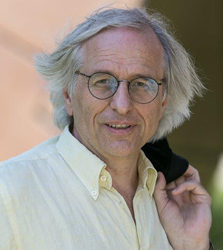
Prof. Dr. Holger Pfaff
has been director of the Institute for Medical Sociology, Health Services Research and Rehabilitation Science (IMVR) at the University of Cologne since 2009. This bridging institute is a joint facility between the Faculty of Human Sciences and the Faculty of Medicine. Since 2009 he has held the bridge professorship “Quality Development and Evaluation in Rehabilitation”, which is responsible for the teaching areas of “Medical Sociology” (Faculty of Medicine) and “Quality Development in Rehabilitation” (Faculty of Human Sciences). Prof. Pfaff's research focuses on three interrelated areas: health services research, social epidemiology (sociology of health) and health system design. In health services research, the focus is on analyzing the care and health system. From 2006 to 2011 he was first chairman and from 2012 to 2014 deputy chairman of the DNVF.
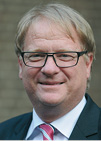
Prof. Dr. Jörg Sydow
has held the professorship for general business administration at the Free University of Berlin since October 1995. His research interests: New forms of organization; strategic business cooperation; outsourcing and insourcing; Business networking, especially in the service, media and high technology sectors; Project, innovation and technology management; Human Resource Management with special consideration of new approaches to a workforce economy; Industrial Relations; International management; Management and organization theory.
Theories according to Sydow that can be used in healthcare research
A) General management and organizational theories with broad validity:
• Practical theories: from Bourdieu to Giddens to Schatzki
• Neo-institutionalism with its diverse forms: Linking practice and institutional theory as “practice-driven institutionalism” network theory (Coleman vs. Burt)
• Constitution of Organizations (CCO)
• Transaction cost theory
• Political economic approaches (e.g. FlexSpec, LPD/Neo-Fordism)
• Exchange theory approaches
• Resource dependency approach
• Evolutionary approaches (e.g. population ecology)
• Systems theory and contingency approaches
• Decision theory
• Interaction-oriented network approach (Swedish provenance)
• Newer systems theory and consistency approaches
B) Focused special theories:
• Theories of temporary organizing
• Organizational path dependence theory
• Identity theory