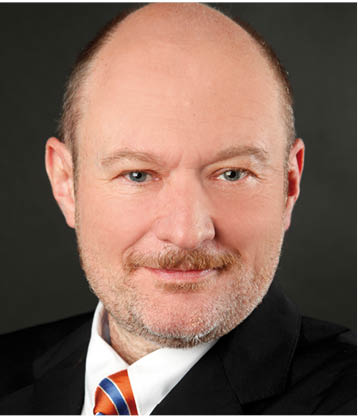
>> The Cochrane Governing Board cites on its website “continued bad behavior that is inconsistent with Cochrane’s principles and governance” as the reason for Gøtzsche’s removal from the governing body and, moreover, his exclusion from the entire collaboration.2 This approach , which Antes appears to be “inappropriate” given the more than 25-year history in which Cochrane has come to terms with Gøtzsche, led to four other board members – Prof. PD Dr. Gerald Gartlehner MPH, David Hammerstein, Dr. Jörg Meer-pohl and Ass.Prof. Dr. Nancy Santesso – submitted her resignation. “Against this background, from my personal point of view, the resignation of the four members appears not only as a well-founded, optional decision, but as a clear commitment to the basic principles of Cochrane and therefore downright compelling,” explained Antes1.
According to Antes, the decisive guideline for the evaluation must be a strict orientation towards the goals and basic principles of Cochrane: scientific rigor, findings with minimal bias or maximum trust and the consistent defense against interest-driven influence on the statements “must continue to be above all else”.
This is exactly where the reasons for Gøtzsche's dismissal can be found. The Dane, according to Australian medical journalist Dr. Maryanne Demasi3, “known for his harsh criticism of the harms of breast cancer screening programs and the excessive use of psychotropic drugs,” criticized the quality and methodology of the Cochrane HPV vaccine review4 in his recent article.
Cochrane editor-in-chief, David Tovey, and his deputy, Karla Soares-Weiser, said the criticism was unwarranted and claimed in return that the “HPV vaccine review was significantly exaggerated, inaccurate and sensationalized”5. Gøtzsche, however, believes that this response did not address “our key concern” that “the harms of the HPV vaccine were grossly underestimated and that much of the clinical data would not be included in the review.”
In order to be able to point out such issues outside of Cochrane in the future, Gøtzsche founded the Institute for Scientific Freedom6 in March of this year. This with the following vision:
• Science should strive to be free of financial conflicts of interest.
• All science should be published and made freely accessible as soon as possible.
• All scientific data, including study protocols, should be freely accessible so that others can conduct their own analyses.
According to Antes, crucial questions now need to be answered from a German perspective: Will the current conflicts have long-term consequences and will they have an impact on national and local work in the short and medium term? The former will be decided by how the current situation is resolved, because the question “Cochrane in crisis?” must be answered with the statement that Cochrane has a governance crisis. But this is not really surprising given the rapid growth from its founding in 1993 to today. Antes: “The goal now must be to view the events as an evolutionary step through which Cochrane will be further developed with the greatest possible transparency for the public. In retrospect, the current excitement can be seen as perhaps painful, but in any case a necessary impulse for fruitful further development.”
Despite all these problems, according to Antes, no immediate impact on work in Germany is to be expected in the short or medium term. On the contrary, the activities of Cochrane Germany have just entered a new era thanks to the BMG's successful efforts to sustainably support the Cochrane Germany Foundation and the establishment of the Institute for Evidence in Medicine at the Medical Faculty of the University of Freiburg. In addition, the new management through the W3 professorship, which will soon be filled, will be the next step that will significantly improve the working situation for Cochrane in Germany. Antes: “This means that Cochrane Germany is in a comfortable situation compared to the rest of the world, which will make it possible to actively support the development of Cochrane International and thus overcome the current irritation.” <<
For a quarter of a century, Cochrane has not only been a fixture of EBM, but also an important institution of true science. Gøtzsche's exclusion is a sign that the scientific, open and fair culture of discussion seems to have a certain amount of catching up to do. But not just her. All of science must - and here Gøtzsche's vision for his new Institute for Scientific Freedom is groundbreaking - strive more than ever to be transparent, openly accessible and as free as possible from financial conflicts of interest.