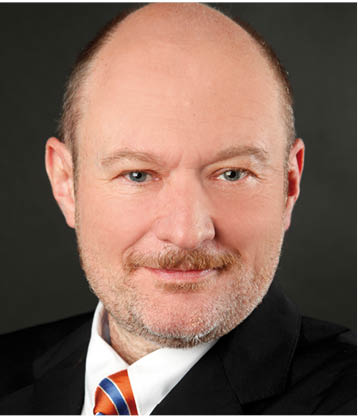
“It was and is time to supplement the Charité’s scientific profile with the area of health services research.” With this commitment, Prof. Dr. phil. Adelheid Kuhlmey, Director of the Institute for Medical Sociology and Rehabilitation Science at the Charité, the 1st Charité Healthcare Research Congress, an initiative of the newly founded platform - Charité Healthcare Research, of which she is the spokesperson. This dedication and commitment to health services research is something very special for this university hospital, which is one of the most research-intensive medical institutions in Germany, with its 279 professors and 7,500 students, over 17,000 employees and over 3,000 beds. And it is by no means an ill-advised act, as the idea of establishing an in-house platform for health services research and perpetuating this with its own congress has been carefully considered over the last year and a half.
>> This is what Prof. Dr. med. Axel Radlach Pries, dean and board member of the Charité since 2015, said on record that he was of the opinion from the beginning that health services research “is a topic that the Charité should, must and can pursue”. “Should” because, in his words, the requirements for a house of this size are always measured against the quality of everyday medical reality. And “must” because whenever medicine has been linked with research, according to Pries, “tremendous progress has become possible, which is particularly true of over half of the German Nobel Prize winners for medicine or physiology, who are closely linked to the Charité are. Or other well-known researchers like Prof. Dr. Rudolf Ludwig Carl Virchow, who – according to Pries – showed with his own ideas that “the
“The real reality of patients can sometimes be influenced much more strongly by topics that are not actually associated with medical research, such as a laundry.”
Which is nothing other than a very early form of health services research.
Nevertheless, it was a long and certainly not an easy road to implement this still relatively young scientific discipline at the Charité. This is not just an add-on, but rather an equivalent subject alongside the many subjects of basic research that are, so to speak, inscribed in the DNA and history of the largest university hospital in Berlin and, on top of that, the largest university hospital in Europe.
The question of “can” remains, which Pries answered by saying that health services research at the Charité arose “individually through the recognition of necessity”. This was by no means a guided, strategically promoted process that the faculty management could boast about, but rather “a real grassroots development”. Likewise, the grass “sprouted out of the ground here and there and there” all by itself. And if you look a little closer, you will discover “almost a meadow” that perhaps still needs a bit of fertilization and watering. The newly founded platform would be the right approach to promote the already existing project diversity; He was very impressed by the quantity and, above all, quality of these “various, individually launched activities in the field of health services research”.
150 health services research projects from almost all specialist areas
The Charité, but also Dean Pries and, above all, all the scientists and doctors involved from almost all disciplines can be proud of this. Adelheid Kuhlmey's team found more than 150 health care research projects on various Charité homepages and pages, 40 of which were presented as posters at the 1st Charité Health Care Research Congress. The Platform - Charité Health Care Research now sees it as its task to map, then visualize and thus bundle this grown interdisciplinary and interprofessional basis, which has so far been “broad but also widely scattered” at the Charité. Kuhlmey's thanks first went to all colleagues who followed the idea of the platform - Charité health services research "so convincingly, in a collaborative and collegial manner", which was seen as "an important step towards networking and an important success for the structural development of health services research at the Charité and beyond could apply beyond that. But, according to Kuhlmey, just as important as networking within the Charité is “integrative collaboration with our partners from science and the health industry, from health insurance companies and associations as well as the providers of care services.”
This is not an easy task even in the house. Housed at four main locations in Berlin, the Charité is divided into 17 centers (CharitéCentren) with more than 100 clinics and institutes, most of which are organized across locations but have independent management with responsibility for results. Of course, this also includes the acquisition of third-party funding, which means that health services research suddenly comes into focus - also in view of the high budgets of the innovation fund, but also other sponsors. “The parameter that is always important for us is funding,” said Pries with regard to health services research, which has so far “perhaps tended to be easily overlooked”: “The critical mass in the Charité is clearly given for this topic.” And Thanks to the 1st Charité Health Care Research Congress and the Platform - Charité Health Care Research, it is now - according to Pries - "more visible and more effective", and a "new mechanism for presenting our research priorities" is currently being developed in the faculty. <<
from:
MVF editor-in-chief Peter Stegmaier and Martin Klein
The “Platform – Charité Health Services Research” brings together research projects, further developments and measures to promote young talent in the area of health services research. The platform currently includes 20 Charité facilities as well as the three research networks EMANet, NAVICARE and Fontane. The aim of networking is to make better use of resources, create new synergies, jointly develop scientific methods and better support young scientists. New healthcare options should be made available to patients even more quickly. The platform’s tasks therefore include:
• The creation of a common research infrastructure by pooling existing resources;
• The networking of methodological and clinical expertise for health services research;
• The promotion of method and theory development in health care research as well as the translation of empirical results into health care practice;
• Networking with local actors as well
• The establishment of comprehensive support for young talent;
• The establishment of a common training landscape.
First of all, the platform should, as Prof. Dr. phil. Adelheid Kuhlmey, in the welcome to the 1st Charité Healthcare Research Congress, said that we would focus on four key topics:
1. Outpatient and cross-sector care
Health services research is primarily looking for the best transition between the sectors of the healthcare system - with the aim of guiding patients through the necessary diagnostic and treatment steps in the best possible way.
2. Vulnerable groups and people with chronic illnesses
In particular, very old people, people with a migrant background or insufficient health literacy have limited access to social services, health education and health care providers. Multimorbidity and functional limitations in chronic illnesses also make it difficult to provide optimal care.
3. Emergency and acute care
Health services research in emergency and acute medicine determines key figures on the actual frequency of use of emergency care structures, as well as the reasons for the increasing use, taking into account the patient and system perspective.
4. Telemedicine and digital care
In telemedicine, health services research examines, among other things, the suitability for use and user-friendliness under everyday conditions and checks the cost-effectiveness and quality of the telemedicine service offered.
Prof. Kuhlmey, director of the Institute for Medical Sociology and Rehabilitation Science, and spokesperson for the new platform, explained: “Thanks to the unique interdisciplinarity of health services research at the Charité, the inclusion of students from different disciplines and young talent, the new platform will make an important contribution to this “To further develop the research area in terms of subject matter, content and methodology and to train the young scientists needed for this.” In addition, Prof. Dr. Martin Möckel, medical director of emergency and acute medicine at the Charité Mitte campus and Virchow-Klinikum campus and deputy spokesman for the platform, said that “with the platform and our clinical partners inside and outside the Charité, the health insurance companies and associations, we are creating a productive network of research “Have care practice and design that makes it possible to pilot, research and prepare new care models for implementation.”