Better care through consistent networking
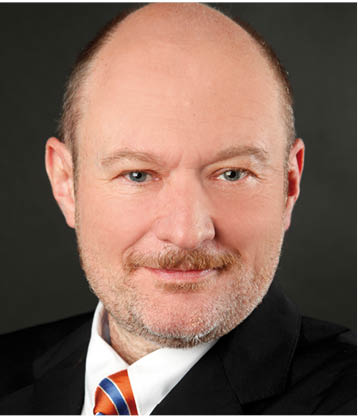
The pharmaceutical company Roche organized an add-on media symposium of a completely different kind in the Berlin restaurant Ottenthal (the best veal schnitzel ever...) on the occasion of the Capital Congress 2023. “Precision oncology: Progress – for everyone, a few, or at least for no one?” was the title of the press dinner. The speakers were Dr. Benedikt Westphalen, medical director of the precision oncology program at the Medical Clinic and Polyclinic III and the CCC Munich LMU, on the topic of “Rethinking care: How does precision oncology reach patients?” Ralf Zerbes from Roche Pharma then gave a lecture on the topic of “Precision oncology with a future: Creating space for innovations – but how?” This article deals with Westphalen’s lecture.
>> Westphalen began his speech, which was based on ten flipcharts drawn by an artist, with a positive statement: “Personalized precision oncology offers incredible opportunities for our patients.” But only if precision oncology is integrated in the sense of an integrated one Care solution is understood as paradigmatic for a change in our healthcare system. “With a limited number of patients, we can learn how we can work better together and with each other and how we can break down sector boundaries,” explained the experienced doctor. By this he not only means the outpatient/inpatient, but above all also the classic boundary line between academy and industry and crane-
insurance on the other hand.
Transsectoral networking is a great opportunity if all stakeholders work together in the areas with the greatest overlap so that - according to Westphalen - "innovation and medical progress reach patients in Germany in the next few years". By this he self-critically also meant university centers that had to “get out of their academic ivory towers” in order to advance medicine. If this succeeds, better healthcare, made possible with the help of personalized prevention and therapy, would “become a reality and not remain a utopia”.
But he also likes a better relationship
Mention work between established oncologists and specialized heart centers. Although studies have shown that cancer patients treated in centers survive longer, this is only part of the truth: 80% of all cancer patients in Germany are treated outside of centers by established doctors. This is such a large number of patients that university centers simply cannot accept them due to the sheer volume. Nevertheless, transfer management is necessary, accompanied by appropriate incentive systems, so that it is worthwhile for residents to refer patients who could benefit from it to specialist centers. On the other hand, in his opinion, the center's expertise should be made more widely available by treating residents using virtual tumor boards. Vice versa, networks would also be formed with which a patient can be treated close to home if they perhaps do not need to be treated in a university environment because the flat rate per case is basically used up with one blood sample. He would like the care process to function as a kind of continuum in which patients can move fluidly depending on the status and stage of their respective patient journey in order to receive treatment where it is best for them
However, this requires one important prerequisite: consistent screening. This would firstly allow tumor diseases to be detected earlier and then, secondly, the correct diagnosis to be made available in a timely manner. The EU Commission's prevention plan states that it is not enough just to offer screening programs, but that the health system must also be able to diagnose patients who test positive and, for example, not to wait for a colonoscopy for months if colon cancer is suspected - if necessary - to wait for a surgery appointment. Westphalen: “If we diagnose early, we may be able to provide neoadjuvant treatment and possibly transform diseases from an advanced stage to a curable stage.” However, this can only be achieved through consistent networking of all players and truly integrated care, starting with the family doctor. who carry out the screenings, right through to treatment with experts in centers. <<
by: MVF editor-in-chief Peter Stegmaier