


Overlooking the elephant in the room: DGG's statement on the expert council's report on the shortage of skilled workers
28.10.2024 13:10
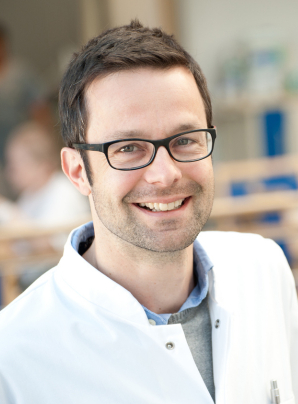
The German Council of Experts on Health and Care is also addressing the shortage of skilled workers this year. In the spring, the panel, appointed by the German Federal Government, presented a 300-page document with recommendations entitled "Skilled Workers in Healthcare – Sustainable Use of a Scarce Resource." Many of these recommendations also concern geriatric care. Professor Michael Denkinger, President-elect of the German Society for Geriatrics (DGG), has taken a closer look at the paper.
Michael Denkinger comments: „The 2024 report by the Council of Experts on Geriatrics contains recommendations aimed at preventing the need for long-term care and rightly emphasizes the value of skilled nursing, primary care physician systems, and geriatric expertise.“ The report also highlights the need to enable more research on multimorbidity and polypharmacy, praises the Medical Director of the Agaplesion Bethesda Clinic and Head of the Institute for Geriatric Research at Ulm University Hospital. He also commends the focus on rehabilitative and preventive approaches, without the trigger of an acute event.
„However,“ Denkinger emphasizes, „all of this will not be enough to cope with the ‚Silver Tsunami‘ of an estimated 1.5 million people in need of care in Germany by 2050. The elephant in the room has been somewhat overlooked!“
The expert reports focused too much on primary prevention.
Many passages in the report focus on primary prevention, criticizes the incoming president of the German Society for Geriatrics (DGG). Prevention, however, must also begin at the secondary and tertiary levels, and even before and immediately after the acute event in the hospital itself – including in Level 2 and Level 3 hospitals. "There is practically nothing about this in the report," criticizes Denkinger. "Thus, geriatric patients continue to be triaged early, before maximum intervention or diagnostics take place, such as directly following abdominal surgery, a heart attack, or a hip fracture."„
Geriatrics, with its unique team- and function-oriented approach based on geriatric assessment, can coordinate triage between prevention, acute therapy, rehabilitation, and palliation, thereby avoiding both under- and over-treatment. "For this to happen, geriatricians must be involved in emergency rooms," demands Denkinger.
Evidence-based and collaborative action against the need for care
Geriatrics, in particular, has demonstrated in recent years, with tools such as the S3 guideline "Comprehensive Geriatric Assessment," Cochrane Reviews, and guidelines from the American Society of Clinical Oncology (ASCO), how a specialty can successfully work in an evidence-based manner. "So let's be bold and tackle it structurally now," encourages Michael Denkinger.
To implement effective measures in hospitals and nursing homes, specialists in therapy and geriatrics would be needed in addition to academic nursing staff. "And based on the outpatient geriatric centers, effective preventive home visit concepts and outpatient rehabilitation could be developed regionally, also in cooperation with nursing and general practice – as a comprehensive concept and bulwark against the need for care," Denkinger proposed.