


New study once again confirms the effectiveness of digital cognitive behavioral therapy for insomnia
17.08.2023 15:45
A new study by the Department of Psychotherapy at Heinrich Heine University Düsseldorf confirms the effectiveness of the digital health application (DiGA) somnio, which has been able to be prescribed by doctors and psychotherapists in Germany since October 2020. The randomized controlled study once again proves that digital cognitive behavioral therapy for insomnia (CBT-I) carried out using DiGA somnio is a promising method for treating sleep disorders within regular medical care.
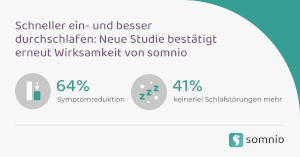
The result in numbers: 64% of the participants were so-called “responders”. For them, the treatment with DiGA somnio achieved clinically relevant success and the insomnia symptoms were significantly reduced. 41% of the participants no longer had any sleep disorders after treatment with somnio. The test subjects fell asleep on average 29 minutes faster with somnio and were awake for 64 minutes less during the night.[1] The study was published online in July 2023 in the prestigious SLEEP® Journal of the Sleep Research Society®.
Significant reduction in insomnia symptoms
The study, titled “The clinical effects of digital cognitive behavioral therapy for insomnia in a heterogenous study sample: Results from a randomized controlled trial,” recruited over 200 participants aged 18 and older who met the criteria for insomnia. illness. The participants were randomly assigned to either the CBT-I group or the control group (waiting list). Unlike other studies, people with comorbid mental illnesses or physical complaints, people who worked shifts and people who were being treated for other reasons at the same time were also included.
The results of the study show that the application of a digital CBT-I, provided by the DiGA somnio, led to a significant reduction in insomnia severity (measured with the Insomnia Severity Index) after 8 weeks compared to the control group, with 64% as " Responders” (Insomnia Severity Index ≥ 8 – the treatment was effective, the symptoms decreased significantly) and 41% achieved “Remission” (Insomnia Severity Index < 8 – those treated no longer had a clinically relevant sleep disorder).
“By including an insomnia population close to care and taking comorbidities into account, we have gained valuable insights that demonstrate the effectiveness of digital cognitive behavioral therapy for insomnia,” says Dr. Leonie Maurer, head of the science department of the somnio manufacturer mementor. “The results once again underline the suitability of our DiGA somnio for use in standard care.”
Positive effectiveness even months after treatment
In addition, there were positive effects of digital CBT-I on the participants' daily well-being and quality of life. Symptoms of depression and anxiety were also reduced. The positive effectiveness remained even after treatment: persistent positive effects were found in the CBT-I group six and twelve months after the start of treatment.
Prof. Dr. Christoph Schöbel, Professor of Sleep Medicine at the Ruhrlandklinik Essen, confirms the study results in his work: “The study once again provides evidence of the effectiveness of digital CBT-I for the treatment of sleep disorders and the significant improvement in the well-being of our insomnia patients. The results are a big step forward in integrating evidence-based digital therapies into everyday clinical practice and thus offering those affected an effective and accessible treatment option.”
The full results of the study are published in the SLEEP® Journal of the Sleep Research Society® and can be viewed at https://academic.oup.com/sleep/advance-article/doi/10.1093/sleep/zsad184/7222305?searchresult=1 .
About the study:
• Title: The clinical effects of digital cognitive behavioral therapy for insomnia in a heterogeneous study sample: Results from a randomized controlled trial
• Carried out in cooperation with mementor DE GmbH, manufacturer of the digital health application (DiGA) somnio
• Randomized controlled trial
• Recruitment of a healthcare-related insomnia population in Germany
• Number of participants: N = 238
• Primary endpoint: Insomnia Severity Index (ISI)
• Secondary outcomes: fatigue, daytime sleepiness, general well-being
• Long-term follow-up in the intervention group at six and twelve months
literature
[1] Schuffelen, J., Maurer, LF, Lorenz, N., Rötger, A., Pietrowsky, R., & Gieselmann, A. (2023). The clinical effects of digital cognitive behavioral therapy for insomnia in a heterogeneous study sample: Results from a randomized controlled trial. Sleep, zsad184. https://doi.org/10.1093/sleep/zsad184 (accessed on July 26, 2023)