


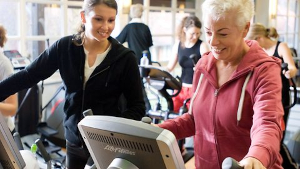
The majority of people over 60 don't exercise enough
15.08.2023 12:42
The majority of people over 60 don't exercise enough. 62 percent of people over 60 show a significant lack of exercise. Only a little more than a third are active in accordance with national physical activity recommendations. The problem worsens with increasing age: of people over 80, almost half (45 percent) are no longer actively active. This is shown by a current Forsa survey commissioned by DAK-Gesundheit. The health insurance company warns of a loss of health, performance and quality of life.
“Against the background of demographic change, the lack of exercise among people over 60 must wake us up,” says DAK CEO Andreas Storm, commenting on the results. In Germany, 30 percent already belong to this age group. “A lack of exercise is a massive health risk, especially in old age, which we often underestimate. It is much easier to influence and positively change risks than other risks.” More physical activity supports staying healthy and helps people over the age of 80 to be able to actively participate in life. “We must make it our mission to sustainably promote enjoyment of exercise and reduce inactivity in old age,” says Storm.
Only 4 out of 10 men over 60 are sufficiently physically active
According to a survey by DAK-Gesundheit, only 38 percent of people over 60 exercise at least twice a week for half an hour at a slightly increased intensity. There are 36 percent of women and 41 percent of men: For example, they do sports in a club, go on demanding bike rides or work up a sweat while gardening. However, as we get older, more and more people stay on the couch. The already too small proportion of people who exercise regularly is becoming even smaller. Of those aged 80 and over, almost half (45 percent) are no longer actively active. This leads to a deterioration in health and performance and thus to a loss of quality of life and an increased risk of needing care. That's why national exercise recommendations also advise people of old age to do at least 75 minutes of intensive physical activity per week. But it doesn't always have to be heavy exertion or classic sports that make a big difference. Even simple everyday activities, such as going to the mailbox or walking to the store, have an important effect. “Every time you get up, every step, every small exercise or every physical task is, in the truest sense of the word, a step towards more strength, energy and quality of life,” says Franziska Albrecht, movement expert at DAK-Gesundheit, summing up the recommendations.
DAK program “POLKA” to promote exercise in nursing homes
In a model project, DAK-Gesundheit has set itself the task of promoting exercise for residents in nursing homes. Under the project management of the German Association for Health Sports and Sports Therapy (DVGS), multipliers are trained in the participating care facilities, who then use targeted measures to promote the exercise-related health skills of everyone involved. Specifically, the residents are kept active through exercise incentives such as more walking distances in the house and music-supported gymnastics. The model project will run until the end of June 2024 and will be accompanied by an evaluation. The aim is to turn the regional project into a nationwide project.